When will elections be held in Venezuela? Donald Trump and Delcy Rodríguez rule out immediate dates, while Marco Rubio announces new talks between opposition and Chavista regime
Both officials made their positions known during the signing of strategic energy agreements in Caracas and in response to demands from various sectors to establish a clear transition timeline.
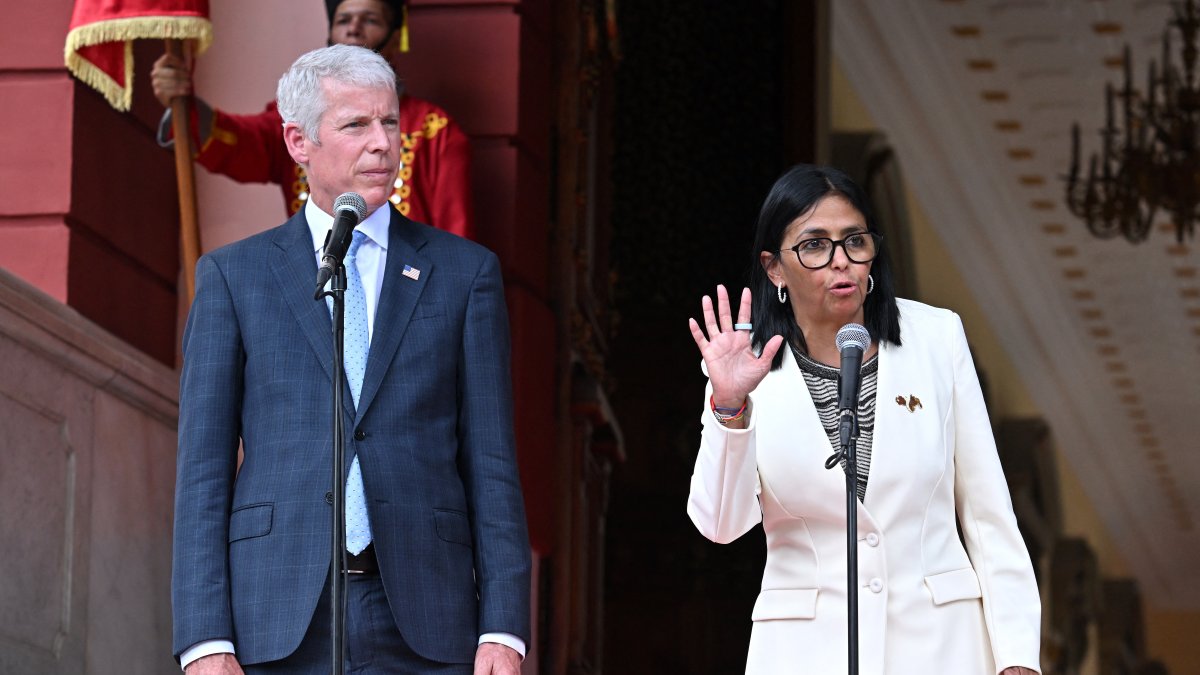
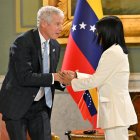
Delcy Rodríguez and U.S. Secretary of Energy Chris Wright in Caracas on Sept. 2.

President Donald Trump and the president of Venezuela's interim government, Delcy Rodríguez, both stated today that the South American country does not yet have the necessary conditions to hold immediate elections.
Both leaders made their positions known during the signing of strategic energy agreements in Caracas and in response to demands from various sectors to establish a clear transition timeline.
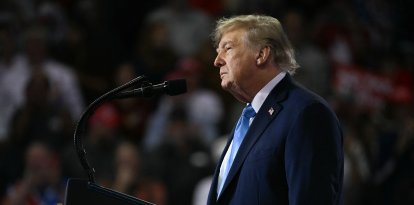
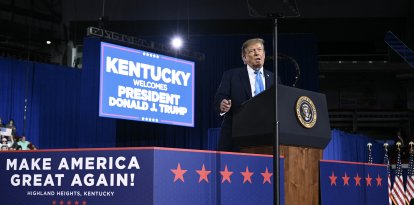
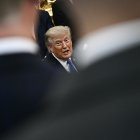
Speaking to the media from the Oval Office, Trump stated that the Venezuelan administration is "very new" and that the current priority is to focus on the stabilization phase following the end of Nicolás Maduro's dictatorship.
"I don't think they're ready yet. It's very new; we pulled them out of a dictatorship, and we get along very well with the government. Delcy, as you know, is doing a very, very good job. She is highly respected, and we want that and they want it too. Delcy wants it, but they're not ready yet," Trump stated, adding that he is confident the polls will open "soon," though he did not specify a timeline.
For her part, Rodríguez supported the view that the country needs to be prepared in advance before going to the polls.
During a press conference in Caracas alongside U.S. Secretary of Energy Chris Wright, the interim president assured that the process will take place within the constitutional framework once the nation is ready. "Have no doubt about that, there will be an electoral process, but under conditions in which Venezuela is prepared. I am not setting a date," she clarified.
The White House's roadmap and institutional vision
Trump's position reflects the three-phase strategy outlined by Washington following the military operation that captured Maduro in January: recovery of the energy sector, economic stabilization and, finally, democratic transition.
Senior administration officials noted that setting a rigid deadline is counterproductive when local institutions have suffered systematic deterioration over more than 20 years of the Chavista regime.
The State Department's perspective emphasizes that democracy encompasses broader elements than mere voting. Secretary of State Marco Rubio compared the dynamics to other global historical processes.
"It won't take as long as it did in Eastern Europe, but that region needed four or five years to complete its transition. Here we can achieve it much more quickly. We are working tirelessly toward that goal," Rubio said in a radio interview, noting that "democratic elections are not simply about holding an election."
Diplomatic progress and energy security in the hemisphere
The postponement of the elections coincides with a push for U.S. oil investments.
The White House confirmed an agreement granting the United States operational and commercial control over 17 oil fields that account for about 20% of Venezuela's proven reserves.
As Rubio explained, this mechanism provides immediate benefits and definitively displaces the geopolitical influence of actors such as China, Russia and Iran in the region's energy market.
On the political front, the U.S. Secretary of State announced that the negotiating table between the Rodríguez administration and the opposition will hold a new round of talks in approximately 10 days.
These talks will address the renewal of the National Electoral Council, a step that the opposition delegation, led by Dinorah Figuera, considers essential for when conditions finally allow a return to the polls.
Politics
Members of Congress call on Donald Trump to clarify before Congress the terms of his negotiations with the Venezuelan regime
Andrés Ignacio Henríquez

LATEST