US Jews increasingly conceal identity due to rising hatred
Fifty-seven percent of American Jews experienced antisemitism over the past year, survey finds.

A majority of American Jews experienced antisemitism over the past year, with many changing their behavior out of fear, according to a survey released on Friday by the Combat Antisemitism Movement (CAM) ahead of the United States’ 250th anniversary.
The survey, commissioned by CAM’s Antisemitism Research Center, found that 57% of Jewish Americans reported experiencing antisemitism in the past year, equivalent to an estimated 3.3 million Jewish adults and approximately 250,000 Jewish children living in affected households.
The findings also suggest that rising antisemitism is prompting many Jews to conceal their identity. Thirty-eight percent of respondents said they now hide items that identify them as Jewish, 32% avoid posting Jewish-related content online, and 23% said they have skipped Jewish events or observances because of safety concerns.
“These findings are a stark reminder that antisemitism is a lived daily reality for Jewish Americans,” said Alyza D. Lewin, CAM’s president of U.S. affairs. “The more openly Jewish you are, the more likely you are to experience antisemitism. Unsurprisingly, as a result, Jews are changing their behavior and thinking twice about how openly Jewish to be.”
The survey also found strong support for the International Holocaust Remembrance Alliance’s working definition of antisemitism. After reading the definition, 71% of respondents said it accurately described antisemitism, and more than two-thirds said it should be adopted by institutions. Only 4% opposed its adoption.
“At the same time, the survey responses demonstrate that Jews overwhelmingly support adoption of the IHRA definition,” Lewin said. “The data is clear. The mandate is clear. It’s time to adopt the IHRA definition and get to work protecting the ability of Jews in America to openly, proudly and safely embrace their Jewish shared ancestry, history and heritage.”
The survey of 1,060 Jewish American adults was conducted by Dr. Ira Sheskin of the University of Miami and administered by the National Opinion Research Center at the University of Chicago. The survey’s margin of sampling error was ±3.5 percentage points at the 95% confidence level.

Less safe than a year ago
Fifty-eight percent of respondents felt less safe than they did a year ago, while 59% said they had encountered antisemitic content online and 47% reported hearing antisemitic tropes. Ten percent said antisemitic content had been directed at them personally.
According to the survey, antisemitism was reported most frequently by Jews who visibly express their Jewish identity or actively participate in Jewish communal life, with the researchers concluding that “the more openly Jewish a person lives, the more antisemitism they reported facing.”
Aaron Keyak, CAM’s special representative on international affairs and former U.S. deputy special envoy to monitor and combat antisemitism, said the findings underscore the need for a bipartisan response.
“This new data only confirms what we in the Jewish community already know—antisemitism is a threat that must be addressed with the seriousness that such a deadly reality demands,” he said. “It is incumbent on all of us not to make this a partisan issue and to actually take measures to make American Jews safer.”
Among other findings, 8% of respondents said they had been physically threatened or attacked because they were Jewish, 36% reported seeing anti-Jewish graffiti or vandalism in their area, and another 36% said they had heard antisemitic slurs or jokes from colleagues or neighbors.
At the same time, 40% of respondents said a non-Jewish person had expressed solidarity with them.

Just the News
New Mexico man charged with federal hate crime after attacking two Jewish facilities
Just The News
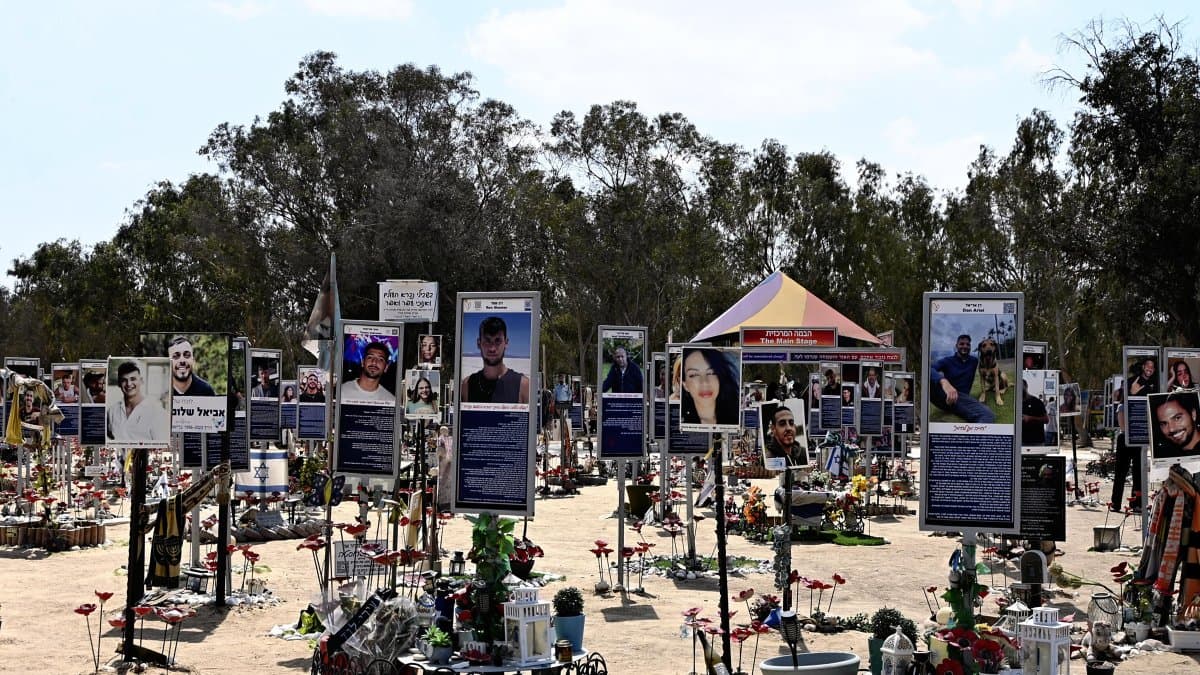
The survey follows a similar CAM study conducted in 2024, shortly after the Hamas-led massacre in southern Israel on Oct. 7, 2023, providing a benchmark for measuring changes in antisemitic experiences among American Jews.
Experts in the field of combating antisemitism gathered at the JNS 2026 International Policy Summit in Jerusalem on June 22 to discuss strategies for confronting the surge in the oldest hatred following Oct. 7.
🛠 Do you think there is an error in this article?
Recommendations







LATEST