






ANALYSIS.
Trump effect on Capitol Hill: Republicans rally together, cracks in Democratic unity
An Institute for Legislative Studies study of congressional voting between 2023 notes that the president's return to the White House has caused the GOP's hard-line wing to lower its standard on issues related to reducing federal spending, limiting regulatory powers, reducing the scope of government or strictly respecting the constitutional structure and civil liberties guarantees, while the more moderate have raised it.
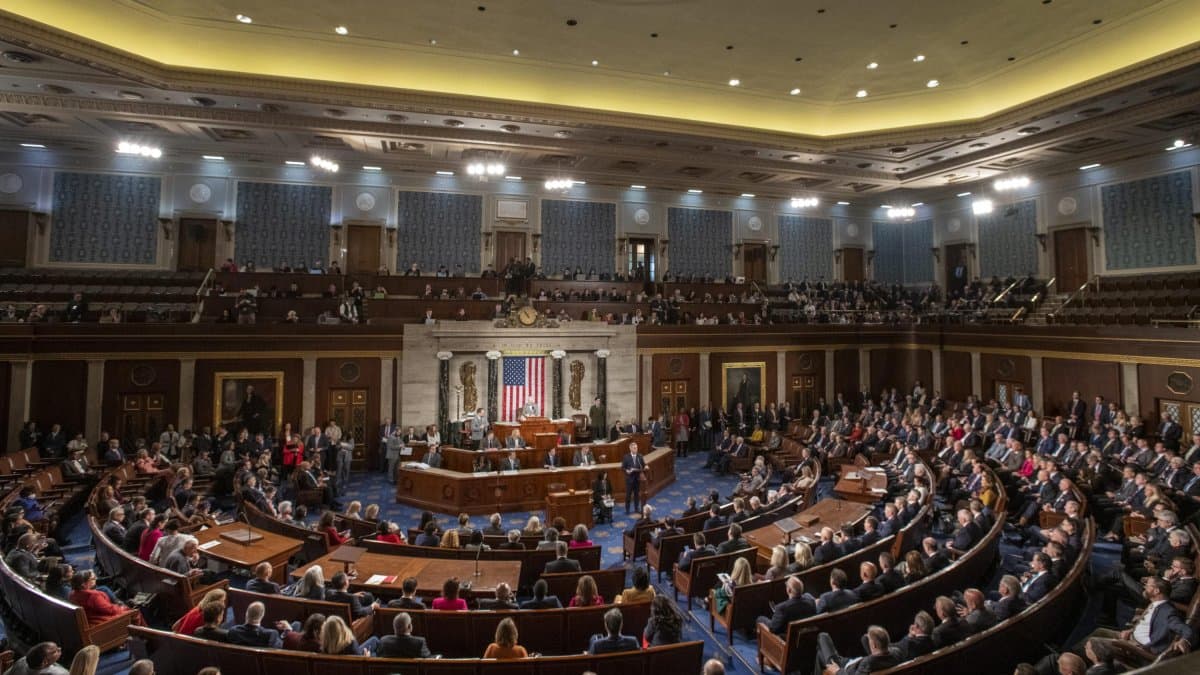

Donald Trump’s return to the White House led to a decrease of the infighting that had been plaguing the GOP in recent years and opened cracks in the Democrats’ ironclad discipline. This is a key takeaway from the Institute for Legislative Analysis (ILA) report on congressional votes between 2023 and 2025 on matters related to reducing federal spending, limiting regulatory powers, reducing the scope of government and strictly respecting the constitutional structure and civil liberties guarantees.
The study scores congressmen on a scale of 0-100: "A score of 100 represents maximum agreement with reduced federal spending, reduced regulatory powers, shrinking scope of government and strict respect for constitutional structure and civil liberties protections. A score of 0 reflects the opposite."
In addition, and to help understand what's behind the polarization that seems to permeate everything and that emerges from the statements of party leaders on Capitol Hill, the ILA "applies a simple weighting system ranging from 1 to 3, so that votes with greater relevance to political orientation or internal party ideology carry more weight in the overall score: fiscal and tax policy, education, health care, law and government outreach, individual liberties, energy and environment, local and national security, regulation, free speech and elections, and labor and employment."
Coalitions that do not fit the old assumptions of right or left
According to the authors of the study, this type of approach makes it possible to show how "coalitions move within an already polarized system, especially on issues such as trade, oversight, fiscal austerity and executive accountability, which do not always fit neatly into the old assumptions of left and right."
Thus, the report stresses that legislators cannot be measured as a bloc in terms of their more or less libertarian stance. On the contrary, it is important to "disaggregate issues rather than relying exclusively on one-dimensional ideological labels. One legislator may hold a strongly pro-limited government stance on spending or regulatory issues while diverging markedly on trade or surveillance. Another may rise in the overall rankings because tax issues dominate the scorecard, even though its results are mixed in other areas. That complexity is not a flaw in the data; it is precisely what a rigorous analysis of the votes is intended to reflect."
In this regard, the report leaves three main conclusions: that many GOP hawks (Freedom Caucus and co.) have lowered their standard, while a considerable number of moderates have raised it, favoring meeting points where it was not easy during the Biden era. In addition, Democrats have generally raised their scores in support of positions closer to the right.
Chip Roy, the 'hawk' with the sharpest talons
As for the first, the three years studied have seen a significant reduction in legislators whose score exceeds 90 points. Thus, it has gone from 63 in 2023 to 27 during the past academic year. Representative Chip Roy is the highest-scoring congressman, with 99.5%.
He is followed by Senator Rand Paul (99.34) and fellow lower house member Andy Biggs (98.48%). Rep. Mark Harris, in the aforementioned 27th spot, is the last of the politicians above 90%. The highest-scoring women are now-former Rep. Marjorie Taylor-Greene (ranked 15th with 93.18%) and Lauren Boebert (18th, 92.82%). The top Democrat on the list is Henry Cuellar (54.73%).
However, this "does not necessarily mean that the Republican conference has simply shifted in a uniformly statist direction. The pattern is more specific than that. The ILA's issue-by-issue scoring suggests that certain issues on which traditionalist supporters of limited government used to hold the party's center of gravity - notably trade, oversight and some accountability-related disputes - now give way to different coalition alignments. Whereas earlier Republican orthodoxy used to emphasize free trade and skepticism toward broad industrial policy, a more populist and nationalist style of government appears to have normalized broader use of tariffs and more situational departures from older constitutional and civil libertarian instincts," notes the study.
The report gives an example of an amendment by Senator Josh Hawley on tariffs in 2023. Hawley then proposed a surcharge on imports from China that was soundly rejected by 17 votes to 81, with 31 Republicans voting against. In 2025, Trump's reciprocal tariffs received the support of 47 conservatives with the rejection of just five.
A "different center of gravity" in the Republican Party
On the other hand, Trump's push moved during the past year many more moderate Republicans to support measures of a more radical cut to which they used to accede previously. Thus the ILA highlights that "the number of Republicans scoring below 60% also dropped dramatically: from 33 in 2023 to 21 in 2024 and to only 3 in 2025. This data reveals that the party did not merely move down the ILA scale, but readjusted toward a different center of gravity."
"This distinction is important because it points to an internal consolidation, not an ideological collapse. Some of the more moderate Republicans began voting more consistently in favor of spending restraint and other limited-government measures, even as members on the libertarian or constitutionalist end of the scale lost ground compared with previous years. Thus, the conference appears more unified internally than two years ago, but unified around a somewhat different mix of priorities."
Again, the authors personalize an example to drive home the point. In this case, the chosen one is Representative Mike Lawler:
"In 2023, Lawler opposed most of the fiscal austerity measures pushed by Republicans. According to the ILA's three-year trend line, Lawler went from 46.83 in 2023 to 56.03 in 2024 and then to 64.14 in 2025. This change is striking because it suggests a shift not in rhetoric, but in voting behavior. The House Clerk's record shows that the Rescissions Act passed the House on June 12, 2025 by a 214-212 vote, with Republicans - including Lawler - contributing all 214 votes in favor. For ILA, support for measures of this type helps explain why previously moderate Republicans scored higher in 2025 than in either of the previous two years."
Democrats, less cohesive
Finally, the third "major finding" of the study is that "Democrats remain more united on principle, but less cohesive than before." The authors note that "Democrats remain much more ideologically united than Republicans when assessed against a narrow governance criterion. In 2025, the average score for Democrats was 10.31, compared to 79.62 for Republicans. On the ILA scale, this means that Democrats continue to cluster much closer to each other at the bottom of the scale, while Republicans continue to span a wider range of positions."
"At the same time, the Democratic caucus was somewhat less compact in 2025 than in previous years. In 2023, the Democrats' average score stood at 7.52. In 2025 it had risen to 10.31. An even clearer indicator is the number of Democrats who scored above 10%. That number increased from 28 in 2023 to 71 in 2024 and then to 99 in 2025. The data show that Democrats remained more united than Republicans, but a greater proportion of the congressional caucus continued to move slightly up the ILA scale."
However, "that does not mean that Democrats are becoming a party of limited government in any broad sense. Instead, it suggests a slightly greater dispersion within the parliamentary group." Also, a related Brookings analysis has argued that "the ideological overlap between the parties has largely disappeared."
AOC is 'only' the third most radical Democrat on Capitol Hill according to its votes
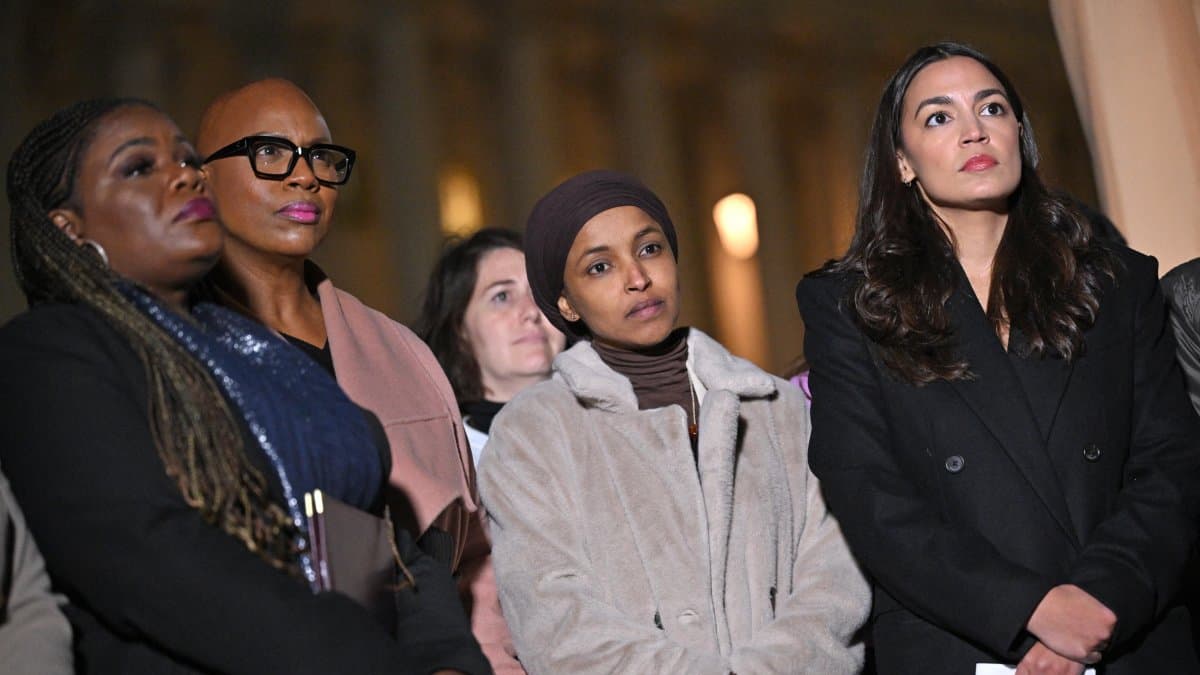
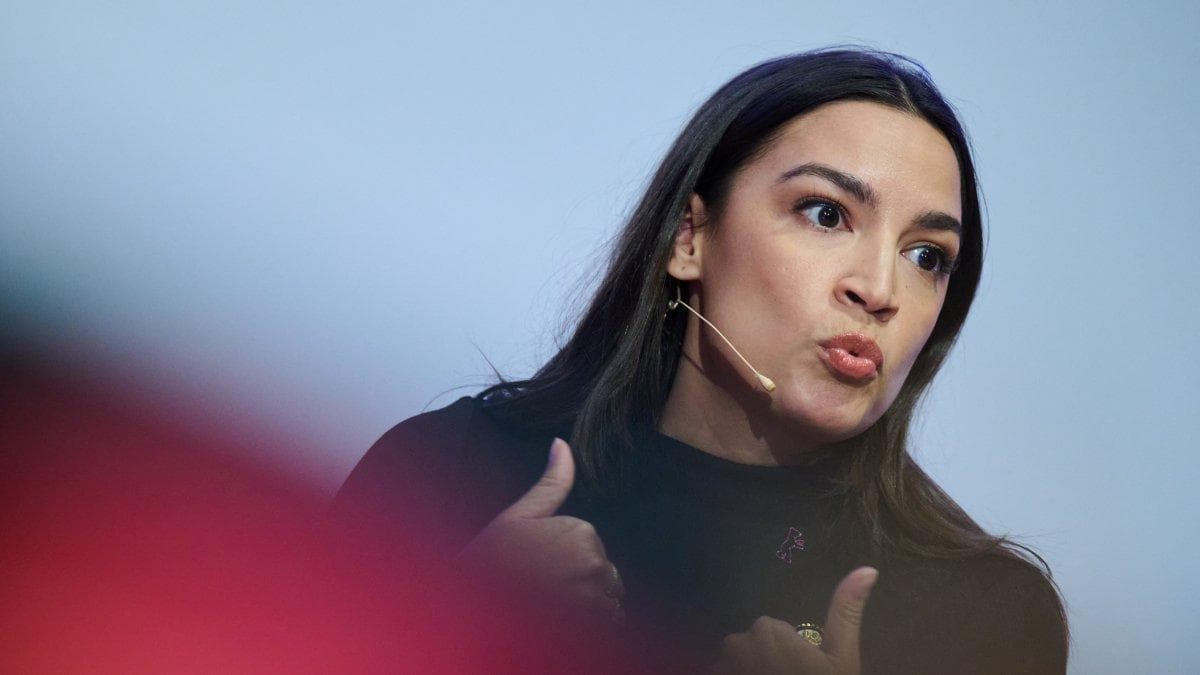
As we did among the top-scoring Republicans, the Democrat who 'leads' (i.e. the lowest-scoring) her group is Rep. Ayanna Pressley with 2.51%, followed by fellow Rep. Delia Ramirez, with 2.71%. Alexandria Ocasio-Cortez takes third place with 3%. The first man on the list is Maxwell Frost, in fourth place, also with 3%. The first member of the Upper House to appear is Senator Mazie K. Hirono, with 5.51%.
The report notes that "taken together, the ILA results describe a Congress in which polarization remains real, but no longer alone explains the entire situation. The deeper reality is the internal restructuring of partisan coalitions. Republicans appear more united than they were in 2023, but that unity is not based on exactly the same limited-government program that once defined the conference. Democrats remain more coalesced around the ILA reference, but even they show signs of a slight split within the caucus."
🛠 Do you think there is an error in this article?
Recommendations





LATEST