The US accelerates the roadmap in Venezuela and is already analyzing ways towards a 'democratic transition'
The objective of the meeting was to establish "pathways towards a stable, orderly and consolidated democratic transition."
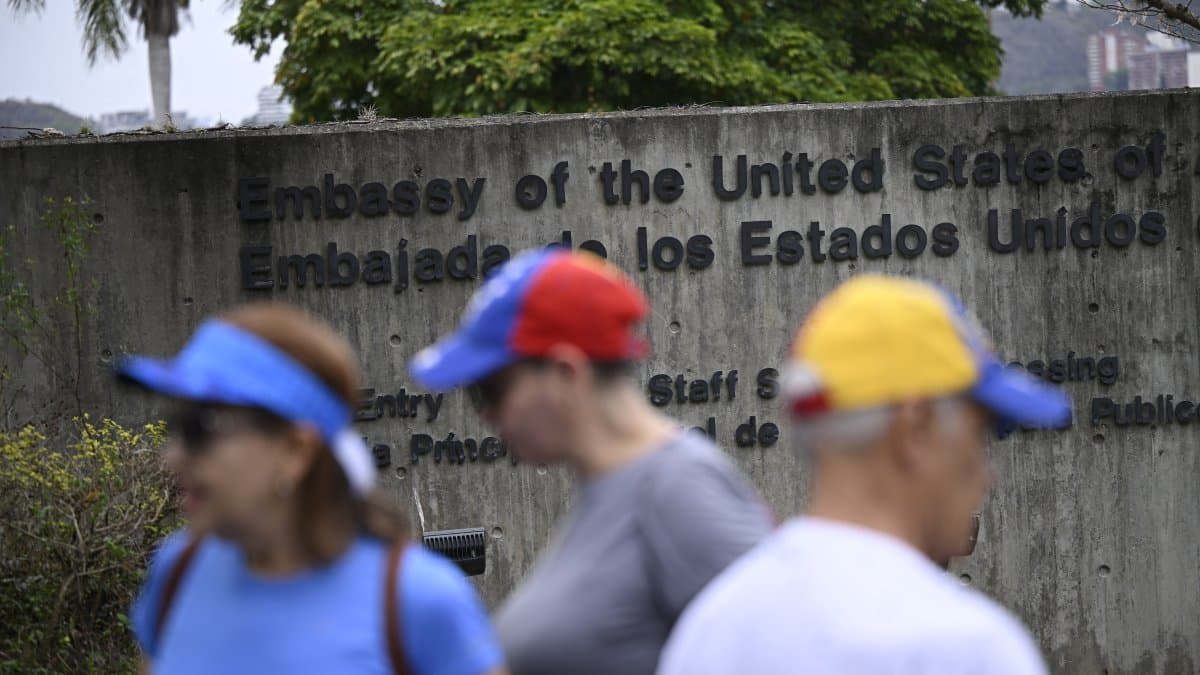

The U.S. State Department appears to be accelerating its strategy toward Venezuela. Michael G. Kozak, Assistant Secretary of State for Western Hemisphere Affairs, held a meeting with Dinorah Figuera, president of the National Assembly elected in 2015.
The main focus of the meeting was the discussion of concrete mechanisms to achieve an institutional solution to the crisis the country is going through. As reported by the U.S. government through a publication in X, the objective of the meeting was to establish "pathways towards a stable, orderly and consolidated democratic transition."
This rapprochement reaffirms Washington's recognition of the legitimacy of the 2015 Assembly as the last democratic instance in the country. Figuera, who exercises his functions from exile in Spain, is positioned as a key player in opposition efforts to maintain institutional continuity in the face of the dictatorship.
The end of the "belligerent rhetoric" and the shift towards solutions.
The U.S. administration appears to have left behind the stage of strident statements to focus on the execution of a pragmatic political agenda. Kozak was emphatic in pointing out that U.S. support is not just diplomatic, but strategic and geared toward tangible results.
"The United States unequivocally supports efforts to build a productive agenda focused on solutions and dialogue," the official said after the meeting. For the State Department, the current approach prioritizes the ability to build bridges over sterile confrontation.
In a direct message about the change of tone in foreign policy, Kozak stated: "The days of belligerent rhetoric are over. It is time to overcome differences and begin a new chapter for all Venezuelans."
Stabilization and the three phases of the recovery process.
The meeting takes place in a context where Kozak himself has reported progress before the U.S. Congress. According to his recent testimonies, the transition process in Venezuela has already passed a first critical stage.
Washington maintains that the stabilization phase has been completed, which now allows progress to be made toward the stages of economic recovery and political reconciliation. This three-phase plan seeks to ensure that the return to democracy is not ephemeral, but has solid institutional foundations.
The conversation with Figuera reinforces the intention to achieve a negotiated exit that includes conditions for free elections and the return of exiled political leaders, especially María Corina Machado. With this move, the United States remarks that the priority is an orderly transition that guarantees long-term stability in the region.
🛠 Do you think there is an error in this article?
Recommendations


LATEST