Trump expresses frustration over Iran talks, but does not define military action
On Feb. 19, the president set Tehran a deadline of approximately 10 to 15 days to move toward a deal.
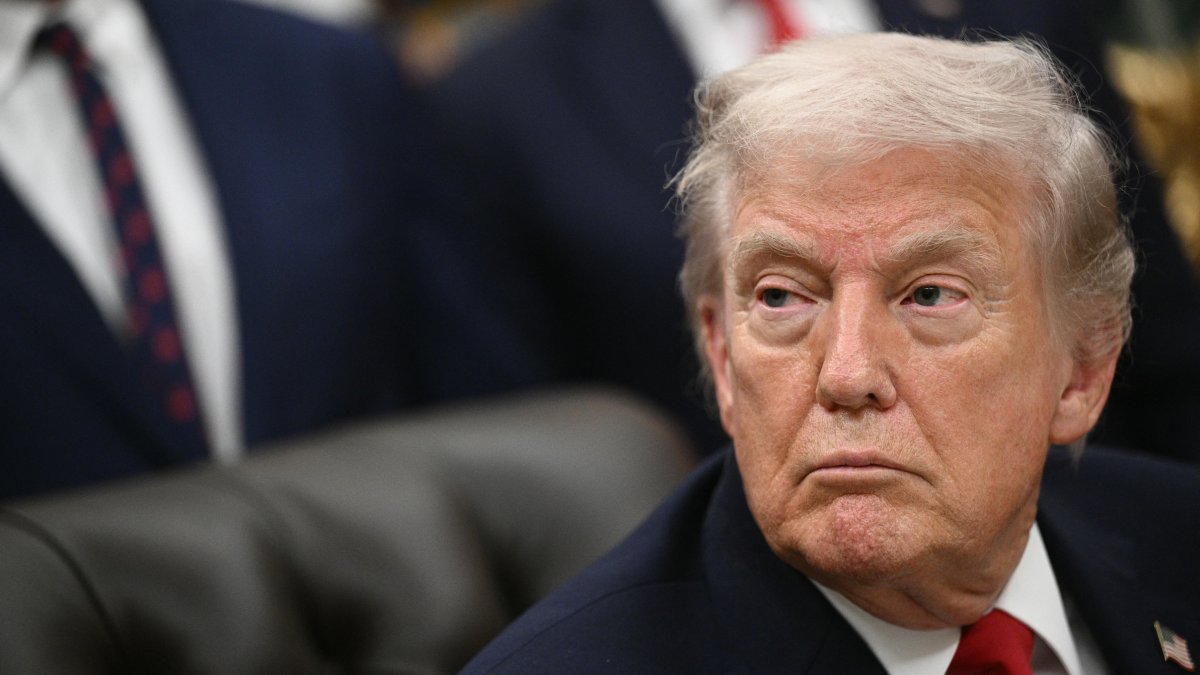
Donald Trump

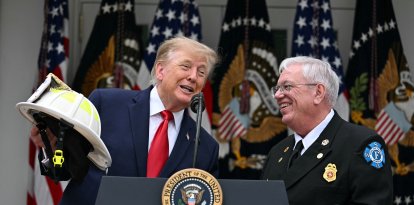
President Donald Trump affirmed Friday that he is not happy with the way Iran is conducting negotiations with the United States. Speaking to reporters, he maintained that Tehran has shown no willingness to offer what Washington deems necessary and advanced that new talks will be held in the coming hours.
"I'm not happy with the fact that they're not willing to give us what we have to have. So I'm not thrilled with that. We'll see what happens (...) We'll have some additional talks today. But, no, I'm not happy with the way they're going," the president declared.
Despite his dissatisfaction, Trump avoided anticipating conclusions and stressed that he will evaluate the next steps depending on how diplomatic contacts evolve.
His comments come amid growing anticipation of a possible escalation in the Middle East. The president confirmed that he has not yet made a final decision on a possible strike against Iran, an option that has been the subject of speculation in recent days.

Deadline and nuclear warning
The president said that although Iran has expressed interest in reaching an understanding, his government has yet to hear an explicit commitment that it will never develop a nuclear weapon. On different occasions he has warned that the absence of an agreement would entail serious consequences.
Risks and precedents
Trump acknowledged that any military action involves risks, including the possibility of a protracted conflict in the region. He indicated that in war scenarios there is always uncertainty about outcomes, both favorable and adverse.
The president further defended his administration's record vis-à-vis Iran. He recalled operations executed during his terms in office, including the one that resulted in the death of General Qassem Soleimani, head of the Quds Force of the Islamic Revolutionary Guard Corps. He also mentioned the so-called Operation Midnight Hammer carried out last summer, assuring that so far those decisions have produced positive results.

JNS
Iran has ‘10, 15 days, pretty much maximum’ to reach deal, Trump says
JNS (Jewish News Syndicate)
Rubio calls out Iran for unjust detentions
At the same time, Secretary of State Marco Rubio announced on X that he designated Iran as a "State Sponsor of Wrongful Detention." As he explained, the move is in response to what he described as decades of detentions of U.S. citizens and other nationalities by the Iranian regime for purposes of political pressure.
Rubio argued that Iran must end that practice and immediately release all Americans that remain unjustly detained.
LATEST