This is what will happen to federal civil servants and agencies during the Democrat-induced government shutdown
Essential services will continue, but administrative, statistical and research areas will slow or halt until there is a funding agreement.

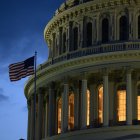
A janitorial staff member walks through the Rotunda of an empty Capitol before the shutdown

The federal government officially went into shutdown after the final deadline to reach a deal on Capitol Hill expired.The White House and Republican lawmakers branded the situation a "Democratic shutdown," blaming rival senators for blocking the legislative path that would have prevented it. Now, tens of thousands of workers and dozens of agencies enter a period of uncertainty, until a political solution is found.
What will happen in these hours?
In labor terms, hundreds of thousands of employees officially went on furlough without pay and others, considered essential to protect life and property, must continue to work on deferred pay until funding is restored. Technically, there are no automatic layoffs despite the shutdown.
According to a tally in the New York Times, the impact is clearly disparate by agency. The EPA foresees 13,432 suspensions on its 15,166 employees (89%), the Department of Education will face 2,117 suspensions of 2.447 employees (87%), in the Department of Commerce there will be 34,711 suspensions out of 42,984 civil servants (81%); in the Department of Labor the number of suspensions will be 9.775 out of 12,916 employees at the agency (76%); and, at the Department of State, there will be 16,651 suspensions out of its 26,995 civil servants (62%).
Likewise, according to the NYT, in the civilian force of the Department of Defense, suspensions will be massive: 334,904 employees will go on suspension out of the 741,477 total civil servants (45%). In Health and Human Services there will be 32,460 suspensions out of 79,717 (41%).
Least affected will be Homeland Security, which will have 14,184 suspensions out of 271,927 employees (5%) and Veterans Affairs, with 14,874 suspensions out of 461,499 (3%). This is because much of its functions are operational or funded by fees.

What will continue to operate?
Everything related to Social Security benefits, import control and tariff collection, FEMA disaster response, TSA airport security, essential immigration and customs processing, military and law enforcement operations. In aviation, air traffic controllers and critical personnel continue to keep the system up and running, with risk of delays if the government shutdown drags on.
What stops or slows down?
For now, the Census Bureau suspends monthly surveys and reports. In Commerce much of the research is slowed down. In Defense there will be, for the moment, no new contracts. At theDepartment of Labor will temporarily stop publishing employment data.
Also, Education stops new grant awards and its Office for Civil Rights will limit reviews and investigations.
The Justice Department will drastically reduce civil litigation (criminal litigation continues), the EPA pauses permits, regulations and grants, and limits federal toxic site remediation program (CERCLA) cleanups to imminent threat situations.
In health, the NIH will not award new grants or admit new patients barring exceptions. In addition, CDC will cut some of its public guidance and the FDA maintains core missions (alerts, recalls, import inspections) but postpones routine inspections and approvals.
Finally, the State Department will send most of its staff on leave in the U.S., with embassies and consulates open.
As long as the shutdown remains, the categorical is that essential services will continue, but administrative, statistical and research areas will slow down or stop until there is a funding agreement.
LATEST