Cuomo's strategy after Adams' exit: force "head-to-head" with Mamdani and ignore Republican Curtis Sliwa
At this point, Cuomo is not only competing against the immense favoritism of his socialist opponent and the obstinacy of the GOP candidate, but also against the clock.

Andrew Cuomo and Zohran Mamdani

With Mayor Eric Adams out of the race, Andrew Cuomo officially remained the only centrist Democrat in the New York mayoral race. His bet, according to specialists in New York internal politics, is clear: reduce the election to a dispute between him and the socialist candidate Zohran Mamdani and take the focus off Republican Curtis Sliwa in the five weeks that remain.
According to a report by Politico, from Cuomo's entourage, they celebrate that, after Adams' resignation, more funding began to come in, and some of the constituencies the two shared—moderate voters, Black and Jewish suburbanites, and billionaire donors worried about a shift to the left—began to realign.
Former governor David Paterson summed it up this way: “Money will be following him. He’s a terrific organizer, and I think he can get a lot of people to come back.”

For that narrative to work, various specialists explained to Politico, Cuomo's team needs the public debate not to revolve around whether or not Republican Sliwa will drop out of the race. “Cuomo needs every day he can get to be a one-on-one with Mamdani,” consultant Chris Coffey said. He added, “The more focus that’s put on whether Sliwa will drop out, the more it freezes the race, freezes money, and freezes the news cycle.”
As this strategy flows into the Cuomo camp, the pressure on Sliwa is growing. For example, the Daily News called for him to get out of the race a day after Adams' withdrawal, and his historic ally, John Catsimatidis, suggested he should "reconsider" his continuance.
However, the Cuomo team decided to stop harping on that front and talk to voters as if the decision was already between the extremist Mamdani and the former New York governor.
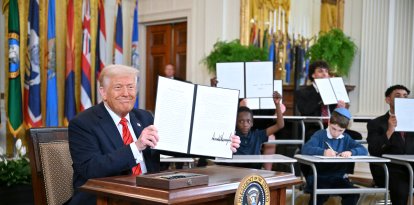
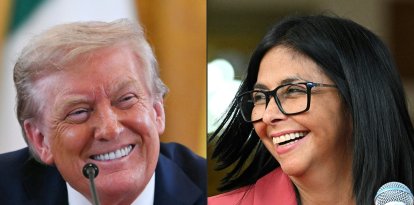
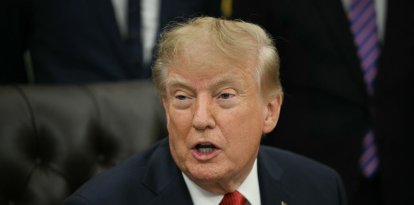
The conversation was surprisingly joined by President Donald Trump, who defined Sliwa as a "not exactly prime-time" candidate and joked that he wanted to bring "thousands of cats" to the mayor's residence. Then, on Truth Social, he warned that a Mamdani win would hurt the city and threatened to withhold federal funds should it happen.

For Cuomo, that noise backs up his argument that a Mamdani administration would impose a sky-high fiscal cost on New York. For other constituents, however, presidential interference is a deterrent.
The data, for now, do not support a favorable swing to Cuomo. A Marist poll already measuring the scenario without Adams narrowed Cuomo's lead over Mamdani from 21 to 16 points, with Sliwa still taking 18% of the electorate. Another poll (Fox News/Beacon/Shaw) shows half of likely voters with a favorable opinion of Mamdani (only 4% say they don't know him), while Cuomo registers 45% approval and 1% unfamiliar.
The energy of the electorate also favors the socialist assemblyman: more than 80% of those who support him have already decided to vote, compared to 65% in the case of Cuomo.
On the political front, Al Sharpton, a civil rights leader and Democratic analyst who knows Cuomo, was skeptical, telling Politico, "I don’t see a big shift to Andrew ... But it’s Andrew’s job to prove us wrong."
Meanwhile, strategist J. C. Polanco summarized the dilemma as follows: "Adams dropping out changed the psychology of the race with some movement, and that may bring in money and consolidate support ... But Mr. Sliwa is still the elephant in the room."
Meanwhile, Cuomo continues to set his contrast with Mamdani: he portrays him as an ideological and financial risk to the city and seeks to transform that clash into enthusiasm. Mamdani hit back by again pointing to cuts to a state housing program during Cuomo's tenure as governor, an accusation the former governor's team denies.
Politics
The chairman of the New York Democratic Party refuses to endorse Zohran Mamdani
Joaquín Núñez
In parallel, Cuomo is trying to attract endorsements that were floating in Adams' space: community leaders (such as a group of Jewish leaders in Crown Heights) and unions, especially police unions.
The success of the strategy will depend on whether Cuomo gets the coverage, money, and conversations in the city to revolve around the "face-to-face" he proposes with Mamdani and, at the same time, whether he manages to minimize Sliwa without the issue—his tenure or not—freezing the race again. At this point, Cuomo is not only competing against the immense favoritism of his socialist opponent and the obstinacy of Republican Sliwa, but also against the clock, which is ticking as the day to go to the polls approaches.
LATEST