Trump Administration asks Supreme Court to partially allow restrictions on birthright citizenship
So far, three federal appeals courts have rejected the Republican administration's requests.

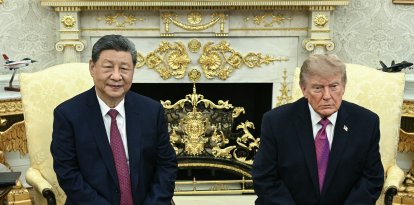
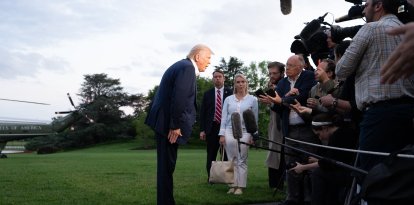
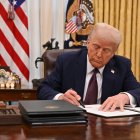
US President Donald Trump in Washington, DC. (Photo by Mandel NGAN / AFP)

President Donald Trump's Administration on Thursday asked the US Supreme Court to intervene to limit the scope of three lower court orders blocking his executive order aimed at restricting birthright citizenship.
In a series of emergency filings, lawyers for the Republican administration argued that lower courts in Maryland, Massachusetts and Washington exceeded their authority in issuing nationwide injunctions preventing implementation of the executive order signed on Jan. 20.
Politics
Trump announces his first measure: ending citizenship for children of illegal immigrants
Emmanuel Alejandro Rondón
This order seeks to eliminate automatic citizenship for children of undocumented immigrants born on US soil after Feb. 19 and prohibits federal agencies from recognizing or issuing documents affirming the citizenship of these individuals.
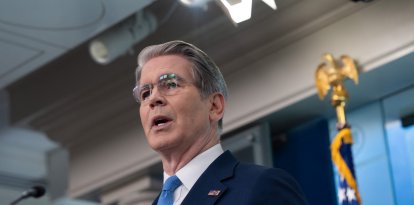
For her part, Acting Attorney General of the United States Sarah Harris explained that “the government comes to this Court with a ‘modest’ request: while the parties litigate weighty merits questions, the Court should ‘restrict the scope’ of multiple preliminary injunctions that ‘purpor[t]' to cover every person in the country,’ limiting those injunctions to parties actually within the courts’ power."
Politics
Appeals court refuses to reinstate Trump's birthright citizenship order
Emmanuel Alejandro Rondón
According to the advocates for the Administration, "universal injunctions" imposed by the lower courts have reached "epidemic proportions" since the beginning of the Republican Administration, and they asked the Supreme Court to resolve the legality of such broad restrictions.
Strong opposition
A coalition of 22 Democratic-led states, along with seven individual plaintiffs and two immigrant rights advocacy groups, have challenged the measure, arguing that it violates Amendment 14 of the Constitution, which states that "all persons born or naturalized in the United States, and subject to the jurisdiction thereof, are citizens of the United States."
Politics
Second federal judge blocks Trump's executive order against birthright citizenship
Agustina Blanco
So far, three federal appeals courts have rejected the Administration's requests to stay the injunctions, and no lower court has upheld the legality of the order.
The executive order signed by Trump
LATEST