The real danger of artificial intelligence is not extinction, but the abandonment of independent thought
Digital immediacy offers a solution to almost any everyday mental obstacle, making it tempting to avoid the effort required to learn from scratch.
Published
The public debate surrounding artificial intelligence often gravitates toward catastrophic scenarios straight out of science fiction: the possibility that an out-of-control superintelligence could threaten human survival. We've seen evidence of this this week.
However, while political and media attention focuses on hypotheses about a distant future, a much quieter and more profound transformation is unfolding in the present : the progressive and voluntary delegation of humanity's intellectual—and even spiritual— faculties to automated systems.
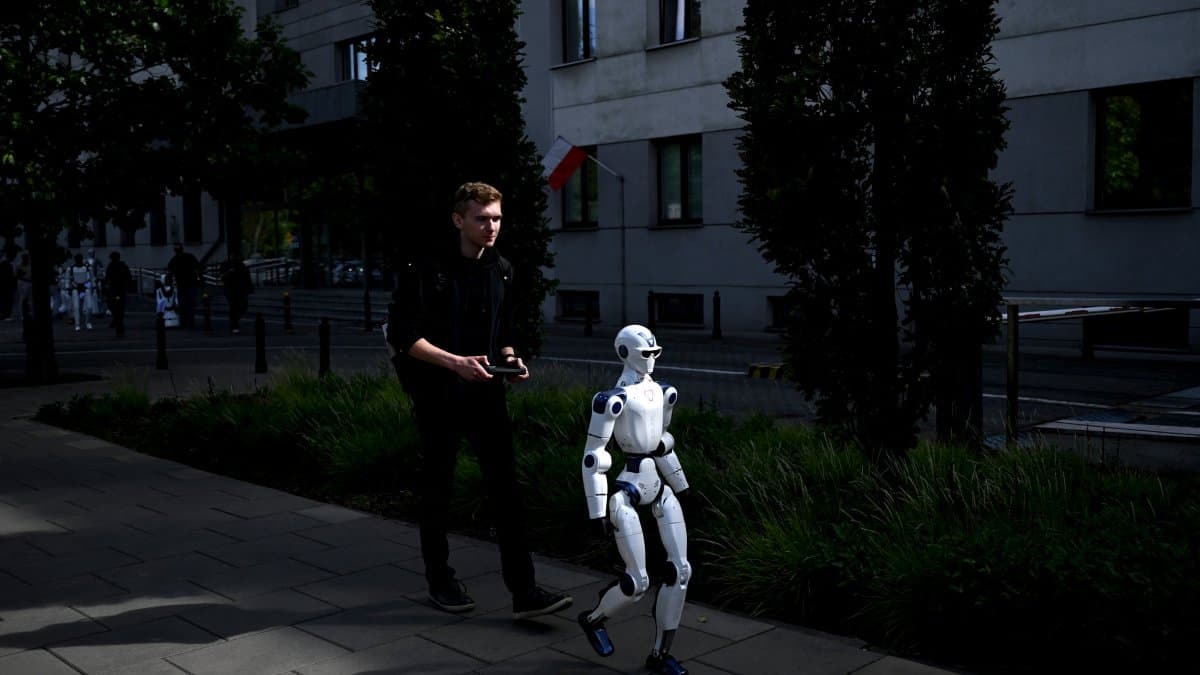
Today, it is surprisingly easy to transfer tasks to a computer that until recently required the exclusive use of the mind: writing essays, structuring arguments, summarizing dense texts, translating languages, writing code, or designing presentations.
While this technological leap yields undeniable gains in productivity and operational efficiency, it also raises a fundamental question about the preservation of the cognitive and human skills that we cease to exercise purely for the sake of convenience.
The illusion of efficiency and the erosion of analytical rigor
Recent research has begun to measure the consequences of this emerging dependence. A study conducted jointly by Microsoft Research and Carnegie Mellon University with a sample size of 319 identified a direct association between greater trust in artificial intelligence and a reduction in the effort required for critical thinking.
Participants described how their mental load shifted away from actively formulating ideas toward merely verifying and organizing the responses generated by algorithms.
This dynamic poses a latent risk to education and professional development. When intellectual work is replaced by the acceptance of a result produced in seconds, the surface of the task may appear flawless, but the mental process underlying true understanding has been omitted.
The fact is that rigorous thinking is not a product that can be generated instantly. It is fundamentally a habit that requires asking complex questions, confronting contradictory sources, and sustaining focus on solving a problem.
The replacement of the effort that builds discernment
Processes such as thoughtful writing, thorough research without shortcuts, or focused reading of lengthy works are not merely mechanical procedures. They represent the cognitive gym through which individuals learn to articulate concepts, detect logical gaps, and develop independent judgment.
By constantly relying on automated summaries and concise summaries, the patience and discipline needed to tackle the complexity of reality are eroded.
Digital immediacy offers a solution to nearly any everyday mental obstacle, making it tempting to avoid the effort required to learn from scratch. However, when the discomfort of thinking is systematically delegated to a machine, there is a risk of turning the atrophy of discernment into a permanent habit.
A society that renounces the difficulty of reasoning gradually loses the ability to evaluate information autonomously, becoming highly vulnerable to bias and manipulation.
The illusion of digital assistance and the importance of independent judgment
This phenomenon transcends the productive sphere and extends into the emotional and social realms. The remarkable rise of applications designed to offer verbal and emotional interaction through digital agents raises questions about tolerance in civic life.
While an artificial intelligence system is programmed to respond without frustration, adapt to the user's preferences, and be available around the clock, authentic human relationships require patience, negotiation, and the acceptance of people with conflicting views and needs.
The replacement of human interaction with algorithm-based interactions tailored to each individual threatens to weaken the social fabric.
The real challenge posed by artificial intelligence is not to succumb to technophobia nor to hinder technological innovation and the obvious benefits it brings to scientific and medical research. The primary goal is to cultivate individual discipline that allows us to use these tools without surrendering our voice, our capacity for judgment, or our independence of thought.
Preserving spaces where mental effort is mandatory is essential to ensuring that technology remains a servant of human progress and not the instrument of its own destruction.

Technology
Republican leaders take a stand on artificial intelligence: They demand security oversight without giving China an advantage
Andrés Ignacio Henríquez
Technology
Sam Altman offers to protect US power grid with AI, months after his own company's agents carried out unprecedented hack
Emmanuel Alejandro Rondón
🛠 Do you think there is an error in this article?
Recommendations








LATEST