Complicit silence: How international double standards keep Myanmar’s dictatorship alive
Since the coup that overthrew the country’s fledgling democratic experiment, the military regime has perfected the art of pretense, formally reorganizing itself under the guise of a so-called “provisional civilian government” led by dictator Min Aung Hlaing.
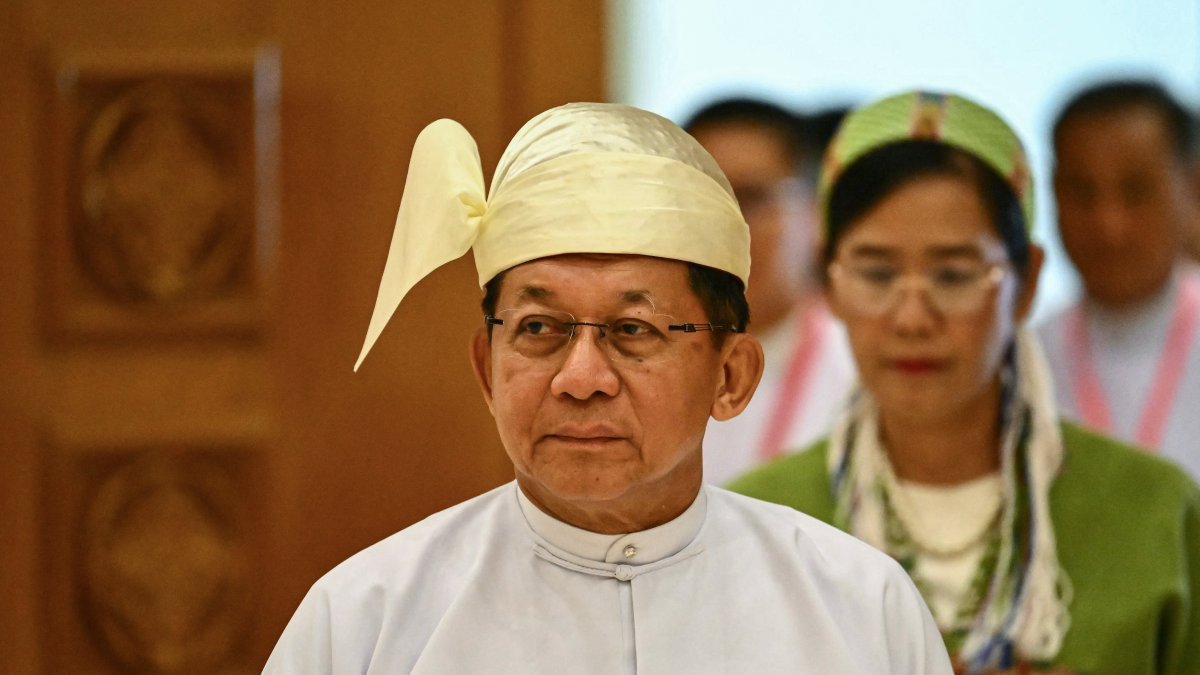
Former military chief and president of Myanmar, Min Aung Hlaing
The attention that the international community and the mainstream media pay to hotspots of violence around the world reveals an alarming asymmetry and a systemic double standard. It is imperative to question why global public opinion is obsessed with meticulously judging every casualty in scenarios such as that of the Middle East, where a sovereign and democratic state exercises its right to self-defense after being attacked—demanding standards that would never be required of any other nation at war—while the suffering of millions of people in other parts of the world is systematically ignored.
If one claims to have a genuine concern about wars but only speaks of them when they involve Israel, a selective fixation becomes evident. If the tragedies in Syria, Yemen, or the Congo are never mentioned, nor is the actual persecution of minorities under totalitarian regimes, the driving force behind that outrage is not human rights. This glaring disparity demonstrates that, if media coverage were not conditioned by antisemitic prejudices, the vast majority of current conflicts would receive fair attention, exposing a hypocrisy in which the true horror matters to no one.
This alarming selectivity of global outrage is not a purely theoretical debate; it has deadly consequences on the ground, acting as the perfect smokescreen for the planet’s most brutal tyrannies. While the world’s attention remains hijacked by this single-issue fixation, in Southeast Asia, the military junta of Myanmar operates on the media’s periphery, which guarantees it absolute impunity.
Since the coup that overthrew the country’s fledgling democratic experiment, the military regime has perfected the art of pretense, formally reorganizing itself under the guise of a so-called “provisional civilian government” led by the dictator Min Aung Hlaing. However, behind this performative facelift, reality belies any transition toward peace. An exhaustive investigation by The Irrawaddy reveals that, in just two months since this cosmetic retreat, junta forces have carried out at least nine massacres—yes, nine—claiming the lives of more than a hundred civilians.
This resurgence of violence demonstrates that the name change is nothing more than a crude diplomatic tactic to break its international isolation while a scorched-earth campaign intensifies, unfolding amid the complicit silence of Western foreign ministries. To understand the root of this barbarity, which the public is unaware of, one must analyze the conflict through its historical context.
The Myanmar Army (the Tatmadaw) operates under a counterinsurgency doctrine developed in the 1960s known as the “Four Cuts” strategy. This military doctrine does not seek to defeat the enemy on the battlefield, but rather to achieve the absolute submission of the civilian population through the systematic destruction of their means of subsistence: food, funding, intelligence, and recruitment channels. Today’s massive aerial bombardments and summary executions are the technological evolution of that same policy that historically decimated ethnic minorities along the borders and is now being ruthlessly applied in the heart of the country.
According to ongoing monitoring by the civil society organization Progressive Voice, airstrikes have become a daily occurrence under the regime, with hundreds of incidents recorded in which more than 64% of the targets are entirely civilian communities. The massacres documented in regions such as Magwe and Sagaing, where military helicopters bombed traditional New Year’s community celebrations, are not collateral damage; they are the deliberate implementation of the “Four Cuts” strategy to sow terror and undermine social support for the People’s Defense Forces (PDF).
This escalation of violence exposes the utter falsity of the junta’s “peace offers,” forming the first major line of analysis of the current crisis. Dictator Min Aung Hlaing has attempted to present himself to the international community as a pragmatic mediator, issuing negotiation ultimatums to the Ethnic Armed Organizations (EAO) while simultaneously demanding the unconditional surrender of the armed wing of the legitimate National Unity Government (NUG) in exile. This duality is a rhetorical trap. The reality of the ground incursions reveals that troops from light infantry divisions continue to execute prisoners, using villagers as human shields, and causing the forced displacement of tens of thousands of people.
Satellite images processed by the fire monitoring system of NASA confirm that, while regime spokespeople speak of reconciliation in the state media of neighboring countries, their battalions are reducing thousands of homes to ashes in the strongholds of the resistance. The "rebranding" does not seek peace; it seeks to buy time, replenish its ranks depleted by desertion, and legitimize fraudulent elections designed to perpetuate the military regime.
There is a second dimension stemming from the conflict’s shift toward an extremely dangerous multipolar scenario, where civilian suffering no longer stems from a single actor. The collapse of the junta’s territorial control has allowed powerful ethnic guerrilla groups to advance, groups that have also committed atrocities, particularly in the state of Rakhine.
Recent investigations published by the Human Rights Watch have brought to light disturbing forensic evidence, including piles of skeletal remains with bullet holes in the skulls, demonstrating how the Rohingya minority has been caught in an atrocious crossfire. Thus, while the central army maintains a criminal blockade of humanitarian aid that condemns millions to starvation, the insurgent forces of the Arakan Army have perpetrated atrocious massacres against unarmed civilians and entire families fleeing under white flags. The current situation in Myanmar is no longer merely a war of liberation against tyranny; it is a balkanized landscape where the most vulnerable populations face dynamics of persecution and cross-ethnic cleansing.
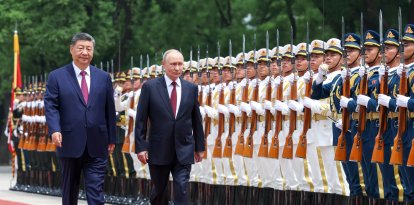
Finally, it is necessary to once again emphasize the complicity and paralysis of international geopolitics. Myanmar has become what local analysts call a “virtual client state” of regional powers that prioritize commercial stability over human lives. Neighboring countries such as China and India not only refrain from formally condemning the massacres, but also coordinate border infrastructure, auction off natural resources such as jade, and host the military dictator himself on state visits.
Given this situation, it is not enough for Western organizations to issue statements of condemnation while the junta’s fighter jets continue to take off. The only real way to stop the bloodshed and dismantle this regime is to impose binding global sanctions that cut off the logistical flow of aviation fuel at the source and the supply of foreign currency that finances the armaments. As long as the international community continues to turn a blind eye to certain conflicts and ignores humanitarian crises of this magnitude, changes in government in Naypyidaw will remain what they have always been: interchangeable masks of the same machinery of impunity and death.
LATEST