Iran rejects US offer of nuclear talks in testy UN Security Council meeting
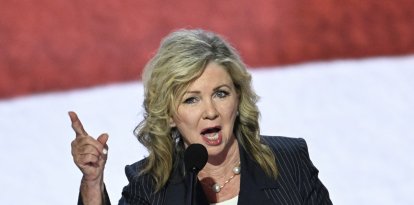
“There can be no enrichment inside of Iran,” U.S. diplomat Morgan Ortagus said. “That remains our principle.”
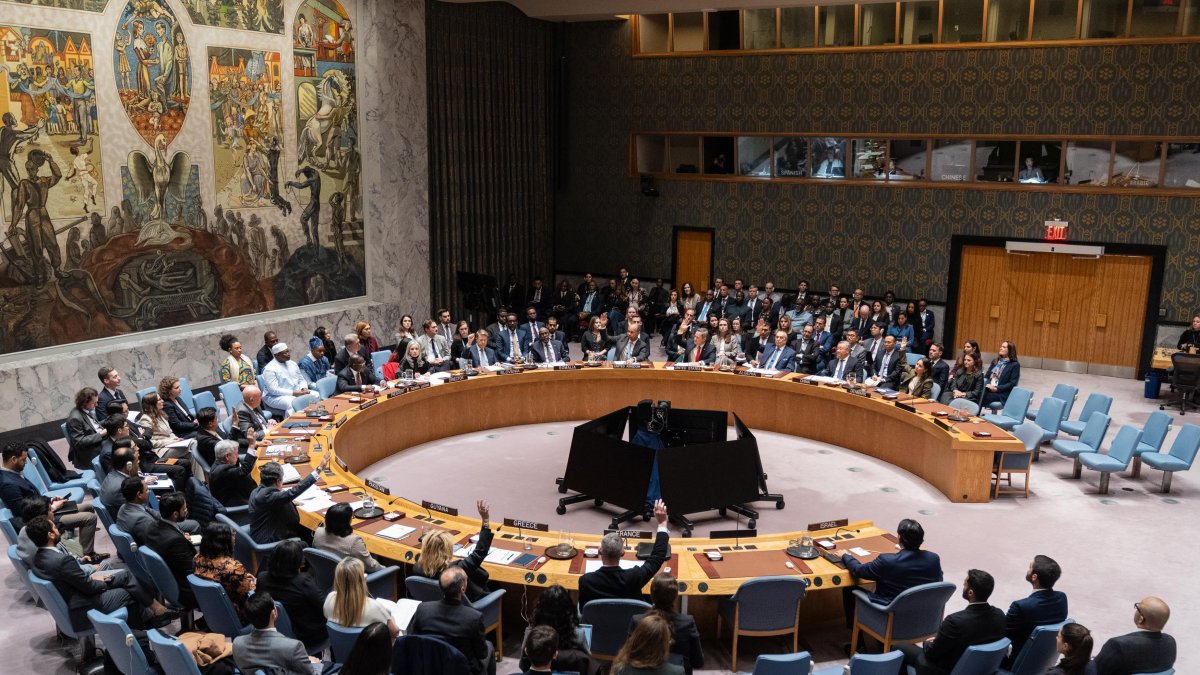
UN Security Council archive image

The United States remains open to nuclear pact talks with Iran, which again rejected Washington’s advances during a United Nations Security Council meeting on Tuesday.
The session focused on implementing the Joint Comprehensive Plan of Action, or JCPOA, of 2015 which outlined Iran’s commitments to limit its nuclear program in exchange for sanctions relief.
The permanent Security Council members—United States, United Kingdom, France, China and Russia—signed the agreement, as did Germany and the European Union.
Tuesday marked the first council gathering on the nuclear issue since sanctions were reimposed on the Islamic Republic through a so-called “snapback” mechanism, which the United Kingdom, France and Germany—known as the E3—triggered.
Sanctions were reimposed due to Iranian noncompliance with verification measures and limits on uranium enrichment levels.
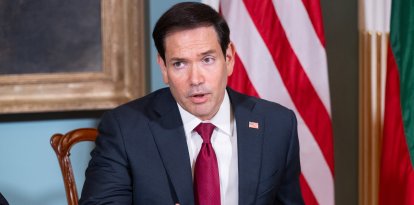
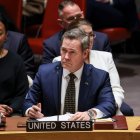
“The United States remains available for formal talks with Iran but only if Tehran is prepared for direct and meaningful dialogue,” Morgan Ortagus, Washington’s deputy Middle East envoy, told the council.
“We have been clear, however, about certain expectations for any arrangement,” Ortagus said. “Foremost, there can be no enrichment inside of Iran, and that remains our principle.”
World
Ukraine-Russia war: What are the new 20 points of the peace plan, according to Zelensky?
Santiago Ospital
Citing its membership in the Treaty on the Non-Proliferation of Nuclear Weapons, Tehran said that American insistence on a zero uranium enrichment policy was a non-starter in talks.
“We appreciate any fair and meaningful negotiation, but insisting on zero enrichment policy, it is contrary to our rights as a member of the NPT, and it means that they are not pursuing a fair negotiation,” Amir Saeid Iravani, Iran’s U.N. envoy, said.
“They want to dictate their predetermined intention on Iran,” he added. “Iran will not bow down to any pressure and intimidation.”
Washington, which withdrew from the JCPOA in 2018 during U.S. President Donald Trump’s first term, held five rounds of negotiations with Iran over the summer. Those talks did not yield an agreement, and a 60-day window for resolution, which Trump had set to expire in June, expired.
Israel struck Iranian targets, including nuclear facilities, the next day, triggering a 12-day war, during which the United States also bombed Iranian nuclear facilities.
“The lack of implementation by Iran of its international obligations related to its nuclear program constitute a grave threat to international peace and security,” said Jay Dharmadhikari, France’s deputy U.N. ambassador.
Dharmadhikari said that Iran’s uranium stockpile “would be of a sufficient quantity to produce 10 nuclear explosive devices” if increased slightly to military-grade levels.
Most signatories to the JCPOA say that the pact remains in force despite the diplomatic degradation this year. Moscow says the accord is a non-entity.
Vassily Nebenzia, Russia’s U.N. ambassador, lashed out at Slovenia, the current council president, for even scheduling Tuesday’s meeting. He said that the country did not “find the courage to impartially uphold your obligation not to act at the behest of those who insisted on holding a Security Council meeting on a non-existent agenda item.”
Nebenzia said that the EU, which coordinates the JCPOA committee, should not be allowed to brief the council, because the pact “does not exist anymore.”
Iravani agreed, telling the council that the JCPOA, which was put into force through Security Council Resolution 2231, expired on Oct. 18, as the accord states.
The E3 triggered the snapback provision shortly before the expiration date.
The Iranian envoy said that the accord “ceased to have any legal effect or operative mandate” and that there is “no mandate for the secretary-general to submit any report and no mandate for the council to hold discussions on it.”
He said that those who think the pact remains valid are engaging in a “calculated distortion” of the resolution.
Hedda Samson, deputy EU head of delegation, said that “the snapback of sanctions and nuclear restrictions must not be the end of diplomacy.”
“Quite the opposite,” Samson said. She urged Iran to give the International Atomic Energy Agency watchdog verifiable information on its nuclear program.
© JNS
LATEST