Gaza’s disarmament headache
The coastal enclave does not exist in a vacuum; it is one node, albeit a vital one, in a network of extremism and terrorism that runs across the region.
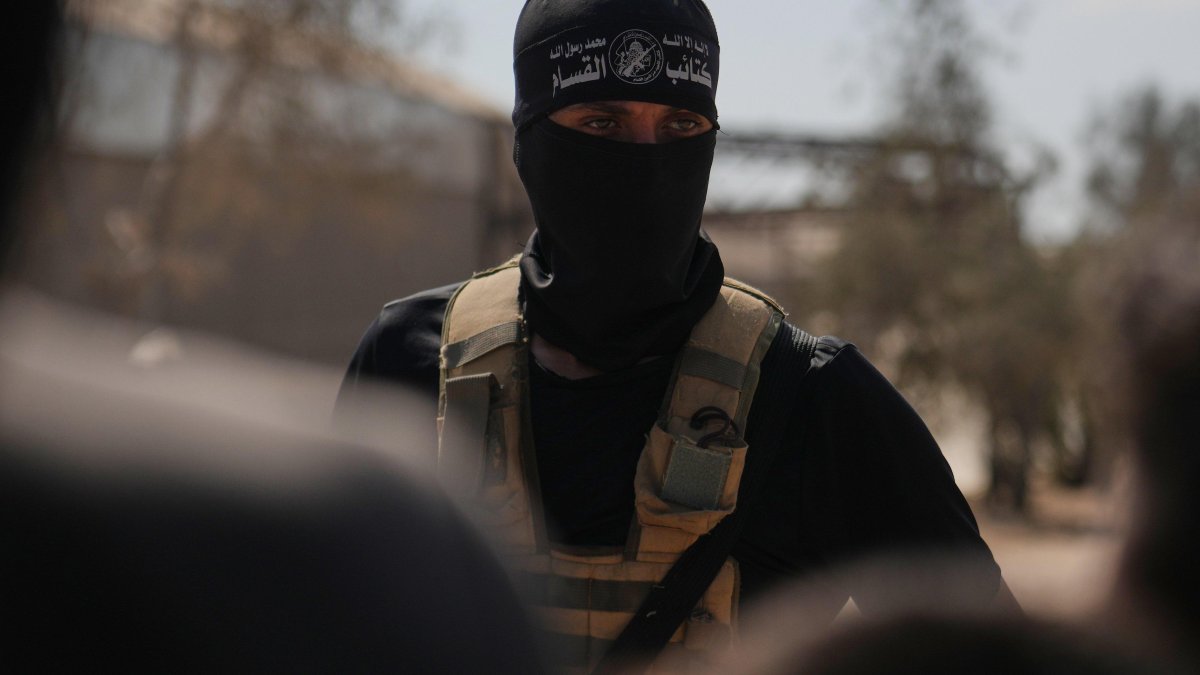
Hamas terrorist south of Gaza
Amid the blood-drenched madness of Hamas’s pogrom in southern Israel on Oct. 7, 2023, there was yet method.
The abduction of more than 250 Israelis and foreign residents—seized as houses were set on fire and women were subjected to brutal rape—was a criminal masterstroke. The presence of the hostages in Gaza, the long weeks and months of uncertainty over their fates, the periodic release of videos of emaciated Hamas captives pleading to be released—all played havoc with the Israeli psyche. On the ground in the Strip, fear that the hostages might be executed meant that the Israel Defense Forces, for all their successes, was not able to inflict the irreversible defeat on Hamas that was warranted.
Hamas is now reaping the benefits of that strategy. Having come out of the war badly damaged but still intact, the Islamist terror organization deftly grasped the key aspects of the immediate post-war situation that crystallized following the U.S.-brokered ceasefire in October. Hamas understood that it was still the unrivaled government in the Strip. And Hamas understood that its fighters still had their weapons. On both those points, it would not concede, for doing so would amount to bowing down to the “occupation.”
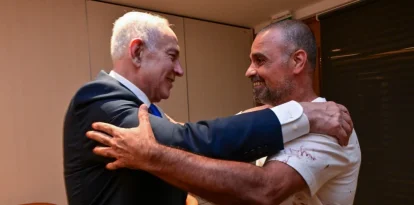
This week’s meeting at the White House between U.S. President Donald Trump and Israeli Prime Minister Benjamin Netanyahu was thin on publicly released details on both subjects—the enduring threat posed by Iran and the next phases of securing peace in Gaza—the two leaders discussed. Nevertheless, the tight-lipped atmosphere around their talks suggested that they were not on the same page on either issue.
Gaza and Iran are, of course, closely intertwined, not least because the Islamic Republic has been Hamas’s main backer and because the regime in Tehran is pledged to Israel’s destruction. Even if Iran were not a factor, the current direction of the peace and reconstruction process in Gaza would still be a source of deep anxiety for Israel.
"If Hamas continues as the main political and military force inside Gaza, we may as well forget about deradicalization."
For the Jewish state to enjoy enduring security along its border with Gaza, two measures are non-negotiable. First, Hamas and the other armed Palestinian factions must be comprehensively and verifiably disarmed. Second, future terrorist onslaughts cannot be prevented by security arrangements alone; a program of deradicalization of the population and government alike is urgent and necessary. Otherwise, the vision of Gaza outlined in the first of Trump’s 20-point peace plan for Gaza—a “deradicalized, terror-free zone that does not pose a threat to its neighbors”—will remain a pipe dream.
Reporting of the closely guarded U.S. plans on disarmament has been patchy at best. The suggestion presently doing the rounds is that Hamas should be allowed to keep those weapons that do not pose a threat to Israel. It is not clear which weapons would fall into this category, with the common assumption that it is small arms that are being referred to.
Allowing Hamas to retain its pistols, its AK-47s and its drones does not only pose a threat to Israel, as has been demonstrated on numerous occasions before and after Oct. 7. It poses a threat to those Palestinians inside Gaza opposed to Hamas, who were the first targets of its “Arrow” internal security force after hostilities ended. That arsenal also ensures the survival of Hamas as a distinct group that can consolidate and keep its hold on power over the coming years, despite the various pledges during the war from Washington, Paris and other capitals that Hamas should not and cannot be a partner in the post-war governance of Gaza.
If the terror organization continues as the main political and military force inside Gaza, we may as well forget about deradicalization—a cumbersome word that essentially means rooting out Islamist ideology, glorification of jihad and the kind of genocidal antisemitism that drove the Oct. 7 atrocities. Many, if not most, of the Hamas terrorists who invaded the Jewish state on that black day were children during the previous two decades. They will have been nurtured on a diet of hatred throughout that time, indoctrinated with monstrous caricatures of Jews at home, at school and on television, watching a Hamas version of “Sesame Street” in Arabic that featured an oversized talking mouse named Farfour who would denounce Jews and Israelis, and exhort his audience to “Kill! Kill! Kill!”


Some argue that Israel’s most realistic option is to quarantine the coastal enclave. That can be achieved through the creation of an impenetrable closed military zone around its borders, as well as by prohibiting the entry of Palestinian residents of Gaza into Israel.
The risk with that approach, however, is its shortsightedness. Gaza does not exist in a vacuum; it is one node, albeit a vital one, in a network of extremism and terrorism that runs across the region. That reality is graphically illustrated by the fact that the war against Hamas in Gaza was also a war against Hezbollah in Lebanon, the Houthis in Yemen, Iran-aligned militias in Iraq and the Iranian regime itself. As long as Hamas rules in Gaza, it can be a participant in a future multifront war.
Moreover, the absence of sustained fighting in Gaza has provided Hamas with an opportunity to solidify its rule during the reconstruction process. One of the many disappointing features of the U.S.-led Board of Peace’s nascent transitional government is the prominence it gives to senior representatives of Qatar and Turkey. Both countries promote antisemitism as effectively a state doctrine, both lionize Hamas, and both are experiencing a boost in influence in tandem with Iran’s relative decline as a regional power. With Qatar and Turkey in the driving seat, Hamas has even less incentive to disarm. As for deradicalization, how could that process even get off the ground when two of the Board of Peace’s leading members actively promote the same poisonous doctrines?
The obvious answer here—that the IDF should be permitted to complete the job it started in the wake of the Hamas massacre—is not the easy one. Trump has hinted several times that he may give the green light to such an operation if Hamas fails to comply with the demands of the ceasefire, but his mercurial nature and transactional approach to diplomacy mean that it would be foolish to invest such comments with any lasting value.
If Israel does launch a final operation against Hamas because its refusal to disarm left the Jewish state with no choice but to “dismantle it and all of its capabilities,” as Israeli Defense Minister Israel Katz put it just last week, it may find itself doing so alone. And that might be a necessary price to pay.
© JNS
LATEST