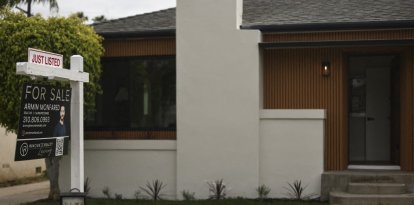
Between the war with Iran and inflation, US mortgage rates climb back above 7%
The combination of inflation and Fed rate hikes dealt the final blow to a market that was already stagnant. Sales of existing homes fell 2% in August compared to July, hitting their lowest level since June of last year, according to the National Association of Realtors.
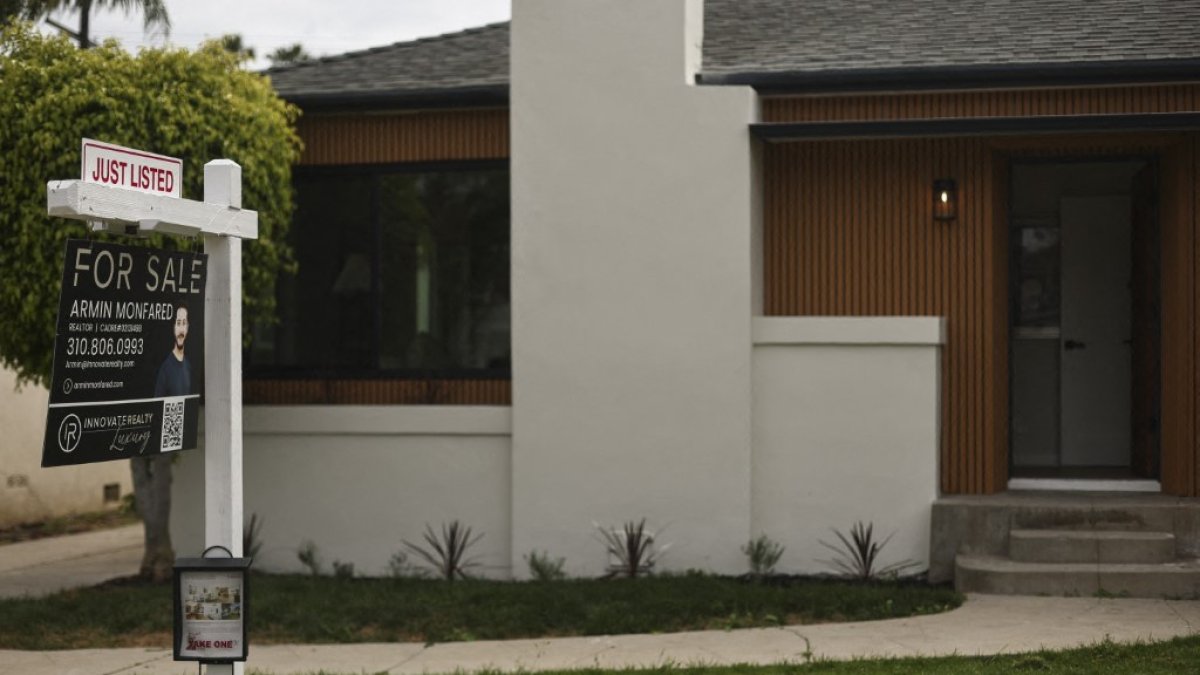
House for sale in Los Angeles, California

The U.S. housing market, which has been struggling for months, took another hit this week after mortgage rates surpassed the 7% threshold, something that hadn't happened since January 2025.
The average rate on a 30-year fixed-rate mortgage, the most common loan among U.S. homebuyers, rose to 7.03% from 6.3% a year ago, according to The New York Times, which cited data from the lending giant Freddie Mac.
The spike comes at a bad time for the industry. By late February, rates had fallen below 6%, and for a while it seemed that the market was beginning to recover after a long period of stagnation. That improvement was cut short as soon as the United States and Israel launched their first attacks against Iran on February 28, and since then, rates have not stopped rising.
Stijn Van Nieuwerburgh, a professor of finance at Columbia Business School, described the impact to the NYT: "A move from 6 to 7 is a big change, and it will further dampen an already weak housing market."
The war isn't the only factor behind the price increase. The conflict reduced oil shipments from the Persian Gulf, driving up the cost of gasoline, diesel, and heating oil, and economists fear that this increase will eventually spill over into the rest of the economy. That pressure is already being felt in the Treasury bond market, the basis for mortgage rates: the yield on the 10-year bond exceeded 5%, a level not seen since before the 2008 financial crisis. Added to this is inflation that refuses to come down, 3.4% year-over-year in August, which led the Federal Reserve to raise interest rates this month.
The combination of inflation and rising rates dealt a final blow to a market that was already completely stagnant. Existing-home sales fell 2% in August compared to July, hitting their lowest level since June of last year, according to the National Association of Realtors. Prices, meanwhile, continued to rise, up 1.5% year-over-year in June, up from 1.2% the previous month, according to the real estate data firm Cotality.
"Nobody can afford to buy a house anymore at these high prices and at these higher mortgage rates," Van Nieuwerburgh, who described the market as virtually paralyzed by rising costs, said.
Politics
El Congreso envía a Trump la mayor ley de vivienda asequible en décadas: esto es lo que cambia para los compradores y para Wall Street
Emmanuel Alejandro Rondón
But other factors also explain the stagnation, particularly the contrast with the market situation five years ago. In January 2021, mortgage rates fell as low as 2.65%, triggering a massive surge in home purchases, sending prices soaring, and sparking bidding wars to the point that some sales became de facto auctions.
However, when rates began to rise again a year later, aligning more closely with market reality, sales entered a period of stagnation, with many homeowners choosing not to move rather than lose those ultra-low rates that no longer exist and are unlikely to return in the short or medium term.
This market situation is causing developers and builders to put their projects on hold amid uncertainty about weak sales. Bill Owens, president of the National Association of Home Builders, said in a statement quoted by the NYT that "Higher mortgage rates, rising construction financing costs and affordability challenges continue to weigh on the market and limit momentum for new-home construction."
Although the situation is complex, some analysts foresee scenarios for a recovery, such as Eric Orenstein, senior director at Fitch Ratings, who expects home sales and mortgage refinancing to continue slowing for the rest of the year but believes the market will eventually begin to thaw when homeowners are forced to move due to circumstances beyond their control, such as a job change. "There's a psychological aspect: At what point do consumers just accept that rates are not going back to 3 percent?" he told the NYT.
Other analysts are pinning their hopes on the 21st Century ROAD to Housing Act, passed by Congress in June, which could increase the housing supply by relaxing regulations for builders.
LATEST