Federal appeals court clears Ohio to require proof of citizenship to register to vote again
The 2-1 ruling comes less than two weeks before the voter registration deadline for Ohio's November 3 election, which is October 5.
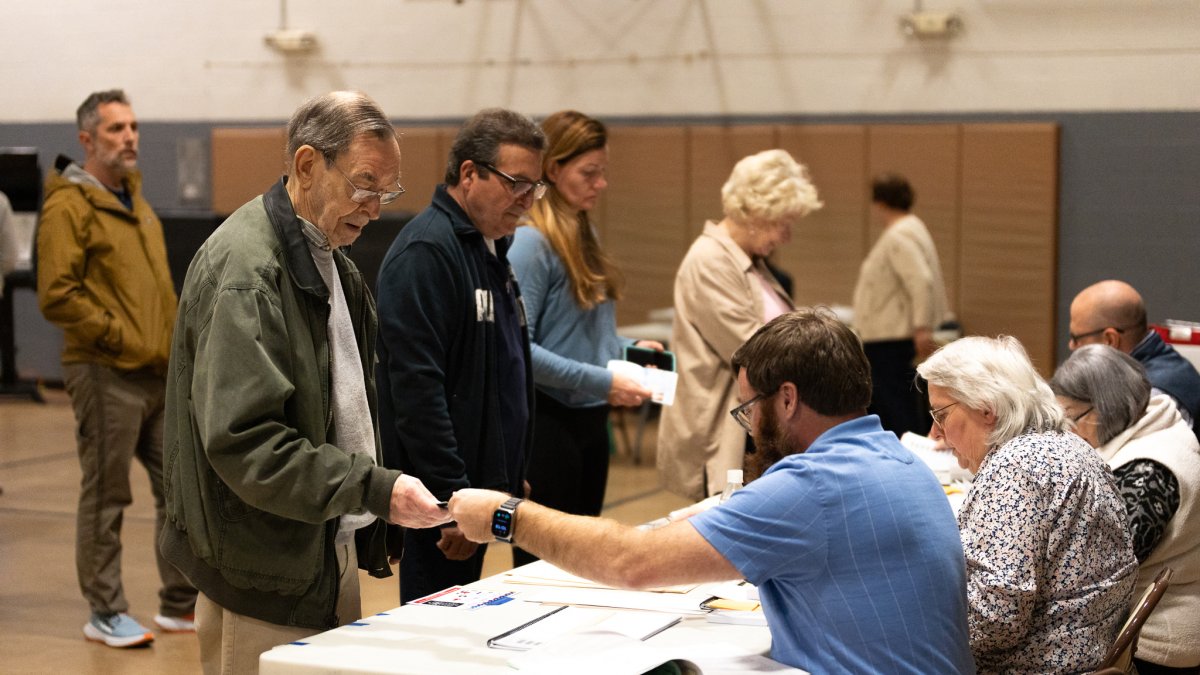
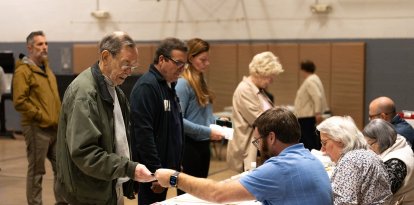
Voting center in Columbus, Ohio / Megan JELINGER

A federal appeals court allowed Ohio to reinstate a law requiring proof of U.S. citizenship to register to vote through the Bureau of Motor Vehicles (BMV). Specifically, the U.S. Court of Appeals for the Sixth Circuit suspended a lower federal court order that had temporarily blocked the provision. As a result, the provision may be enforced in the midterm elections.
The 2-1 decision comes less than two weeks before the voter registration deadline for Ohio's November 3 election, which is October 5.
The requirement was originally enacted in 2025 as part of the H.B. 54 Act. The law requires anyone registering to vote through the Bureau of Motor Vehicles (BMV), the state agency that issues driver's licenses and identification documents, to submit proof of U.S. citizenship when completing certain procedures.
The requirement applies specifically to voter registration conducted through the BMV. Ohio also allows voters to register online or via a paper form. For online registration, the applicant must declare, under penalty of committing voter fraud, that they are a U.S. citizen and that all information provided is true. Ohio classifies voter fraud as a felony.

Politics
Trump’s political machine kicks into gear: $138 million for key races ahead of midterms
Joaquín Núñez
Red Wine & Blue and the Ohio Alliance for Retired Americans later challenged the measure, arguing that the requirement violates the National Voter Registration Act of 1993 (NVRA). The plaintiffs argued that federal law requires states to offer voter registration through driver's license offices and limits the additional requirements states may impose on applicants.
In August, federal Judge Solomon Oliver Jr. temporarily blocked enforcement of the provision. Ohio appealed to the Sixth Circuit Court of Appeals, which has now overturned the lower court's order and allowed the requirement to be enforced again.
The judges who formed the majority, John Nalbandian and Whitney Hermandorfer, held that the plaintiff groups likely failed to demonstrate the standing required to bring the case before the courts.
"Neither Dutcher nor Fazio ever encountered anything having to do with the Associations’ H.B. 54 voter-registration challenge. Instead, BMV officials rejected their driver’s-license applications based on independent paperwork defects," the judges wrote.
LATEST