INTERVIEW
The 'impostor poet' with multiple DEI identities speaks exclusively with VOZ: 'Poetry will make a comeback as soon as editors ease up with their politics'
Aaron Barry's fake poets were published, interviewed and nominated for awards. Today, the Canadian author defends his experiment as a call for quality over identity.

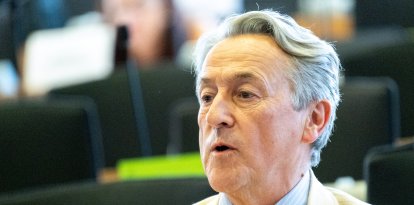
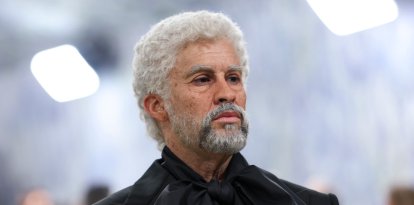
Images provided by Aaron Barry/VOZ

For more than two years, Aaron Barry, a 29-year-old white male, published dozens of poems under the guise of DEI poets. In his own words, these poems were "trash." They were published, he claims, more for the identity of their authors than for the quality of the work.
His decision to reveal his identity earlier this year generated uproar in the industry. The publisher of his first novel, "Femoid," withdrew it from circulation (it was later re-published, but by another publisher and under his real name). B'K Magazine dedicated a long and critical series of posts to him asserting that he had "lied about everything," that "his whole point" was to "take down marginalized-led and centering publications."
Barry's version is very different. He says he simply wanted to show the industry's biases, as he explained when he first revealed his deception in Substrack: "I, like many others in my position, could be skilled enough and dedicated enough to get into any number of literary magazines—but we’d largely remain buried under a mountain—or, in this case, a volcano—of diversity quotas, nepotism, politics, and so forth. So, to bring all of this to light, I put together a book for the disgruntled poets out there who’ve noticed similar things." (This disclosure was made under another mask, that of writer Jasper Ceylon).
For example: "tiktok stoic man," a poem that according to the Canadian author garnered 26 rejections when he submitted it signed under the pseudonym of a white man, and only one before being accepted under the authorship of b. h. fein, one of his multiple false identities. His play "Shakespeare's C*****" was nominated for a Best of the Net award. (After learning of the spoof, the publisher added a "note" correcting the author's biography and assuring that it had been a "cruel joke" but acknowledging "artistic value").
Another of her successful identities was Adele Nwankwo, a supposedly "gender-fluid" author from the Nigerian diaspora. Nwankwo published several plays: "A Contemporary Tragicomedy," "a half-wolf girl dichotomy," "AFTER COMING OUT: A WRESTLING PROMO" and more. Barry believes he could have gotten "Adele" to publish a full-length collection, but explains to VOZ that there came a point where he realized he had already "succeeded" in his original objective.
The "impostor poet" detailed his experience in "Echolalia Review: An Anti-Poetry Collection," whose publisher, he says, asked to remain anonymous and dismantled his imprint worried that being "associated with such a controversy" would not allow him "to have a public-facing job."
Barry speaks exclusively with VOZ
- Question: You adopted multiple personas to submit poems to literary journals around the world — but you didn’t stop there. You also gave interviews, exchanged personal emails with editors... What was the process of creating and maintaining those false identities like?
Answer: Each persona was meant to represent an identity type I had seen actively championed within the poetry industry, so each persona had to have their own motivations, styles, preferred subjects, and so forth.
This extended to how each persona presented themselves to the world, too. For example, some personas would respond to emails in all-lowercase, while others would use proper formatting. Some would use short, choppy sentences; others would lay it on thick with parentheticals.
I even went so far as to place them in geographical locations that would complement their writing, researching apartment complexes that could receive any mail sent their way (and subsequently send it back if I or a trusted friend couldn't retrieve it) without arousing any suspicion or giving away my personal information.
I'm fond of puzzles, and I like shows where characters concoct elaborate plans or see conclusions many moves in advance, so this quickly became my version of that. Any time a publisher or editor threw a new complication my way, I'd come up with some work-around, and it would inevitably make my hoax all the funnier and more intricate for it.
"Maybe we'll see more 'impostor poets' in the near future"
- Q. You present your ruse as a critique — a satire, more precisely — of the literary industry. But from what I’ve read, not all editors reacted negatively. Would you say your experiment was not only a criticism, but also, in a way, a tribute to those editors who judged the work on its own merits?
A. Undoubtedly, yes. If anything, I was happy when I'd get rejected during the initial poem-submitting process, because that meant whomever had just looked at my junk poems had (rightly) found something deficient in them. It was the exact opposite of the standard submission process.
In fact, the editor (let's call him Z) who picked up my full "Echolalia Review" collection for publication, the one who made me Editor-in-Chief at Pere Ube before he decided to pack up the journal and press, was thrilled he'd passed what he called my "poetry Voight-Kampff test" when I'd sent him some of my poems for his magazine a half year prior. The reason I sent the full book his way in the end was precisely because he'd passed.
We need more editors in publishing who, if they're on the fence about a poem, or if they think alterations could be made, will either reject a piece or work with the poet to make the necessary improvements to the content in question. We need editors who hold themselves and the literary community to higher standards, because it makes us all better in the end, and it feels more significant when we finally earn their imprimaturs.
Editors like Z, Max Rosenbloom and others I met along the way, like Bernard Schweizer of Heresy Press, were not blinded by ideological affinities when it came to evaluating a work, and I respect them for that.

- Q. How did it feel to "come out" after two years of working behind fictional personas? From the outside, it seemed like you gave serious thought to when and how to reveal yourself.
A. In a word: freeing. As mentioned, I could have held on to my fake identities for several more years -- especially my S.A.B. Marcie novelist one -- but the timing felt right to remove the veil and show what I'd done.
I've openly advocated for the usefulness of pen names in contemporary publishing in getting one's work out there, and I do very much believe more people should be experimenting with them, but everything seemed to be pushing me toward disclosure at the time.
- Q. You’ve said you wrote the book "for the disgruntled poets out there who’ve noticed similar things." Since revealing your identity, have you heard from other young or marginalized writers who’ve felt a similar sense of exclusion in the literary world?
A. Actually, a ton have reached out to me via email and social media. It's heartening to hear from people who've decided to return to writing because of my work, or who've decided to recommit themselves. I've had engaging conversations with publishers, poets, and readers of all kinds.
When I set out to do this, I told myself it'd all be worth it if I saved even one writer from giving up on their craft, and I'm as proud as could be that the number already stands at more than one. Some poets have even told me they'd like to try out their own version of my experiment. Maybe we'll see more "impostor poets" in the near future
But, oddly enough, it's refreshing to hear from my detractors, too. I value their perspective on things, and it's been informative hearing every manner of objection to my work. I could do without the comments about wanting to read my eventual suicide note (haha), but, for the most part, it's constructive for any artist to pay at least some mind to the criticism levied at them.
- Q. And with poetry... what now?
A. I want poetry to survive and thrive as an art form. I love a lot of contemporary poetry, and I think our poets still produce fantastic works all the time. I just think that the industry has lost touch with reality a bit, and now, the public finds it increasingly difficult to engage with today's poetry, which is a shame.
But I think poetry -- serious, form-defining stuff, and not just the Rupi Kaur-type "easy" content -- will make a comeback as soon as editors and publishing houses learn to ease up a little with their politics and let poets say what they need to say again. Everyone will benefit from that in the end
LATEST