What is Cuba 2.0? The ambitious project that aims to rebuild the island with $250 billion
An initiative launched from Florida aims to transform the Cuban economy through artificial intelligence, international investment and close trade integration with the United States. The program promises to multiply the country's economic capacity, although its projections have not yet been backed by publicly verified funding.

An estimated investment of $250 billion, accelerated economic growth, and the transformation of Cuba into a technological and industrial hub of the Caribbean. These are some of the main aspirations of CUBA 2.0, an initiative that proposes a model for the island's economic and institutional reconstruction.
The project, presented under the slogan The Intelligent Rebirth of Cuba, proposes replacing the current economic structures with a system based on the rule of law, institutional transparency, private investment and the incorporation of advanced technologies.
According to its official platform, one of the central objectives is to leverage Cuba's geographical proximity to the United States to transform the country into a hub for production, innovation and exports.
The proposal is led by Ernesto Eduardo Dobarganes, who identifies himself as the founder and CEO of Vortygon, a company involved in projects related to artificial intelligence, robotics, energy and technological research, headquartered in Florida.

A two-phase reconstruction plan
The program envisages two major stages to transform the Cuban economy.
The first, known as the startup phase, would last two years and require investments ranging from $90 billion to $110 billion.
During this period, new legal safeguards for investors, audit mechanisms and capital protection measures would be established, in addition to the modernization of strategic sectors such as energy, industry and logistics.
It also proposes digitizing tax and administrative systems to reduce bureaucracy and improve public management. The program's proponents estimate that this first phase would increase the Gross Domestic Product (GDP) by between 30% and 35%.
The second phase, focused on consolidation and expansion, spans a 10-year horizon and involves an additional investment of between $140 billion and $170 billion.
This phase would aim to increase domestic production, develop high-value-added industries, expand exports to the United States and strengthen research and technological training.
The document sets out the goal of increasing the size of the economy more than tenfold and achieving a GDP of $500 billion, according to its own projections.
Artificial intelligence and technology as economic drivers
The initiative aims to develop data centers for artificial intelligence, robotics industries, digital infrastructure, modern aviation and new energy capabilities.
The stated goal is to attract international companies, create specialized jobs and integrate the country into regional and global supply chains. Proximity to the U.S. market plays a central role in the strategy.
The project argues that Cuba could become a productive partner of the United States, capitalizing on its geographic location and the potential to develop new export-oriented industries.

Where would the $250 billion come from?
The proposal calls for a combination of private and institutional investment, public-private partnerships, financial instruments, multilateral cooperation and participation by the Cuban diaspora.
On their platform, the proponents present a simulator that allows users to calculate hypothetical financial returns. For the first phase, a benchmark rate of 20% per year is used, and for the second, 15%.
However, these figures are projections prepared by the promoters themselves; they are neither proven nor guaranteed returns.
The website also notes that some of the financial and strategic materials are reserved for institutional and accredited investors.
So far, the public documentation reviewed does not allow for verification of funding commitments for the announced $250 billion, nor does it identify binding agreements with governments, multilateral organizations, or major investors that would support the program's implementation.
Between a vision for the future and the challenges of its implementation
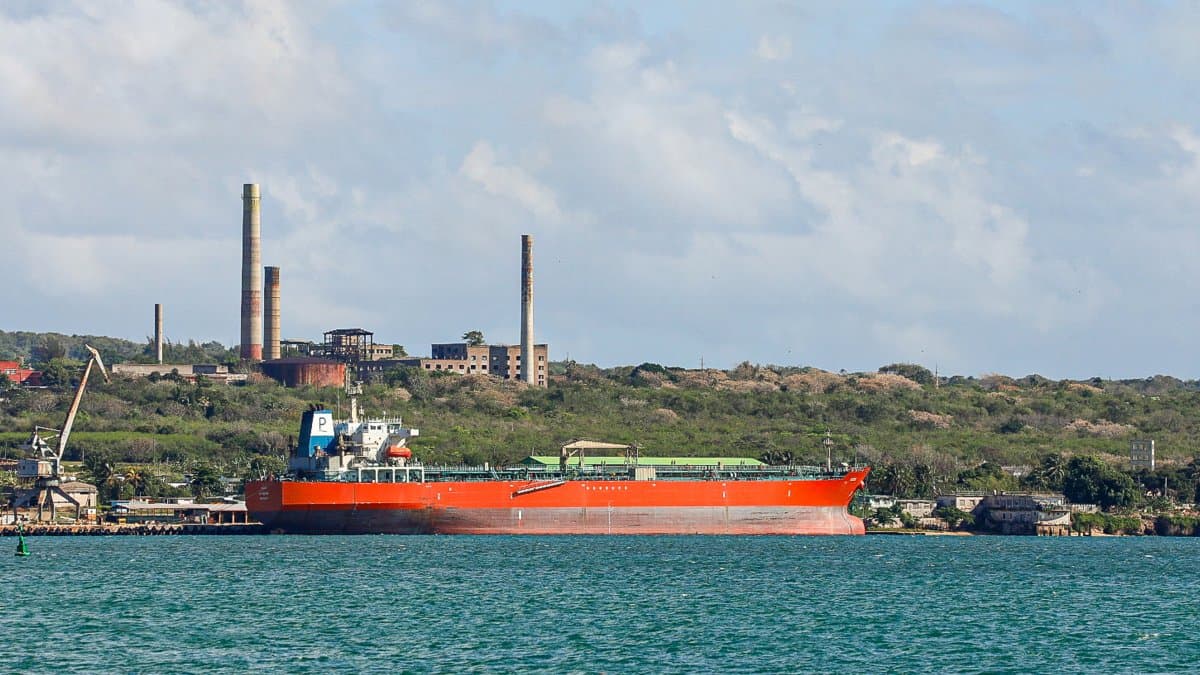
The initiative emerges against a backdrop of a deep economic crisis and deterioration of Cuba's services and infrastructure, marked by power outages, production difficulties, fuel shortages and a loss of purchasing power.
However, the scale of the program raises fundamental questions.
Its implementation would require far-reaching political, legal and economic transformations, as well as effective guarantees for private property, investment protection and the functioning of independent institutions.
It would also be necessary to resolve issues related to U.S. sanctions, access to international financing and the conditions for attracting capital in an economy currently controlled by the Cuban state in strategic sectors.
For now, CUBA 2.0 is a proposal for reconstruction, not a proven process of investment and economic transformation.
The project presents an ambitious vision of how the economy of a future Cuba could be reorganized, but its viability will depend on political, institutional and financial factors that go far beyond the projections published by its promoters.
🛠 Do you think there is an error in this article?
Recommendations








LATEST