Rebuilding Cuba: The multibillion-dollar cost of a potential transition
Business leaders and influential figures in the exile community are working on projects to rebuild the island's economy, infrastructure and institutions in anticipation of a potential political change. The Wall Street Journal reveals meetings, multibillion-dollar estimates and contacts with the Trump administration.
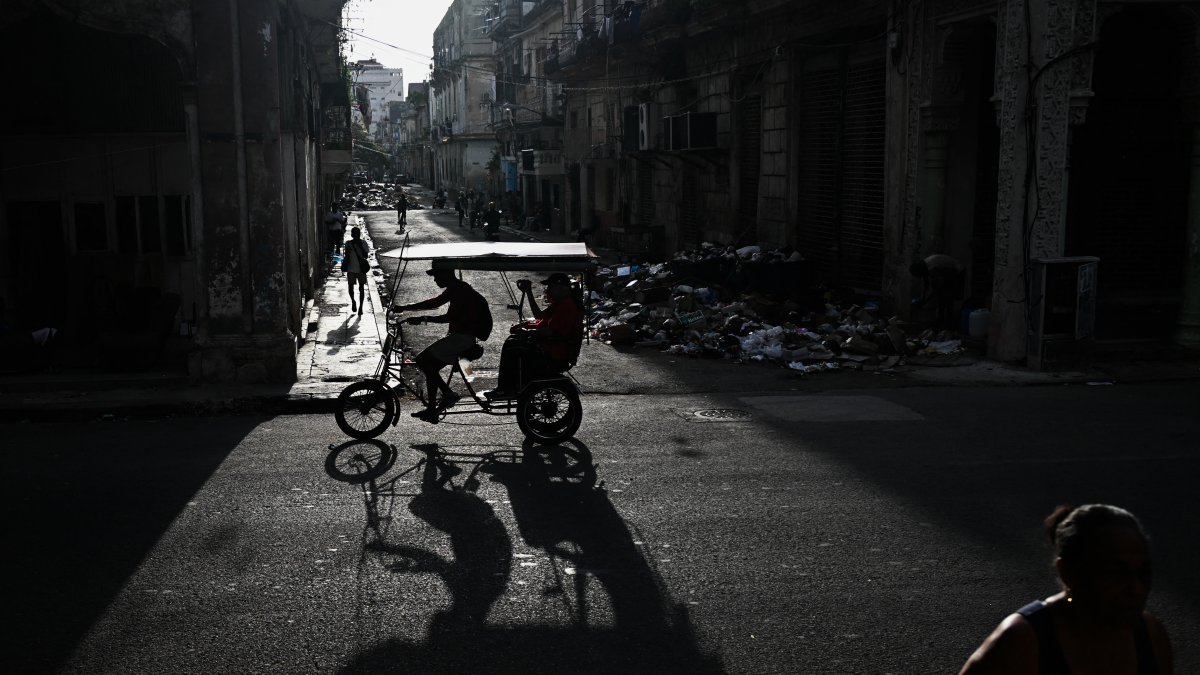
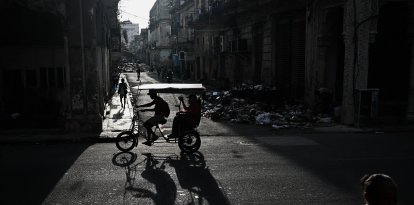
A street in Havana during a blackout (File photo)

A group of business leaders and influential figures from the Cuban exile community in Miami has been spending months preparing economic, political and infrastructure plans for a potential post-communist Cuba, while the Donald Trump administration maintains pressure on Havana and evaluates various scenarios for the island.
The initiative was revealed by The Wall Street Journal in a report that details private meetings, conversations with business leaders, and contacts between members of the exile community and U.S. officials.
According to the newspaper, the preparations range from the creation of a Cuban stock exchange and the organization of an international investment summit in Havana to projects to rebuild the electricity grid, renovate airports, and attract American banks, large corporations and investment funds.
One of those meetings, held in June at a residence overlooking Biscayne Bay, was attended by Juan Omar Sixto, 82, a former tobacco producer and president of the newly created Cuban-American National Chamber of Commerce.
"We have waited 67 years. We need to start," Sixto said during the meeting, according to the Wall Street Journal report.
A multibillion-dollar reconstruction
The plans aren't limited to the business sector.
According to the report, various groups are working on the design of a possible provisional government, on legal proposals for a democratic transition and on mechanisms aimed at attracting private capital to the island.
Among the projects analyzed is the modernization of eight Cuban airports—a project estimated to cost about $8 billion—as well as studies on floating power plants, energy infrastructure and mechanisms to resolve claims regarding property confiscated after 1959.
One of the key figures mentioned by the newspaper is Jorge Mas, president of the Cuban American National Foundation and co-owner of Inter Miami.
Mas stated that Trump asked him how much money would be needed to rebuild Cuba. His estimate was approximately $90 billion over the first three years of a transition—an amount he said the business community could mobilize.
Rubio, Trump and the Pressure on Havana
The report also places Secretary of State Marco Rubio at the center of U.S. policy toward Cuba.
The Wall Street Journal notes that some of the business leaders and officials involved have direct political ties to Washington and that the Trump administration has turned to members of the Cuban-American community to discuss ideas, political support and potential private capital in the event of a transition.
The strategy coincides with an intensification of the measures adopted by Washington against the Cuban regime throughout 2026.
In January, Trump declared a national emergency related to Cuba's actions and established a mechanism to impose additional tariffs on countries that supply oil directly or indirectly to the island. The White House justified the measure by citing threats to national security and U.S. foreign policy.
In May, the president expanded sanctions against officials, entities, and individuals linked to the Cuban security apparatus, acts of corruption or serious human rights violations.
The timeline is stretching out
According to The Wall Street Journal, several figures in the Cuban exile community believed that a decisive transformation could take place on the island in 2026, especially following the events in Venezuela earlier this year.
Washington's focus on other international conflicts and the Cuban regime's ability to remain in power have led U.S. officials to adopt a longer-term perspective, even extending to the end of Trump's term in 2028, the newspaper notes.
This shift in expectations contrasts with statements made months earlier by Mike Hammer, the top U.S. diplomat in Havana, who publicly stated in March that he expected political change in Cuba in 2026.
"We believe change is coming. It will arrive in 2026," Hammer said at the time during an event in Miami.

A transition that is not guaranteed
Not everyone shares the optimism of the businesspeople preparing these projects.
Ric Herrero, executive director of the Cuba Study Group, warned The Wall Street Journal that numerous businesspeople, lawyers and lobby groups are beginning to position themselves in anticipation of a possible opening in Cuba, even though a political transition remains far from certain.
Herrero described a scenario in which various actors are seeking to prepare for a possible transformation of the island, while others may simply be anticipating an event that has no set date and no guarantee that it will occur.
The report itself also highlights another issue: a significant portion of these plans is being developed in Miami, primarily by long-standing members of the exile community and well-connected businesspeople, while the debate continues over what role Cubans remaining on the island would play in an eventual transition.
For now, the projects remain on paper.
LATEST