Trump administration revokes visas for 17 officials, businessmen rrom Bolivia, Colombia, Ecuador, Peru over ties to corruption, drug trafficking
"Under the Trump administration, corrupt foreign officials can no longer freely enter the United States," the State Department said in a statement signed by its spokesperson, Thomas Pigott.

State Department logo in a stock image

The State Department announced on Monday a new policy of visa restrictions targeting government officials and businesspeople from Bolivia, Colombia, Ecuador and Peru, who have been accused of involvement in alleged acts of corruption and drug trafficking that, according to Washington, undermine democratically elected governments in the region.
"Under the Trump Administration, corrupt foreign officials can no longer freely enter the United States," wrote the State Department in a statement signed by its spokesperson, Thomas Pigott. The measure is part of the commitments made at the Doral Summit and reaffirmed in the leaders' declaration of the Shield of the Americas on Sept. 22, which provides for the coordination of sanctions, designations and financial actions against those who "undermine security, the rule of law, and democracy" in the hemisphere. The restriction is applied under Section 212(a)(3)(C) of the Immigration and Nationality Act and also applies to the immediate family members of those designated.
In total, 17 people were affected, in addition to nine other Bolivian citizens who, not currently holding a visa, were deemed ineligible to obtain one in the future.
Bolivia accounted for the largest number of sanctions, with 12 individuals named: Senior Prosecutor Martín Daniel Irusta Flores; Judge Albania Chané Caballero Saavedra; Departmental Prosecutor Alberto Zeballos Flores; Judge Rosario Ximena Flores Paniagua; former Minister of Justice Iván Manolo Lima Magne; Prosecutor Álvaro Mauricio Nava Morales Carrasco; Constitutional Court Justice Israel Ramiro Campero Méndez; former Executive Director of Customs Alberto Samuel Soto de la Vía; former judge Iván Ramiro Campero Villalba; Judge Rodrigo Aldo Vedia Espinoza; Bolivian Police Colonel Frans William Cabrera Quispe; and private businessman José Luis Iriarte Cussi.
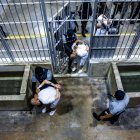
In addition to this list, the Department of State publicly designated Bolivia's Attorney General, Roger Mariaca, under Section 7031(c) of the State Department's appropriations law, a mechanism reserved for officials against whom there is credible information regarding significant corruption or serious human rights violations. According to the statement, Mariaca, who was appointed in 2024 during the administration of former far-left President Luis Arce, "abused his public positions by soliciting and accepting bribes to facilitate narcotrafficking and helped violent criminals evade justice."
In Colombia, the restrictions targeted businessman Euclides Antonio Torres Romero, owner of a conglomerate with businesses in energy, traffic signal systems and street lighting, as well as Senator Martha Isabel Peralta Epieyú, a member of the Historic Pact and the Alternative Indigenous and Social Movement (MAIS). In Ecuador, the measure affected two citizens whose identities were not publicly disclosed. In Peru, the sanction was imposed on Judge Juan Carlos Núñez Matos of the First Constitutional Court of Lima.
The announcement is part of a series of moves by the Trump administration to position itself as an ally of conservative governments in the region in the fight against drug trafficking and organized crime. In January, U.S. forces captured former dictator Nicolás Maduro along with his wife, Cilia Flores, in Venezuela. Both are now awaiting trial on drug trafficking and money laundering charges in New York. Likewise, in June, a joint operation between Washington and the interim authorities in Caracas resulted in the death of Héctor "Niño" Guerrero, leader of the Aragua Train, in Bolívar state. Bolivia, Colombia, Ecuador and Peru, along with other countries, are part of the Shield of the Americas, the U.S.-led coalition against drug trafficking and transnational organized crime.
LATEST