Despite political tensions following earthquakes, US assures Venezuela’s roadmap for democratic transition 'remains intact'
The latest official toll from the disaster stands at 2,295 dead and 11,267 injured, prompting the declaration of seven days of national mourning beginning July 1.
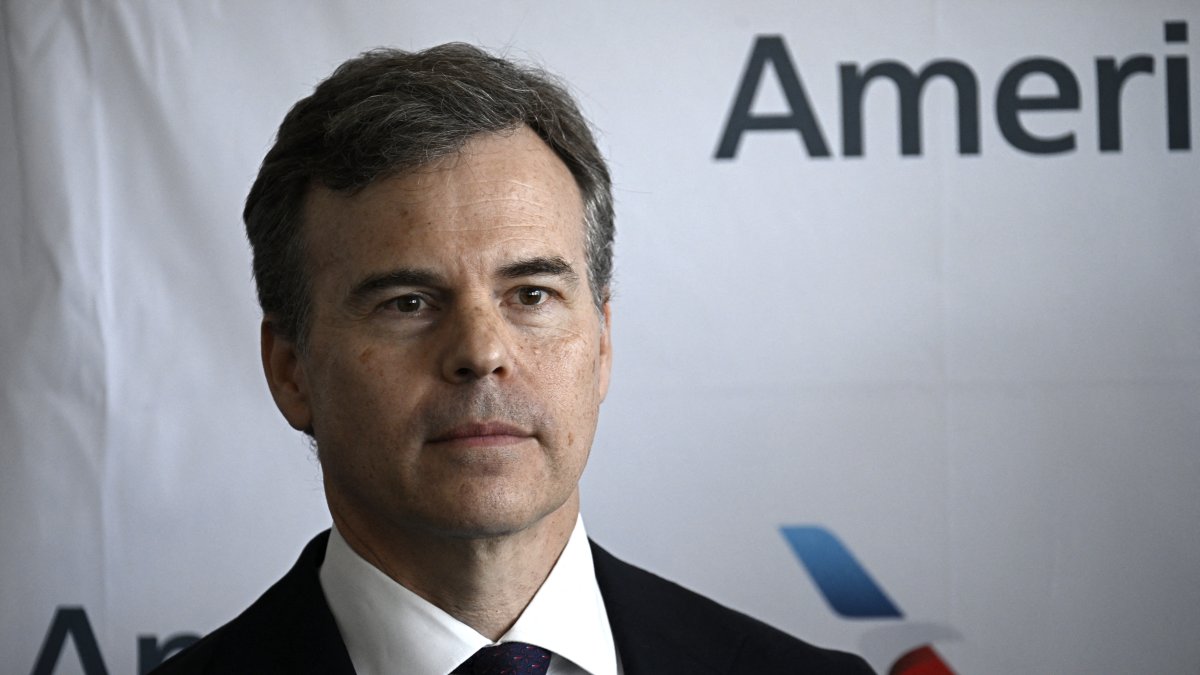
U.S. Chargé d’Affaires in Venezuela, John Barrett.

One week after the devastating earthquakes that struck Venezuela, the U.S. government reaffirmed that the top priority of its teams deployed on the ground remains the location and rescue of surviving citizens.
In a virtual press conference organized by the State Department, the commander of U.S. Southern Command, Francis Donovan, explained that operations are proceeding at a critical pace because the chances of survival in collapsed structures are determined by rigorous technical standards.
“In this type of situation, there is a window of between three and seven days to respond in the hope of rescuing people who are still alive and may be injured amid the rubble,” Donovan stated.
Given this scenario, the U.S. mobilization encompasses air, land, and naval capabilities, coordinating the work of more than 310 elite specialists from Miami-Dade, Los Angeles, and Fairfax counties, integrated into a local and international task force of approximately 2,000 personnel on Venezuelan soil.
On-the-ground coordination and assessment of assistance
For his part, the U.S. Chargé d’Affaires in Caracas, John Barrett, confirmed that rescue efforts remain in full swing at multiple collapsed buildings, primarily in La Guaira, the epicenter of the destruction.
To date, U.S. teams have successfully rescued five people —including a mother and her son—and located a U.S. citizen who had been reported missing.
The diplomat reported that Washington’s funding for humanitarian aid has already exceeded $300 million, resulting in the deployment of field hospitals, water purification plants, and large-scale logistical support.
Regarding allegations made by various civil society organizations about alleged operational obstacles and the politicization of supply delivery by Delcy Rodríguez’s interim regime, Barrett dismissed the existence of serious friction.
“I can say with confidence that local authorities have fully complied with our requests and demands, and have done their part by accelerating the massive humanitarian effort,” he asserted, noting that U.S. logistics infrastructure has served as the “backbone” of the distribution without reporting “any major problems.”
Weakened infrastructure and the political roadmap
The situation facing U.S. forces is heavily influenced by the country’s prior deterioration. General Donovan linked the difficulties of the emergency to the local institutional legacy, emphasizing that “it has been a huge problem, and due to decades of underinvestment in the people and the nation of Venezuela, which has made it much more difficult for the current government.”
The latest official toll from the disaster stands at 2,295 fatalities and 11,267 injured, prompting the declaration of seven days of national mourning beginning on July 1.
Despite the severity of the disaster, U.S. diplomats made it clear that the emergency will not alter the strategic objectives set by the administration of President Donald Trump and Secretary of State Marco Rubio following the capture of Nicolás Maduro last January.
Barrett firmly maintained that the institutional plan centered on three successive stages —stabilization, recovery, and democratic transition— “remains intact.”
The diplomat conveyed a message of economic certainty by emphasizing that, fortunately, the earthquakes did not affect the oil and gas extraction facilities, ensuring that the planned flow of global private investment will continue to drive the nation’s financial recovery.

World
They rob the dead and the survivors: Outrage erupts in Venezuela as regime forces loot earthquake victims
Emmanuel Alejandro Rondón
World
Voz News report from Venezuela: Aftershocks keep thousands of people out of their homes
Luis Francisco Orozco
LATEST