ANALYSIS
China: Political conclave kicks off with focus on economy and national security
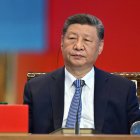
Thousands of parliamentarians and delegates of the ruling Communist Party from across the country are meeting for a week in Beijing, under the supervision of President Xi Jinping. The regime has been stringing together dismissals of senior officials, including generals, as the meeting approaches.

China's President Xi Jinping

China opened its main annual policy conclave on Wednesday, known as the "Two Sessions," which is expected to announce growth targets for the world's second-largest economy. Within this framework, the Asian giant's roadmap for 2026 and for the next five years will be defined, as well as its military budget, in a delicate international context.
Thousands of parliamentarians and delegates of the ruling Communist Party from across the country are meeting for a week in Beijing, under the supervision of President Xi Jinping, for this highly choreographed and media-visible event.
Nothing is left to chance during the meeting, presented as a sign of the attention that the Communist Party devotes to the population. According to AFP, the approval of the texts is an example of this, since most of them have been previously validated by the party leadership.
Deliberations began around 3 p.m. local with a solemn session of the Chinese People's Political Consultative Conference (CCPPC), a body whose main function is to formulate policy recommendations to lawmakers.
On the other hand, the regime has strung together dismissals of senior officials, including generals, as the appointment approached.
China removes three generals
On this occasion, it was the Chinese People's Political Consultative Conference (CCPPC) that adopted expulsion measures on Monday against 15 of its members, including three retired generals: Han Weiguo, Liu Lei and Gao Jin, the agency said.
No reason was provided.
Since taking over as Communist Party chief in 2012, Xi Jinping has pushed an intense anti-corruption campaign in both the civilian and military spheres.
In recent weeks there was the dismissal of an influential general and, in addition, another pillar of the system, the National People's Assembly (APN), expelled last week 19 of its members, among them nine high-ranking military officials, without offering any explanation.
At the same time, it also approved the dismissal of the Minister of Emergencies following the opening of an investigation for alleged corruption.
Economic and defense agenda
Thursday will see the opening of the session of the National People's Assembly (APN), the country's 3,000 member unicameral parliament. Premier Li Qiang will present there the report on the work of the government.
He is expected to unveil the economic growth target after the economy expanded 5% at the end of 2025, a key indicator of the ambition of this Asian country, which alone accounts for one-third of global growth, according to AFP.
Analysts estimate that the target for this year will be between 4.5% and 5%.
China also is expected to announce its annual defense budget that day at a time of numerous strategic challenges, including tensions in the South China Sea and over Taiwan, a democratic island tthat China claims and has vowed to bring under its control, by force if necessary.
Experts anticipate an increase similar to that of recent years, slightly above 7% from 2022.
Focus on emerging technologies and domestic consumption
The conclave will also serve to approve the 2026-2030 five-year plan, a roadmap covering areas such as the economy, technology, defense and demographics.
Its outlines were outlined in October by the Communist Party Central Committee, in a document that pledges to intensify efforts in cutting-edge emerging technologies to transform industry and ensure robust growth.

It also stresses the need to boost domestic consumption to decrease dependence on exports.
Despite a bitter trade war with United States in 2025, before the fragile truce reached in October, China posted a historic trade surplus of nearly $1.2 trillion.
The country has struggled to regain its pre-pandemic dynamism, it posted growth rates of 6.8% in 2018 and 6.1% in 2019, according to the World Bank, as its economy continues to suffer from the lingering effects of a deep real estate crisis, according to AFP.
Industrial activity weakens
The world's second-largest economy has grappled in recent years with weakness in domestic demand and investment, factors that have put pressure on its large industrial sector.
According to AFP, a key indicator of the state of the sector, the manufacturing purchasing managers' index (PMI), fell to 49.0 in February, according to the National Bureau of Statistics (NBS), below the 50-point threshold that separates expansion from contraction.
The figure was down from 49.3 recorded in January and also fell below the forecast of 49.2 in a Bloomberg survey of economists.
NBS statistician Huo Lihui mainly attributed the drop to lower activity during the Spring Festival vacations, which this year were held entirely in February.
Indexes for sectors such as "textiles, garments and automobiles" remained below the critical point, indicating weak market activity, Huo said.
Elsewhere, China's non-manufacturing PMI, which measures activity in services and construction, came in at 49.5 in February, a slight improvement from January's drop.
"Economic activities contracted at the start of this year," Zhiwei Zhang, president and chief economist at Pinpoint Asset Management, wrote in a note after Wednesday's data was released.
"The government's policy stance is flexible this year," Zhang added, noting that he expects the government to moderately boost investment to ease pressure on the economy if activity continues to weaken in the coming months.
LATEST