Colombia open to granting asylum to dictator Nicolás Maduro if he leaves power, says foreign minister
The leftist government did not rule out the possibility of granting political asylum to the Venezuelan dictator in case he agrees to leave power as part of a negotiated transition process to ease diplomatic tension in the region.

Gustavo Petro, president of Colombia, in file image.

The leftist government of Colombia has not ruled out the possibility of granting political asylum to Venezuelan dictator Nicolas Maduro should he agree to leave power as part of a negotiated transition process to ease diplomatic tension in the region, Colombian Foreign Minister Rosa Villavicencio said Thursday.
The statement comes amid growing international pressure - especially from the United States - to move toward a peaceful and democratic exit in Venezuela, where the Maduro regime faces strong accusations of corruption, repression and links to drug trafficking, as well as recent diplomatic and military actions by Washington in the Caribbean.
In an interview with Caracol Radio, Foreign Minister Villavicencio stated that if Maduro's departure implies that he must live in another country or request protection, "Colombia would have no reason to say no" to him. The head of the Colombian diplomacy described asylum as a "universal" figure that could be considered as part of a possible negotiation to facilitate a transition in the Venezuelan government.
Villavicencio stressed that Colombia is not acting as a direct mediator in the talks between Caracas and Washington, but that the country is willing to support diplomatic dialogue to resolve the regional crisis and avoid an escalation of the conflict. In addition, she noted that she does not believe that Maduro would choose Colombia as a place to live if he finally leaves power, although the option remains open.
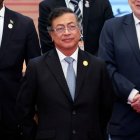
The Colombian president, Gustavo Petro, a historic political ally of Maduro and critic of the U.S. administration led by Donald Trump, recently called for a democratic transition in Venezuela and has raised the possibility of a general amnesty and a transitional government, although without formal recognition of the 2024 election in which Maduro was proclaimed president for the third time.
">El gobierno de Maduro debe entender que la respuesta a una agresión externa no es solo un alistamiento militar sino una revolución democrática. Es con más democracia como se defiende un país no con más represiones ineficientes.
— Gustavo Petro (@petrogustavo) December 10, 2025
Es una amnistía general no extender la cárcel.
Los… https://t.co/FWQT1dvF51
The eventual possibility of asylum has generated debate in Colombia and the region, while political and social voices analyze the diplomatic and security implications of hosting the Venezuelan dictator if he chooses to leave power as part of a negotiated settlement.
LATEST