






Maduro defies and mocks Trump's ultimatum by dancing in a public act: "They will never be able to get us out"
Among exaggerated dances, smiles and triumphalist gestures, Maduro sought to demonstrate on national television that he does not feel, at least on camera, pressured by the U.S. military and diplomatic campaign.
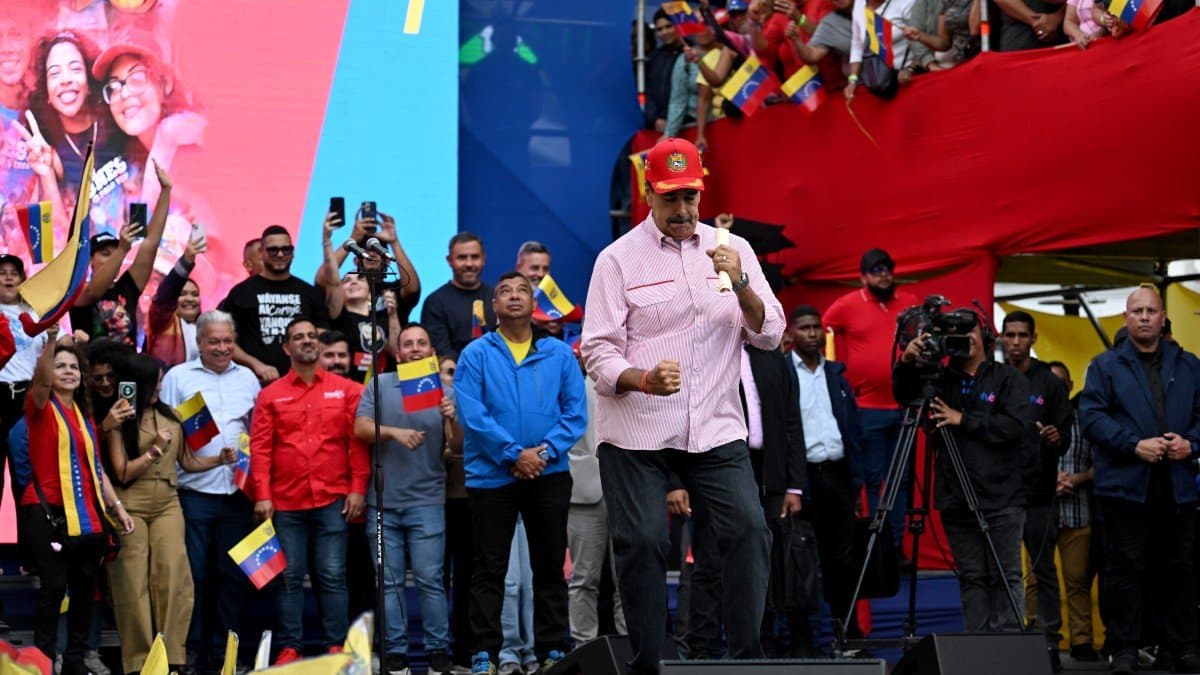

Just days after the expiration of the ultimatum that President Donald Trump imposed on him to leave power, Venezuelan dictator Nicolás Maduro reappeared at a public event with a clear message to the White House: challenge, mockery and an attempt to project strength in the face of U.S. pressure.
The event, held in Caracas, in the vicinity of the Miraflores Palace and with public employees forced to attend, served as a platform for Maduro to launch a series of defiant messages. In the middle of the event, the dictator repeated that "they will never be able to take us out, under any circumstances, from the path of the revolution," reaffirming his intention to ignore the challenges of Trump and his Administration. He also swore to his followers that, "at the cost of my own life and tranquility, I swear to you absolute loyalty until beyond the times that we can live this beautiful and heroic history."
The Chavista dictator also described the last few weeks as a period of aggression led by the Trump Administration. According to Maduro, Venezuela "lived twenty-two weeks of an aggression that can be qualified as psychological terrorism... twenty-two weeks that have put us to the test, twenty-two weeks of popular, military and police exercises, which have put Venezuela at a point we never had before, of integral defensive capacity, preparing ourselves to defend our land."
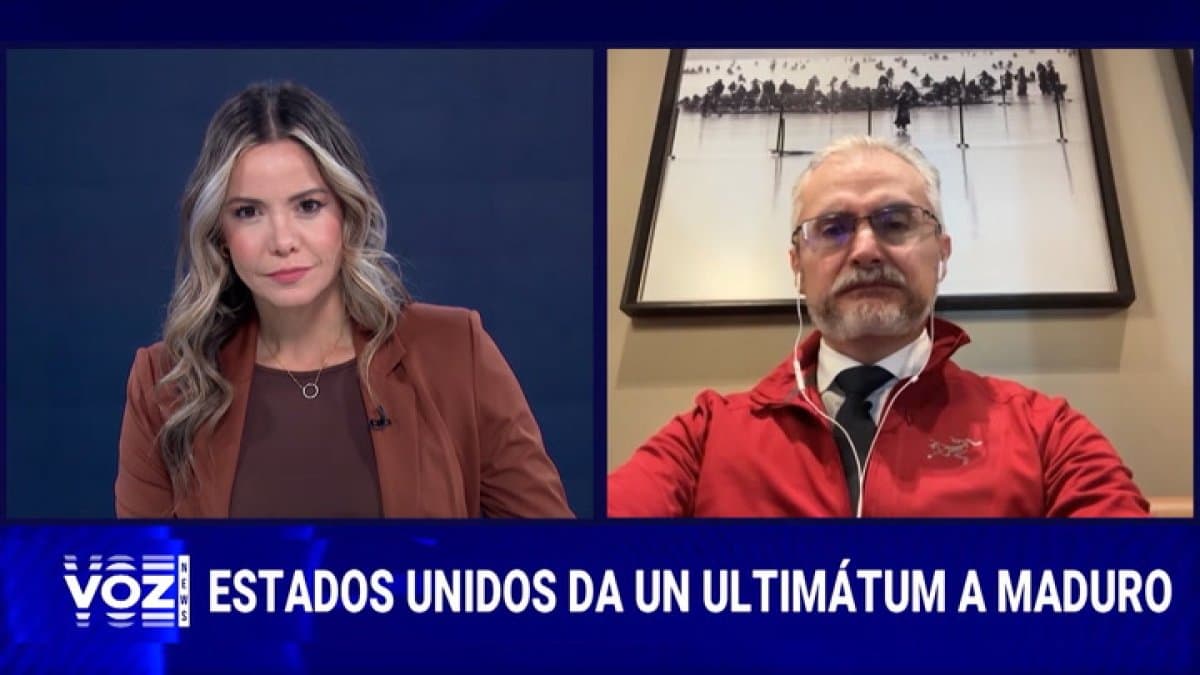
Among exaggerated dances, smiles and triumphalist gestures, Maduro sought to demonstrate on national radio and television networks that he does not feel, at least on camera, pressured by the U.S. military and diplomatic campaign, despite the closure of Venezuelan airspace, the destruction of vessels linked to narco-terrorism, and the international expectation on the White House's next steps.
Maduro's message was clear: he does not intend to leave for good, at least for now.
A challenge to Trump
The dictator's public challenge comes just days after the ultimatum that Donald Trump had imposed on him last November 21, in a 15-minute call reported by several media, including the Miami Herald and Reuters.
According to the British agency, in that private conversation the U.S. president offered Maduro an exceptional safe-conduct to leave the country with his family before Friday, November 28.
The safe-conduct was offered despite the fact that Maduro faces a drug trafficking indictment in the Southern District of New York and a $50 million reward for his links to the Cartel of the Suns.
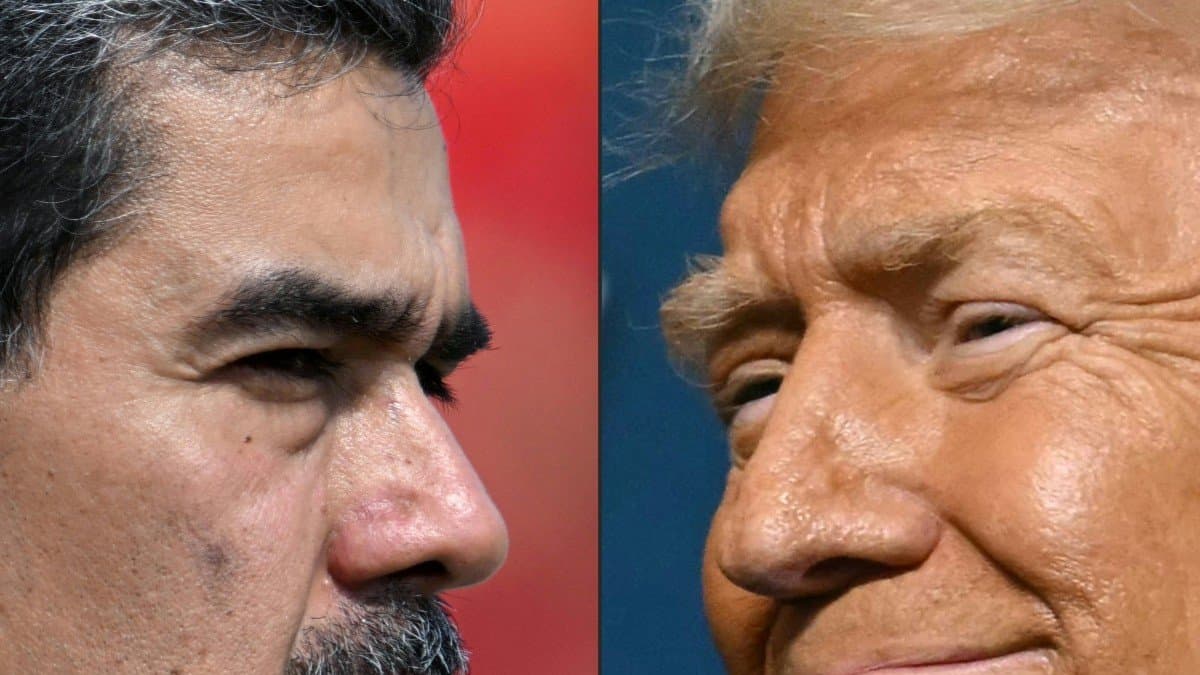
In that call, Maduro asked for a series of conditions to leave power: total amnesty, the lifting of all sanctions, the closing of the file at the International Criminal Court, pardon for more than 100 Chavista officials and that his vice president, Delcy Rodriguez, lead a transitional government before calling new elections. Trump rejected most of these conditions and maintained his ultimatum.
After the deadline expired, Trump met this Monday with his security team and his top advisors to evaluate the next steps against the Chavista regime. Although no details emerged, the meeting took place as the United States intensifies its presence in the Caribbean and the Pacific, where the U.S. Army has destroyed at least 21 narco-boats linked to the Cartel of the Suns and the Aragua Train, organizations that Washington directly links to Maduro's circle.
The tightening also includes the White House's declaration that Venezuelan airspace "is totally closed," an announcement that generated uncertainty in Caracas and fueled speculation about possible operations inside Venezuelan territory, an option the United States has not ruled out.
🛠 Do you think there is an error in this article?
Recommendations
LATEST