Nepal's prime minister announces resignation after crackdown on protests
Communist K.P. Sharma Oli, who was in his fourth term, resigned following the deaths of 19 protesters against social media restrictions and government corruption.
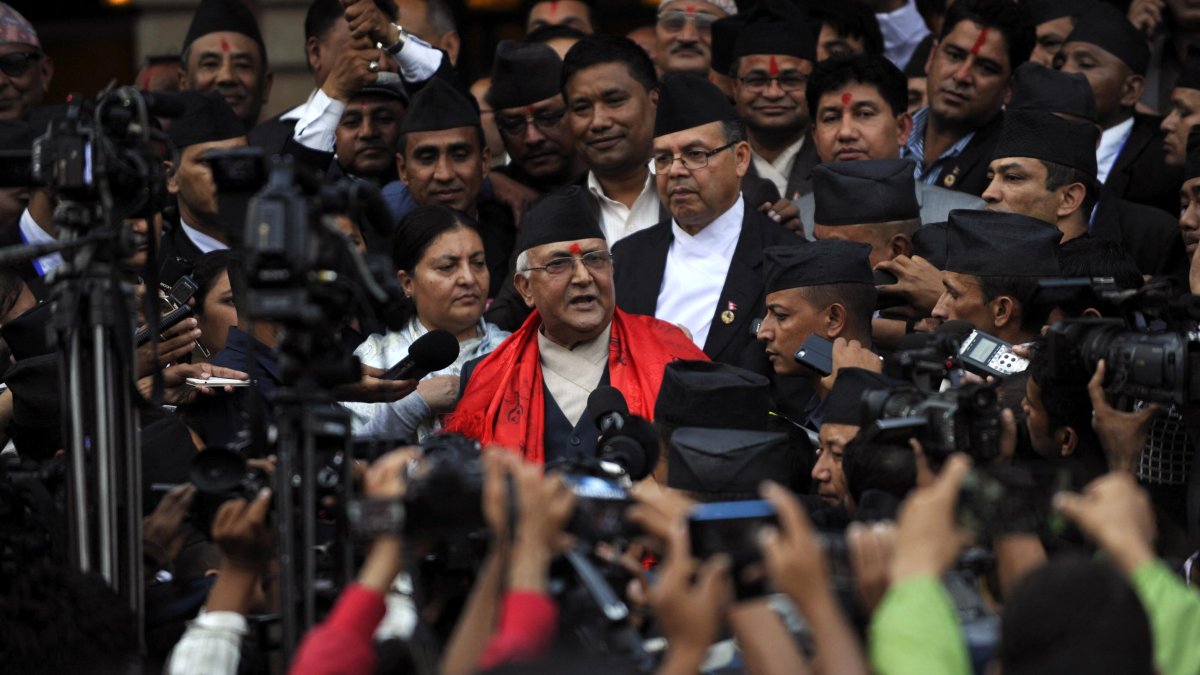
K.P. Sharma Oli in a file photo

Nepalese Prime Minister K.P. Sharma Oli announced his resignation Tuesday after a crackdown on Monday's protests against restrictions imposed on social media and corruption left at least 19 dead.
"I have resigned effective today ... in order to take further steps towards a political solution and resolution of the problems," the prime minister said in a letter to the president.
Allegations that police used live ammunition against protesters
Protests began Monday in the capital Kathmandu and other cities against the government's decision to block social media and against corruption. At least 19 people were killed, and according to Amnesty International, police used live ammunition against protesters.
Authorities later lifted the block, which eventually affected 26 sites, including Facebook, YouTube, X and LinkedIn, which had not registered with authorities by the deadline.
Oli, 73, began his fourth term last year after the Communist Party, to which he belongs, formed a coalition government with the center-left Nepali Congress.
Political instability, corruption and low economic growth
Discontent has continued to grow in this country of 30 million people due to political instability, corruption and low economic growth.
The 15-40 age bracket accounts for 43% of the population, according to official statistics, and unemployment is around 10%. GDP per capita is just $1,447, according to World Bank data.
The country became a federal republic in 2008 after a long civil war and an agreement whereby the Maoists entered the government, and the monarchy was abolished.
LATEST