Report | Massacres without borders: The legacy of Palestinian terrorism around the world
Attacks by Palestinian groups outside Israel in past decades have demonstrated their ruthlessness and their goal: the destruction of the Jewish state and the extermination of Jews, as well as the free world in general. In the face of the heavy blows received by the Israelis in the current conflict, these attacks could be resumed.

The attacks perpetrated by Palestinian terrorist groups outside Israel are a series of heinous acts that massacred innocent civilians, diplomats, athletes and travelers of various nationalities and with no direct connection to the conflict in the Middle East. Groups such as the Palestinian Liberation Organization (PLO), Black September, the Popular Front for the Liberation of Palestine (PFLP) and Abu Nidal raised terror on a global scale, hijacking planes, bombing airports and embassies, and murdering in cold blood defenseless people, including children and the elderly, in a campaign of violence that left a trail of death and fear.
These attacks succeeded in demonstrating the ruthlessness of these groups, whose goal was (and is) the destruction of Israel and the extermination of the Jews, as well as the free world in general.
The beginnings of international terror (1960s)
Palestinian terrorism spread beyond Israel after the Six-Day War in 1967, with attacks designed to sow global panic.
On December 26, 1968 in Athens, Greece, PFLP terrorists attacked Israeli airline El Al Flight 253, firing on the aircraft and killing one passenger, marking the beginning of a wave of violence against civilian aviation.
Months earlier, on June 6 in Los Angeles, United States, the assassination of Robert F. Kennedy was perpetrated by Sirhan Sirhan, a Palestinian motivated by the conflict, although not always linked to an organized group, leaving one fatality and a devastating political impact.
On July 23, 1968 in Rome, Italy, three Popular Front for the Liberation of Palestine (PFLP) terrorists hijacked El Al Flight 426, a Boeing 707 with 32 passengers and ten crew, shortly after takeoff en route to Tel Aviv. The attackers, armed with guns and grenades, diverted the plane to Algeria, where the hostages, including women and children, were held for 40 days in conditions of terror under constant threat. This cowardly act, which marked the PFLP's first air hijacking, sought to press for the release of Palestinian prisoners and spread international panic by exposing the vulnerability of innocent civilians caught up in a conflict of which they were not a part. The hostages were released after negotiations in exchange for Arab terrorists, but the incident left an indelible mark on the history of global terrorism.

Politics
Marco Rubio denies and revokes visas of Palestinian officials ahead of UN General Assembly
Williams Perdomo
The 1970s: massacres at airports and embassies
The 1970s was the peak of international Palestinian terror, with mass kidnappings and brutal attacks.
On February 21, 1970 in Switzerland, Swissair Flight 330 operating the Zurich-Hong Kong route, with a stopover in Tel Aviv, and with 47 people (38 passengers and 9 crew) on board, suffered a bomb attack, which resulted in the plane crashing shortly after takeoff. There were no survivors.
In September 1970, at the British air base at Dawson's Field, Jordan, the PFLP hijacked four commercial airliners, taking hundreds of hostages and destroying the aircraft after negotiating the release of imprisoned terrorists, a spectacle of chaos that affected passengers of multiple nationalities, especially Jews who were held together with the crew for almost 20 days longer than the rest.
In late February 1972, the hijacking of Lufthansa Flight 649 in Yemen demanded monetary ransoms and releases, keeping dozens of passengers under threat. It was later determined that the perpetrators, who identified themselves as the Organization for Resistance to Zionist Persecution, were recruited by the PFLP.
On December 28 of the same year in Bangkok, Thailand, the Palestinian terrorist organization Black September took hostages at the Israeli embassy, releasing them after negotiations, but exposing the vulnerability of diplomatic targets. The terrorists agreed to leave in exchange for being flown to Egypt.
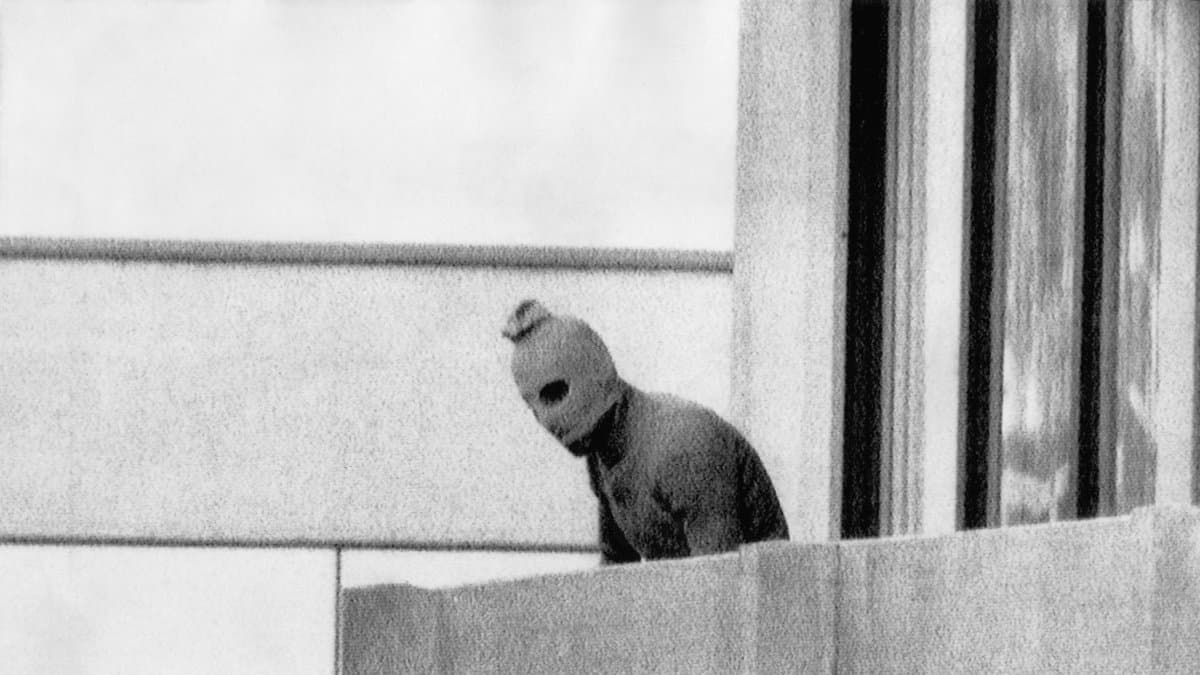
The most infamous attack occurred in September 1972 in Munich, Germany, during the Olympic Games. Black September terrorists stormed the Olympic village, took 11 Israeli athletes hostage and murdered them during a failed rescue, also killing a German policeman. Five terrorists were killed in the incident. This savage act against innocent athletes, known as the Munich massacre, horrified the world.
In 1973, the violence continued. In Khartoum, Sudan, in March of that year, Black September stormed the Saudi embassy, taking diplomatic hostages and executing three: U.S. Ambassador Cleo Noel, U.S. deputy chief of mission in Sudan George Curtis Moore and Belgian diplomat Guy Eid, in an act of brutality against noncombatant personnel.
That same month, in New York, USA, a Black September plot to detonate three car bombs on the day Israeli Prime Minister Golda Meir was arriving for a visit could not be carried out due to mistakes made by the terrorist organization itself, but it showed the power of the threat of these groups in the country.
On July 20, 1973, the hijacking of Japan Air Lines (JAL) Flight 404, a Boeing 747 flying from Amsterdam to Tokyo with a stopover in Anchorage, occurred. This incident was carried out by a mixed group of terrorists: four members of the PFLP and a Japanese member of the Japanese Red Army (JRA). They demanded the release of Kozo Okamoto, one of the perpetrators of the JRA attack on Ben Gurion International Airport in Lod, near Tel Aviv. Israel refused. The hijackers flew the plane first to Damascus, Syria, and then to Libya. On July 23, 89 hours after the hijacking began, the passengers and crew were released.
On February 6, 1974 in Kuwait, the Japanese embassy was attacked by members of the PFLP and the Japanese Red Army, with hostages taken, including the ambassador. The hostages were released and the attackers were allowed to fly to Aden, Yemen.
On September 8, 1974, a bomb exploded on TWA Flight 841 over the Mediterranean killing all 88 passengers and crew. This was an act of indiscriminate terrorism attributed to Abu Nidal, as the Arab National Youth Organization for the Liberation of Palestine, run by the Palestinian terrorist group from Libya, claimed responsibility for the bombing.
On January 19, 1975, a PFLP commando attacked Orly airport in Paris, France, as part of its campaign of international actions against targets associated with Israel and the West. The terrorists attempted to attack an El Al (the Israeli airline) plane on the runway, but were intercepted by French Police before achieving their primary objective. During the standoff, the attackers took ten hostages in an airport lounge and demanded the release of Palestinian prisoners. The attack left several injured but no deaths were reported. Negotiations with the French authorities ended with the surrender of the terrorists, who were arrested.
In July 1976, the hijacking of Air France Flight 139, diverted from Greece to Entebbe, Uganda, by the PFLP and German allies, kept more than 100 hostages under threat. The terrorists separated the Jewish and Israeli passengers from the others, gradually releasing the non-Jews. They demanded the release of 53 prisoners, mainly Palestinians and members of leftist groups, imprisoned in Israel and several European countries. The Israeli rescue, called Operation Entebbe, led by Yonatan Yoni Netanyahu, brother of current Prime Minister Benjamin Netanyahu, was successful, but cost the lives of four hostages and Yoni, the only Israeli soldier killed, hit by gunfire, possibly from the control tower. All the terrorists were eliminated, along with between 20 and 45 Ugandan soldiers.
In August 1976, an attack on Yeşilköy airport in Istanbul, Turkey, left four dead, including a U.S. citizen, and 20 wounded. The event occurred when a commando of three PFLP terrorists attacked the terminal with automatic weapons and grenades, targeting passengers in the international departures area, especially those at the El Al counter. The attackers were neutralized by Turkish security forces, with two of them killed and one captured.
In 1977, the hijacking of Lufthansa Flight 181 affected France, Italy, Cyprus, Bahrain, United Arab Emirates, Yemen and Somalia, ending in a rescue in Mogadishu that left three terrorists dead. On October 13 of that year, a Boeing 737 flying from Palma de Mallorca to Frankfurt was hijacked by four PFLP members. The plane, with 86 passengers and five crew members, was diverted through several countries: Rome (Italy), Larnaca (Cyprus), Bahrain, Dubai, Aden (Yemen) and finally Mogadishu, Somalia. The hijackers demanded the release of 11 members of the German Red Army Faction (RAF), imprisoned in Germany, in addition to two Palestinians imprisoned in Turkey and a payment of $15 million. In Aden, pilot Jürgen Schumann was killed by the hijackers after refusing to follow their orders. On October 18, a German commando of the GSG 9 anti-terrorist unit, supported by the British SAS, carried out an assault on the airport in Mogadishu, Somalia, a mission that bore the name Operation Mogadishu. All four terrorists were killed, and all remaining hostages were released. There were no casualties among the passengers during the assault.
On May 20, 1978, Orly airport was again the target of an attack, attributed by Israel to Abu Nidal and the PFLP. The attackers opened fire on passengers in the terminal, specifically in the international departures area, causing three deaths and several injuries. The three terrorists were eliminated.
On August 20 of the same year, a bus carrying El Al airline personnel was attacked in London, UK, by a Palestinian commando, probably linked to the PFLP. A flight attendant and a terrorist were killed in the attack.

The 1980s: synagogues and ships under attack
Violence continued in the 1980s, with attacks on Jews and travelers.
In 1980, the attack on the Copernic Street synagogue in Paris, perpetrated on October 3 by a Palestinian group (possibly the PFLP), killed 4 people and left 46 wounded. It was one of the first major anti-Semitic attacks in France after World War II.
On October 20, 1981, a car bombing at a synagogue in central Antwerp, Belgium, left three dead and more than 100 injured. Black September claimed responsibility for the attack.
On October 7, 1985, the hijacking of the cruise ship Achille Lauro in Egypt by the PFLP ended with the murder of Leon Klinghoffer, a Jewish-American passenger in a wheelchair, thrown into the sea in an act of extreme cruelty.
On November 23 of that year, the hijacking of EgyptAir Flight 648 by Abu Nidal terrorists resulted in 56 passengers killed out of 89 on the plane, two of the three attackers and two crew members, after a failed rescue by Egyptian forces.
In December 1985, simultaneous attacks at the airports of Rome and Vienna, Austria, by Abu Nidal killed 18 people (13 in Rome and five in Vienna) and left 120 wounded. The terrorists fired indiscriminately at El Al counters.
On September 5, 1986, the hijacking of Pan Am Flight 73 in Karachi, Pakistan, by Abu Nidal, left 20 dead and 150 wounded. The terrorists were demanding the release of Palestinian prisoners imprisoned in Cyprus and Israel. The attackers collected passengers' passports to identify U.S. and Israeli citizens, who were considered priority targets. Pakistani forces carried out a chaotic and poorly coordinated assault.
That month, in Aita al-Foukhar, Lebanon, Abu Nidal murdered British journalist Alec Collett, hanging him and shooting him in retaliation for Western actions. He had been commissioned by the United Nations Relief and Works Agency for Palestine Refugees in the Near East (UNRWA) to write about Palestinian refugee camps.
On September 6, 1986, an attack on the Neve Shalom Synagogue in Istanbul, Turkey, by Abu Nidal, killed 22 worshippers during a religious service. The attack was perpetrated by two terrorists armed with machine guns and grenades. Both attackers committed suicide by detonating explosives.
On July 11, 1988, the attack on the City of Poros ship in Greece, also perpetrated by an Abu Nidal terrorist with automatic weapons, killed eight tourists and injured 98. The attacker then committed suicide in an explosion.
JNS
Hostage survivor tells UN Security Council of rape, starvation in Hamas captivity
JNS (Jewish News Syndicate)
Decades later: sporadic but persistent violence
In July 1994, the bombing of the AMIA (Asociación Mutual Israelita Argentina) Jewish center in Buenos Aires, Argentina, killed 85 people and left hundreds injured, attributed mainly to the Lebanese terrorist organization Hezbollah with possible links to Palestinian groups.
On October 7, 2004, bombings at resorts in Sinai, Egypt, led by Palestinian Iyad Saleh, killed 34 people of different nationalities. According to the Egyptian government, the attackers were Palestinians who had attempted to enter Israel to carry out attacks there, but were unsuccessful.
Attacks abroad may resume
In view of the heavy blows received by Palestinian terrorism in Gaza, in addition to Israeli victories against Hezbollah in Lebanon and the Iranian regime, it is possible that Hamas and other Islamist groups, with Iranian funding and support, may begin to look again to other countries to carry out attacks, with the focus mainly on Israeli and Jewish targets, but also on other Western targets.
🛠 Do you think there is an error in this article?
Recommendations








LATEST