Austria opens the door to Sharia: Court accepts ruling based on Islamic law
The ruling is seen by some as a symptom of the European Union's failed migration policies, and there are warnings that it could erode confidence in democracy and the rule of law.

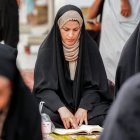
Muslims pray on a street in Vienna, Austria.

A recent judicial decision in Vienna has sparked an intense debate in Austria over the integration of religious legal systems into the country's legal framework. The controversy arises following the validation by a regional court of a financial arbitration based on sharia, Islamic law, which has generated criticism from various quarters who fear that this ruling could open the door to parallel legal systems and weaken the rule of law.
The case
The case began when two Muslim men agreed to resolve their disputes through an arbitration panel that would apply the principles of Sharia law. Following a dispute, the arbitration court ordered one of them to pay a sum of €320,000. However, the defendant refused, arguing that Sharia is susceptible to multiple interpretations and that its principles conflict with Austria's fundamental values. Despite this, the Vienna Regional Court dismissed the appeal, noting that Austrian law allows parties to choose arbitration systems to resolve financial or property disputes, as long as the outcome does not contradict the country's core legal values. The judges clarified that their task was not to assess the fairness of the Sharia itself, but to determine whether the ruling violated Austrian law.
The controversy
The decision has provoked mixed reactions. According to the Exxpress media outlet, the ruling is seen by some as a symptom of the European Union's failed migration policies, and there are warnings that it could erode confidence in democracy and the rule of law. Politicians from the Freedom Party of Austria (FPÖ), such as Manfred Haimbuchner, deputy governor of Upper Austria, have sharply criticized the ruling, saying Sharia law is incompatible with the country's Western and Christian values.
Haimbuchner pointed out that practices associated with Sharia, such as punishment by stoning or permissiveness toward domestic violence, are unacceptable in the Austrian legal framework.
Even organizations such as the Turkish Cultural Association have expressed concern, arguing that the decision could violate European Union treaties. According to the association, a 2003 ruling by the European Court of Human Rights had already established that Sharia law is incompatible with human rights principles, reinforcing fears that this ruling could have wider implications, affecting not only financial disputes, but also sectors such as trade and services.
Although the court emphasized that its ruling applies only to property disputes, critics fear it could set a precedent for wider acceptance of religious legal systems in Austria.
The controversy highlights the challenges of cultural and legal integration in a context of increasing diversity. While some defend the freedom of the parties to choose their methods of conflict resolution, others warn about the risks of allowing systems that, in their view, clash with the fundamental principles of Austrian law.
Sharia in action: Homosexuals sentenced to flogging in Indonesia and LGBTQ+ activist arrested in Morocco
In the Indonesian province of Aceh, known for its adherence to strict Islamic principles, a pair of 20- and 21-year-old university students recently faced harsh sentencing for gestures of intimacy. Caught by local authorities while kissing and hugging, the students were tried in a specialized court that applies religious rules.
The verdict, delivered behind closed doors except for the final reading, imposed 80 lashes each, arguing that such acts violate moral regulations that prohibit conduct seen as a precursor to unpermitted relationships.
In Morocco, a feminist and LGBTQ+ activist was arrested after sharing content on the internet that authorities interpreted as offensive. Ibtissame Lachgar, a leading figure in movements for personal freedoms, posted an image in July of herself wearing a T-shirt with the caption "Allah is lesbian," accompanied by a text describing Islam, as well as "all religious ideology," as oppressive and discriminatory toward women.
The Rabat Public Prosecutor's Office launched an immediate investigation, calling the publication an affront to the predominant faith, which led to the publicly announced arrest. Under the local legal framework, such expressions can carry penalties of up to two years in prison and significant fines, which are aggravated if disseminated on publicly accessible digital platforms.
Lachgar reported suffering massive harassment online, including serious threats, in response to her post.
LATEST