Trump asks China to evaluate release of businessman Jimmy Lai
The statement came after a court convicted him of three charges linked to the National Security Law.

Media mogul Jimmy Lai.

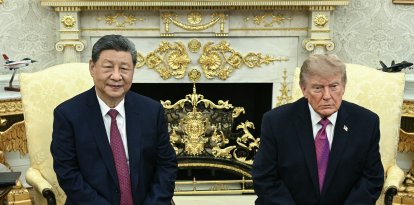
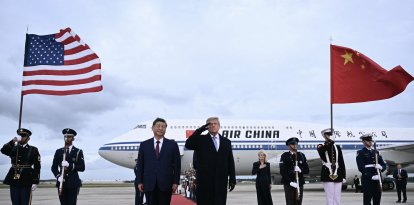
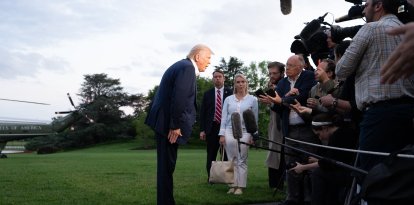
U.S. President Donald Trump reported that he asked Chinese President Xi Jinping to consider the release of Jimmy Lai, the media entrepreneur from Hong Kong convicted on national security charges. Trump explained that his request was based on Lai's age and state of health and noted that it is now incumbent to wait for Beijing's response.
"I feel very bad. I spoke to President Xi about it and asked him to consider releasing him," Trump told reporters.
The statement came after a Hong Kong court found Lai guilty ofthree charges linked to the National Security Act.

The conviction and charges.
Prosecutors argued that Lai was behind conspiracies aimed at promoting actions by foreign governments against Hong Kong or China and at allowing the publication of content that, according to the indictment, incited discontent against the government. The businessman pleaded not guilty and could face a sentence of up to life imprisonment, although he retains the right to appeal.
During the reading of the verdict, the judge stated that Lai maintained hostility towards the People's Republic of China and that he had requested help from the United States under the argument of supporting the people of Hong Kong.
International reactions.
The United Kingdom, the country of which Lai is a citizen, condemned the trial and called for his release. The European Union said the condemnation reflects the deterioration offreedoms and democracy in Hong Kong since the imposition of the National Security Law following the 2019 protests. China rejected these criticisms and objected to what it described as attempts to discredit the Hong Kong judicial system.
Press freedom and media context.
Local journalistic organizations have warned that the prosecution contributed to an atmosphere of self-censorship and fear in Hong Kong media, while Chinese authorities maintain that Lai acted as a tool of foreign forces.
LATEST