More than half of Germans would not defend their country in the event of an attack
According to a poll, 59% of respondents said they would "probably" or "definitely" not be willing to defend their country in the event of an attack. Defense Minister Boris Pistorius has already put contingency plans in place in case volunteers prove insufficient: he has opted to add to the new military service law the option of reactivating compulsory conscription at short notice.
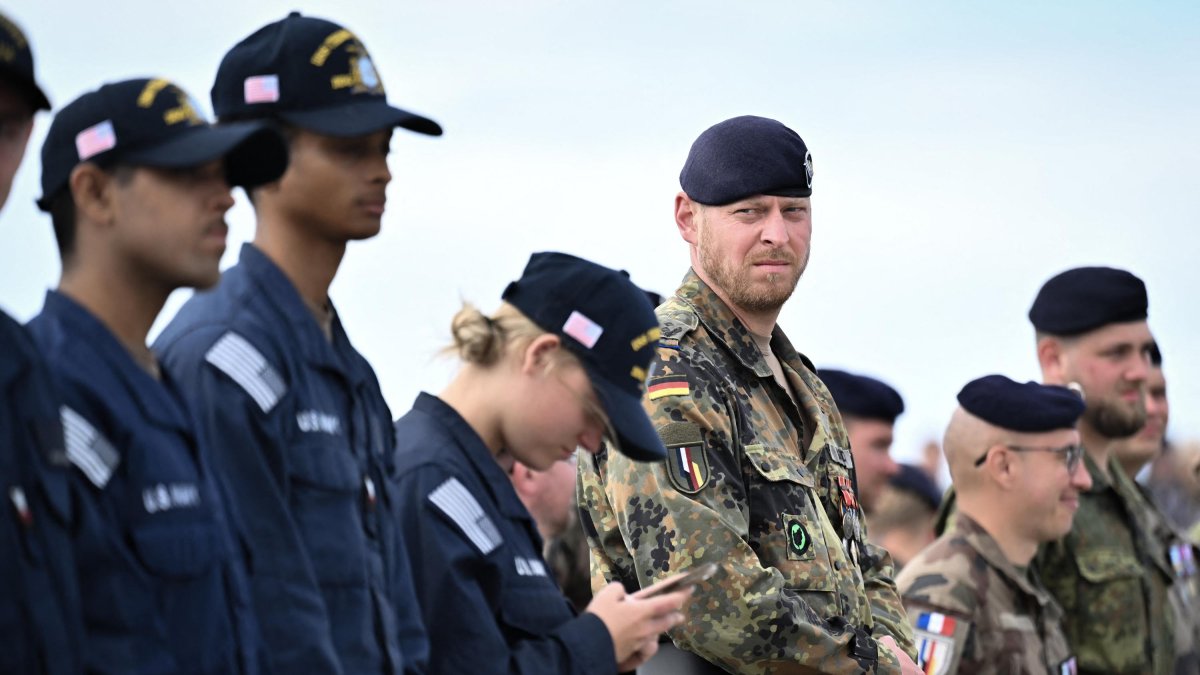
A member of the German Army-File Image.

A large proportion of Germans would not defend their country if it were invaded, reveals a poll by German broadcaster RND. According to the poll, 59% of respondents said they would "probably" or "definitely" be unwilling to defend their country in the event of an attack.
Only 16% of Germans would "definitely" be willing to take up arms to defend Germany, while 22% said they would "probably" do so.
According to The Telegraph, these figures pose a problem for German defense minister, Boris Pistorius, who is leading the efforts to rearm the country with the aim of making it a security powerhouse.
Attracting volunteers by offering better pay
After years of underinvestment in the military, Pistorius unveiled plans in July to recruit 40,000 young people a year into the Bundeswehr, the German armed forces.
The goal is for voluntary recruits to increase by 3,000 to 5,000 each year, starting with 15,000 to be trained in 2025, so that from 2031 onwards there will be 40,000 troops performing military service each year.
For the time being, the defense minister's plan is to attract more voluntary recruits by making military service more attractive, mainly by offering better salaries, rather than quickly reinstating compulsory military service.
Meeting NATO demands and standing up to Russia
On the other hand, according to United24 Media, André Wüstner, head of the German Bundeswehr Association, believes that increasing the size of the army from its current size of approximately 180,000 to 260,000 troops is essential to meet NATO requirements and cope with the threat posed by Russia.
In an interview with RedaktionsNetzwerk Deutschland, Wüstner said in late May that compulsory conscription should be introduced as part of the expansion plan for the army, as compulsory military service, previously very unpopular in Germany, ended in 2011.
According to Wüstner, a combat-ready reserve should be formed from that expanded force to reach the target of 460,000 soldiers.
In case the target is not met, Pistorius has already started to put contingency plans in place: he has opted to add to the new military service law the option to reactivate compulsory military service in the short term. This would come into effect if not enough volunteers were found or if the security risk increased. The cabinet is expected to debate the bill in late August.
The end of defense budget orthodoxy
The plan, worth several hundred billion dollars and requiring changes to the German constitution's strict debt limit rules, will be spent on rearmament and modernization of its infrastructure.
For decades of budgetary orthodoxy, Germany neglected military spending, taking advantage of U.S. protection after World War II.
"We must do everything to ensure that Germany once again has one of the strongest armed forces in Europe and can protect itself," Bavaria's conservative leader Markus Söder told the Bundesrat rostrum in March.
Merz also reiterated that the measures were a "first big step toward a new European defense community" that includes "countries that are not members of the European Union," such as the United Kingdom and Norway.
LATEST