Market instability due to geopolitical tensions in the Middle East
Gold rose sharply and European stock markets opened lower on Friday following Israeli bombings of nuclear and military facilities in Iran.
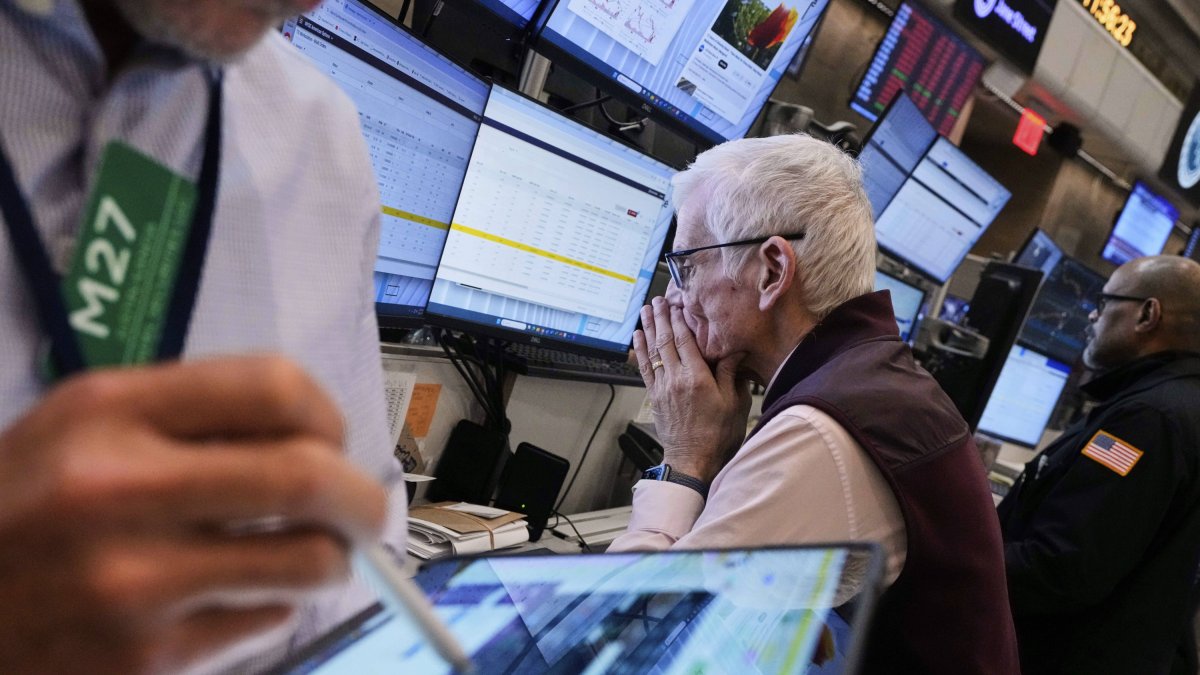
Workers at the New York Stock Exchange (File).

Oil prices soared, gold rose sharply and European stock markets opened lower this Friday amid heightened geopolitical tensions in the Middle East following Israeli strikes on Iran’s nuclear and military facilities.
Iran is one of the world's top 10 oil producers and markets reacted quickly in anticipation of a drop in crude supply, with prices soaring.
After rising more than 12% overnight, by 08H30 GMT, a barrel of West Texas Intermediate for July delivery was up 6.53% to $72.48. At the same time, North Sea Brent for August delivery was gaining 6.40% to $73.80 per barrel.
Iranian exports and Persian Gulf shipping
"Not only are the prospects for Iranian exports of concern, but also the risk of disruption to shipping through the Strait of Hormuz in the Persian Gulf, a key route for about 20% of global oil flows and an even greater proportion of liquefied natural gas (LNG) shipping," explains Derren Nathan, analyst at Hargreaves Lansdown.
"One-fifth of the world's LNG transits this strait," adds Ipek Ozkardeskaya of Swissquote Bank.
In this context, so-called "safe haven" stocks were favored over equities, which are considered risky.
Gold rises and the stock market falls
In early trading in Europe, Paris lost 1.13%, Frankfurt 1.32% and London 0.57%. By the end of the day in Asia, Hong Kong was down 0.97%, Shenzhen 1.10% and Shanghai 0.75%. Tokyo was down 0.89% and Seoul 0.87%.
"The focus is now on what form Iran's retaliation might take," says Jim Reid, an economist at Deutsche Bank.
"If Iran refrains" from retaliating, "there could be a sigh of relief from markets," but a strong response from Tehran against Israel "could redefine macroeconomic scenarios for the rest of the year" and an escalation of the standoff would have "global implications," reacted Stephen Innes of SPI Asset Management.
"In any case, many investors will probably prefer to reduce their risk exposure in the face of what promises to be a potentially very volatile weekend on the geopolitical front," Ozkardeskaya reckoned.
LATEST