Episode 86
Parenting to let go: Why the bond with adult children is sown from an early age
We spoke with Raquel Ramos and Penny Alonso about how to nurture that bond from childhood, adapt it at each stage, and maintain it when children are free to choose whether to stay close.
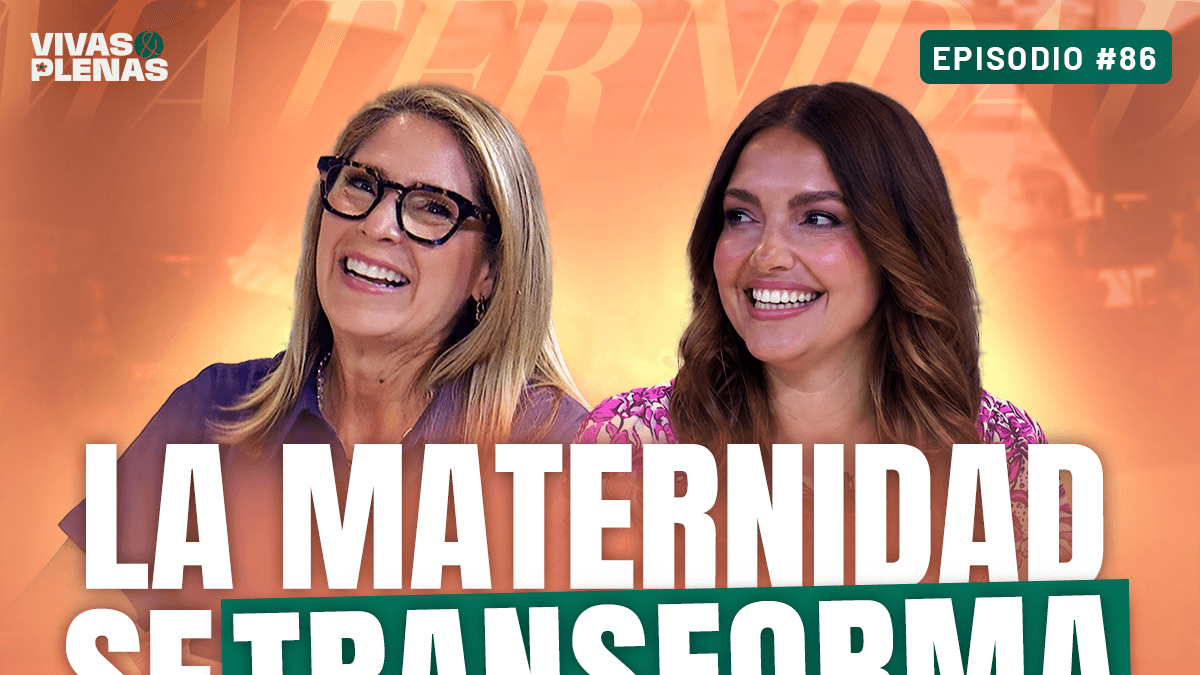
In this episode of "Vivas y Plenas," we spoke with Raquel Ramos and Penny Alonso about how children can fly as high as fate allows without breaking the bond. Because there comes a day when they're no longer obligated to stay with us, and whatever they decide then depends almost entirely on what was sown long before.
In this conversation, we explore how to nurture that bond from childhood, how a mother's role changes at each stage, and what we must let go of for the relationship to survive into adulthood. Because parenting always ends in the same paradox: what you let go of takes care of itself.
Children are like a seed
Raquel opens the conversation with an illustration: children are like a seed held in one's hand, and depending on how it's watered, it will grow. From the time they're small, how we interact with them and show them how relationships work shapes what happens later. And what comes next is clear: there comes a time when they are no longer obligated to be our children or to stay with us, and they'll only long for that relationship if we nurtured it from the very beginning.
Penny, a mother of three boys, agrees and adds something that's often left out of conversations about parenting: enjoy them. She describes the impact of videos where a mom dances and asks her son to film her, but what's actually captured is the child's face as he watches her. A mother who enjoys motherhood creates a bond simply by being happy.
From caregiver to companion on the journey: The stages of motherhood
Raquel explains that what helped her most was understanding that children go through stages, but that we mothers also need to grow alongside them. When they're babies, we're caregivers who provide security. When they're children, we teach them and set boundaries. During adolescence, we become a sort of coach cheering from the sidelines: "This is how you handle this situation; now it's your turn." And when they're adults, it's no longer about directing but about walking alongside them, being friends, listening, and asking questions.
The fundamental shift lies in the type of question we ask. Instead of giving the answer, Raquel suggests asking why they're making that decision, so that they can reach their own conclusions. Each child asks for something different: with one of her daughters, the conversation begins over the phone with a simple "How are you doing?" with the other, you have to spend time together until, at some point, a window opens and the conversation emerges.
Asking the right question and knowing how to receive the answer
Penny says that with boys, the classic "How are you?" always gets the same "Fine" response, so she had to learn to ask questions that would actually open things up. But the real challenge, she says, isn't in the question but in what comes next: as they grow up, the answers stop being what you expect.
"The answer itself will determine how you respond," she states. And that's the point: being shocked by what a child shares might be exactly what makes them decide never to share anything again. Added to that is the instinct to offer solutions, which comes through in the conversation with humor and honesty, because we moms have been there before. But often children don't come looking for a solution; they just want to be heard, and all it takes is lending an ear to understand the full picture.
Respecting a decision that isn't your favorite
Penny proposes three principles for adulthood: ask questions, don't be shocked by the answers, and respect decisions even if they aren't your own. She says this without any pretension: it's not her favorite decision; there are others that are much nicer, but she respects it. Sometimes we assume that with our children, we don't need to show the same respect we do toward anyone else, but it's actually the exact opposite.
Flor Elena takes it a step further. If everyone outside the home respects that person, but at home we keep treating them as if they were four years old, that person cannot develop or reach a healthy adulthood with their own boundaries. And there's the fear, which the panel doesn't deny, that we'll always be afraid they'll fail. It's normal. What can't happen is for fear to be the driving force all the time. As Yudy points out, unconditional love doesn't depend on them making the best decisions: you're there to celebrate their victories and also to cry and reassess.
Stepping into their world
The most concrete story in the episode is Penny's story about sports. When her children were young and everything revolved around sports, she realized she had two options: to be the mom who carries the bags and the food, or to be the mom who sits on the sidelines watching. She chose the second option, and that meant deliberately learning about sports. To this day, a large part of her relationship with them is built on that.
But it didn't work the same way with all three of them. One of her sons isn't into sports: he likes technology, reading, museums, art, and movies. And she had to learn about that world, too. The bottom line is that every child has their own point of entry, and finding it is more about opening your heart than technique. With boys, those shared moments open the door to difficult conversations: sitting together watching a game, during halftime, things come up that wouldn't come up if addressed head-on.
Penny adds something that's rarely said: children also have to learn to deal with their mother's emotions. She's had conversations where she cried in front of them and then explained what was going on, because one day they'll be with someone who goes through the same thing. The relationship goes both ways, especially once they're adults and can give back, too.
Values aren't just taught through empty words
Raquel insists that principles aren't passed on by simply stating them, but by living them, and she quotes a verse that guides her: "Train a child in the way he should go, and when he is old he will not depart from it." She explains it as a kind of "baggage": what takes root in a child's heart is what they carry with them when they leave home.
Proof that this "baggage" had made the journey came in the form of a story. One of her daughters studied music production at Berklee and composed a song so catchy that one of her professors organized an event to feature it. It was to promote a cannabis-infused beverage. As she told the story, her parents listened with bated breath, because their daughter is an adult now and could decide whatever she wanted. She said no: she'd rather her song not be played everywhere than see it used for something that didn't represent her.
Motherhood doesn't end, it transforms
We tend to think motherhood has an end, says Penny, but she believes it actually undergoes a transformation. Supporting a child as they navigate a relationship that isn't working, for example, puts into action everything you taught them, because what we said is one thing, and what they truly absorbed is quite another.
Penny says that being aware that we, too, can transform and adapt to what that child needs at every stage of life is what makes the difference between a relationship that's enjoyed throughout one's life and one that gradually deteriorates. And the reward is clear: seeing them happy, fulfilling their dreams, and starting their own families. But to achieve that, we must invest intentionally.
When they start their own families
Raquel shares something she heard when she was newly married that reshaped her relationship with her own family. When you get married, your family becomes the one you're building, and the one you grew up in becomes your extended family. The same applies when children grow up: they now have their own core family and different priorities. It doesn't mean being left out; it means understanding that the dynamics have changed.
That's where the episode's most practical piece of advice comes from. If we smother them and try to be there all the time, we'll run into resistance. If we give them space and make sure the moments we share enrich their lives- laughing, traveling, doing things together, and not just having serious conversations- the relationship changes form but continues. Raquel adds an idea that applies to both sides: we change every seven years. Neither they nor we are the same, and the risk is clinging to the image of the seven-year-old child—at mealtimes and in everything else.
The question we're afraid to ask
There's a question that runs through the end of the episode: What kind of mother do my children need right now? Several of the women present admit that they ask themselves this all the time, but that they've never asked their children directly.
Penny did ask it when all three went off to college, and she found herself facing an empty nest. One replied that he didn't need anything, and that answer alone set things straight for her. Another asked for something specific she never would have guessed on her own. The challenge, she acknowledges, isn't asking the question but receiving the answer without resentment: accepting a request for space as a legitimate boundary, not a rejection. When they asked her to call less often, she handled it this way: if I can't talk to them, I'll talk about them. And she began to pray.
Raquel says that text messages saved her. A photo that pops up as a memento on her phone, an "I'm thinking of you," a word of encouragement. Her daughters know they're under no obligation to reply, and that's precisely why it works: it arrives without pressure and is saved.
The episode closes with an image of Flor Elena, the same one she used at her daughter's wedding: children are eagles who must fly as high as their destiny, their gifts, and their purpose allow, and we mothers are the anchors that hold them steady in prayer and propel them forward.
Would you like to hear the full conversation?
Watch the full episode with Raquel Ramos and Penny Alonso on our YouTube channel.
Follow us on social media as well:
Instagram: @vivasyplenas
TikTok: @vivasyplenas
Facebook: Vivas & Plenas
🛠 Do you think there is an error in this article?
Recommendations



LATEST