ANALYSIS
The turns upside down: Commentator and Holocaust denier Nick Fuentes says Tucker Carlson is 'true Jew-hater,' calls on Vance to condemn him
Fuentes accused Carlson of rabid antisemitism and described him as someone suffering from what he called "Israel derangement syndrome."
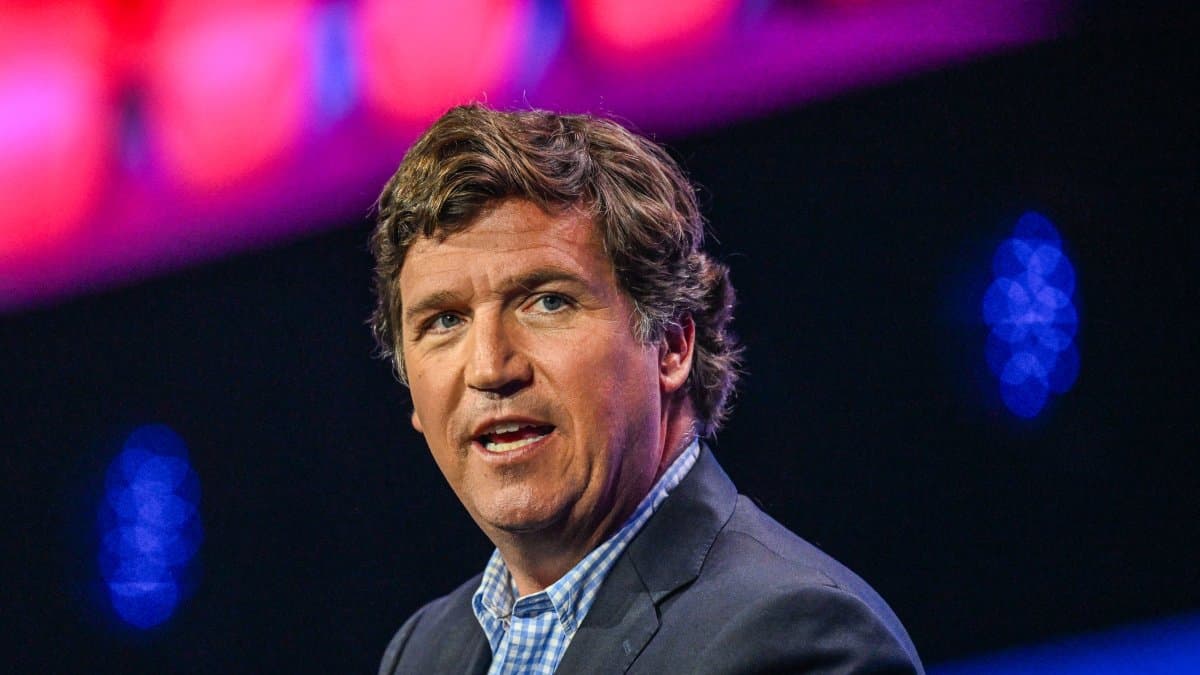

The public feud between far-right commentator Nick Fuentes and former Fox News host Tucker Carlson has brought to the forefront a question the Republican Party has long been dodging: To what extent is the American right willing to tolerate antisemitism within its own ranks?
The video and its context
According to a report by The Jerusalem Post, in a clip lasting approximately one minute posted Oct. 20, 2026, via the X account @ImperiumFirst, Fuentes accused Carlson of rabid antisemitism and described him as someone suffering from what he called "Israel derangement syndrome." According to the commentator, Carlson is "completely obsessed" with Israel and "it's the only thing he can talk about." Fuentes directly labeled him a "true Jew-hater."
In the same clip, Fuentes claimed that he had tried to steer Carlson away from that hostility during a visit to Maine. He cited their shared Christian faith as the basis for that intervention, but stated that the effort had failed. He then called on Vice President J.D. Vance to condemn what he called Carlson's "noxious hatred."
The Jerusalem Post notes that it cannot be confirmed with absolute certainty whether Fuentes' statements were sincere or sarcastic, nor the exact date of the recording.
Background to the interview
In October 2025, Tucker Carlson invited Nick Fuentes onto his podcast. During the interview, Fuentes espoused openly antisemitic views. The commentator argued that Jewish identity was inseparable from the political positions of the pro-Israel conservatives he was criticizing, and leveled accusations regarding Jewish "loyalty" and "influence" in the United States.
However, agreed with Fuentes in his criticism of the United States' relationship with Israel. He also harshly attacked Christian Zionists. On the same program, he stated: "Christian Zionists … I dislike them more than anybody … because it’s Christian heresy, and I’m offended by that as a Christian." He described that position as a "brain virus" and named, among others, Mike Huckabee, Ted Cruz and John Bolton.
That interview sparked intense controversy within the conservative movement due to Carlson's decision to provide a platform to a figure known for his Holocaust denial and his praise of Hitler. Subsequently, the relationship between the two deteriorated publicly. Fuentes accused Carlson of dishonesty and criticized his remarks in which he defended individual rights rather than a white identity politics agenda.
The test for Vance
The case puts Vice President J.D. Vance's position to the test, as he has tried to distance himself from Fuentes without completely breaking ties with Carlson, whom he still considers a friend. In September, speaking before the Republican Jewish Coalition in Las Vegas, Vance condemned antisemitism, calling it "corrosive to the soul." He also explicitly rejected Fuentes. However, he refrained from directly criticizing Carlson for having given him a platform.
According to a report by Politico, former Sen. Norm Coleman (R-Minn.), chairman of the Republican Jewish Coalition (RJC), questioned Vance about several names: "A few names: Tucker Carlson, Megyn Kelly, Joe Rogan, Nick Fuentes. They have platformed antisemites. How do you draw the line, in terms of … the platforms that you appear on?"
"I recognize a lot of people in this room may disagree with things that Tucker Carlson or Megyn Kelly or Joe Rogan have said," Vance replied, before moving on to discuss Rogan and Fuentes, stating that they are "two very, very different categories of people" and suggesting that with people like Rogan, one must engage in dialogue and reason, even when there are disagreements.
Carlson's silence comes at a cost
Activist Shabbos Kestenbaum warned that Vance's refusal to unequivocally condemn Carlson will make it very difficult to secure support from the Jewish community. Former South Carolina Gov. Nikki Haley summed it up clearly the next day: it is not possible to support both the Tucker Carlson wing and the pro-Israel wing of the party at the same time.
🛠 Do you think there is an error in this article?
Recommendations


LATEST