FAA deploys $875 million AI system to manage air traffic
The SMART platform analyzes some 200 data sources to anticipate congestion, bad weather and potential delays. It began operating on a limited basis in Washington and will later be expanded to other parts of the country.
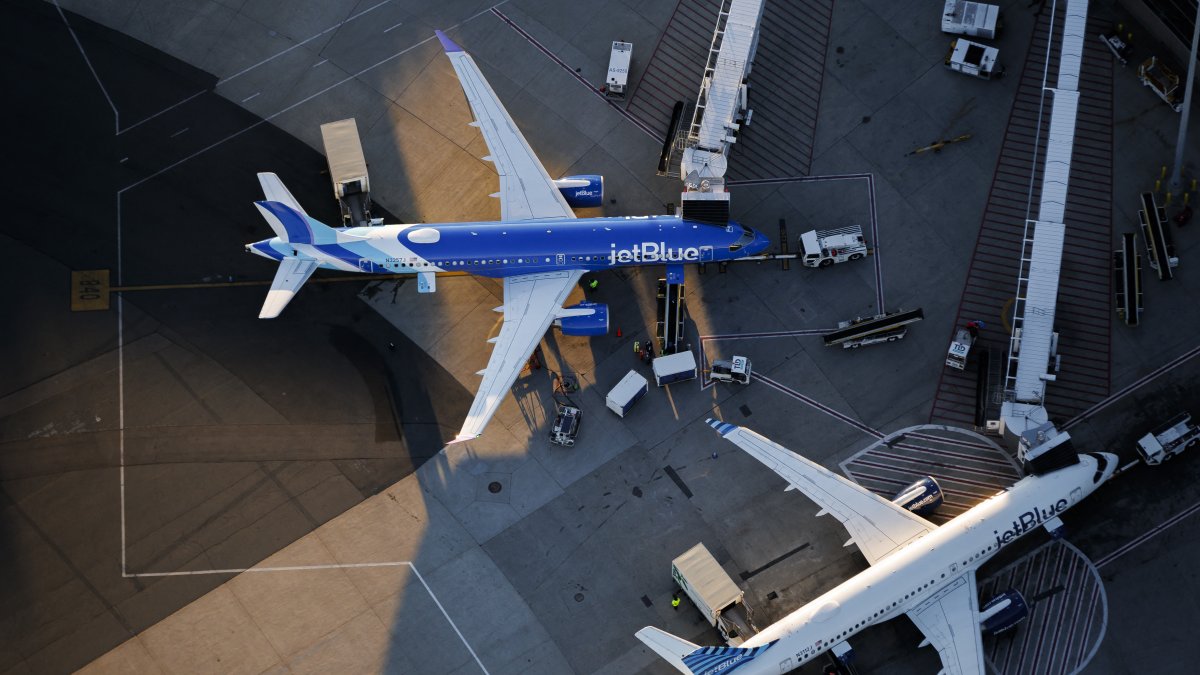
Two airplanes parked at Terminal C at Boston Logan International Airport

The Federal Aviation Administration (FAA) has begun using a new platform powered by artificial intelligence that aims to anticipate airspace congestion and reduce delays and cancellations before problems affect passengers.
The system, called Strategic Management of Airspace, Routes and Trajectories (SMART), was officially unveiled by Transportation Secretary Sean Duffy and FAA Administrator Bryan Bedford. Its implementation is part of the broader process of modernizing the U.S. air traffic control system.
According to NPR, the project represents an investment of approximately $875 million. The tool was developed in collaboration with Air Space Intelligence and began operating on a limited basis in the airspace around Washington, D.C.

Society
The FAA green lights Trump's arch in Washington, but requires an 'eternal flame' to alert pilots
Diane Hernández
A.I. to anticipate problems
SMART brings together 200 information sources on a single platform, including weather data, flight paths, traffic levels and air traffic controller availability.
Its A.I.-powered engine cross-references this data to show where aircraft will be, how much capacity the system will have available, and where problems caused by congestion or weather might arise.
The idea is to transform a system that typically responds to problems only after they arise into one capable of anticipating them.
The FAA explained that SMART can analyze demand, weather conditions and airspace restrictions to make forecasts hours, days and even weeks in advance. Based on that information, specialists can adjust flight plans or recommend alternative routes.
The agency explained when presenting the platform that SMART represents a shift "from a reactive approach to a predictive one."
Duffy stated that the technology will help reduce delays, ease the pressure on air traffic controllers, and, eventually, cut operating costs for airlines. The FAA even believes that greater efficiency could translate into lower prices for passengers, although that effect will depend on multiple market factors.
A.I. will not replace air traffic controllers
The recommendations generated by SMART must be reviewed by FAA personnel, and the managers of each facility retain the authority to accept or reject them.
This point is particularly relevant given the shortage of air traffic controllers that the United States has been trying to address for years.
A former air traffic controller interviewed by NPR described the technology as an additional tool for professionals and not as a substitute for their work. The National Air Traffic Controllers Association (NATCA) stated that it did not participate in the system's design, testing or initial implementation and has so far refrained from assessing what impact it will have on its workers.
Society
Washington airspace scare: Trump's helicopter flies within a mile of Passenger Jet
Emmanuel Alejandro Rondón
Multimillion-dollar modernization
SMART is being introduced as Washington carries out a much larger overhaul of the infrastructure that supports U.S. air traffic.
The Trump administration is allocating $12.5 billion to upgrade telecommunications lines, radars, radios and other components of the national air traffic control system. According to the FAA, the 13 main modernization initiatives are scheduled to be completed by the end of 2028.
The agency itself acknowledges that every day, thousands of flights depart with built-in delays because, at certain times, demand exceeds the available capacity of airports and airspace sectors.
The goal now is for a machine to detect such congestion before it forms.
The initial trial is focused on the Washington, D.C., area, and the FAA plans to gradually roll out SMART to the rest of the country over the coming months.
LATEST