ANÁLISIS
Charlie Kirk's legacy: Faith, family, and the battle for the minds of a generation
A year after the assassination, the co-founder of Turning Point USA left behind a network of campus chapters, a more explicitly Christian form of youth conservatism, and an organization still aligned with President Trump.
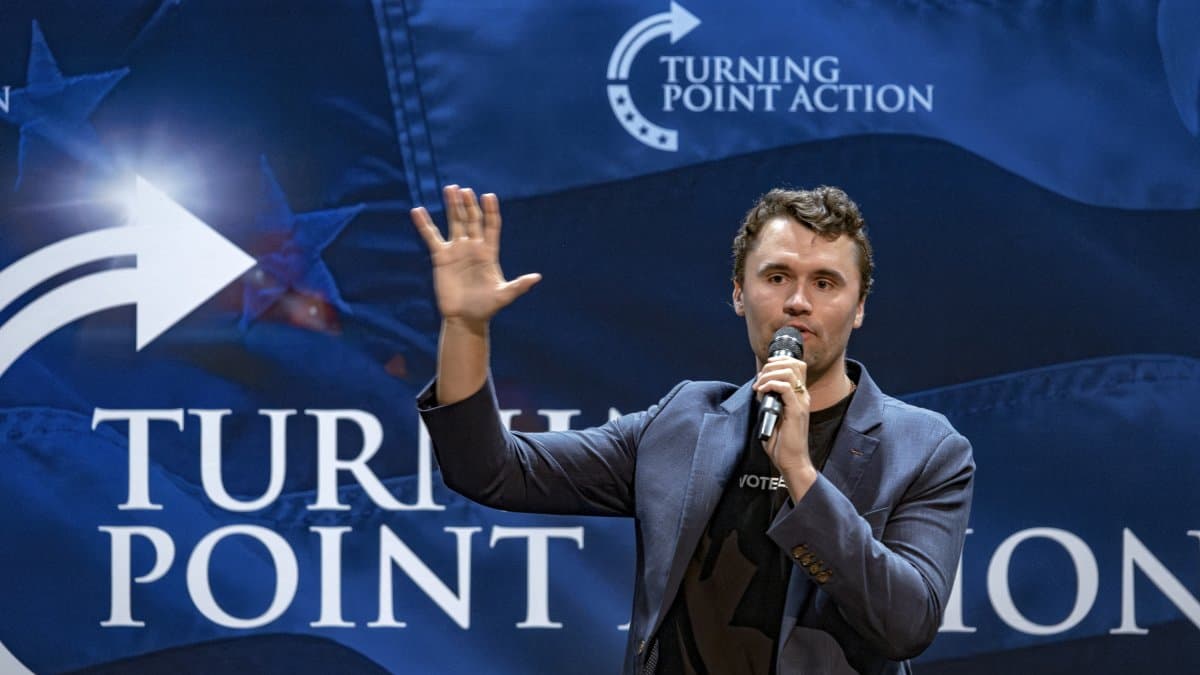

Charlie Kirk died on September 10, 2025, at the age of 31, shot and killed while debating with students at the Utah Valley University, a tragic end that cemented his image as a martyr of the American conservative right. His death, which occurred exactly one year ago, left a void in the youth conservative movement, but it also cemented his legacy as the architect of a new generation of Christian activists and defenders of traditional values.
An unprecedented student movement
At age 18, Kirk co-founded Turning Point USA (TPUSA), an organization that would become the most influential conservative force on college campuses across the United States. Its mission was clear from the start: "We identify, educate, train, and organize Americans to promote the principles of freedom." But Kirk understood earlier than many that the culture war was won or lost in the minds of young people, and he turned campuses into ideological battlegrounds where leftist ideas were challenged without compromise.
For more than a decade, Kirk traveled to American universities setting up tents, microphones, and debate tables, directly confronting students in exchanges that went viral on YouTube and social media. His stated goal was to save Western civilization, a phrase that resonated with thousands of young conservatives who felt marginalized in the dominant academic environment. TPUSA grew to include hundreds of student clubs and a network of activists who would carry the conservative message to every corner of the country.
Faith as a foundation: Kirk and militant Christianity
Kirk's conversion to evangelical Christianity marked a turning point in his activism. In his own words: "I started to come in a much closer relationship with Jesus Christ and reading my Bible more and becoming more, essentially, unapologetic about my Christianity. I was given a choice; I could try to descend more into this kind of secular world, or reaffirm my faith, and that's exactly what I did."
This faith was not a rhetorical accessory, but the core of his political worldview. Kirk argued that "the body politic of America was so Christian and was so Protestant that our form and structure of government was built for the people that believed in Christ our Lord."
His funeral, held on September 21, 2025, in Arizona, brought together tens of thousands of supporters and figures such as President Donald Trump, Vice President JD Vance, and Speaker of the House Mike Johnson. At that ceremony, Vance hailed him as "a hero to the United States of America and a martyr for the Christian faith." Trump, for his part, called him "a giant of his generation." Kirk had inextricably fused faith and political action and left behind a Christian right that views politics as a arena for religious convictions as well.
Kirk and Trump: A strategic alliance
Kirk was one of Donald Trump's closest allies and played a key role in his return to the White House in 2024. The president publicly credited him with having "captured the youth" and said that no one understood "the heart of the youth in the United States of America better than Charlie". Turning Point Action, the political arm of TPUSA, allocated millions of dollars to voter registration and get-out-the-vote campaigns in key states and organized massive rallies featuring Trump and other conservative figures.
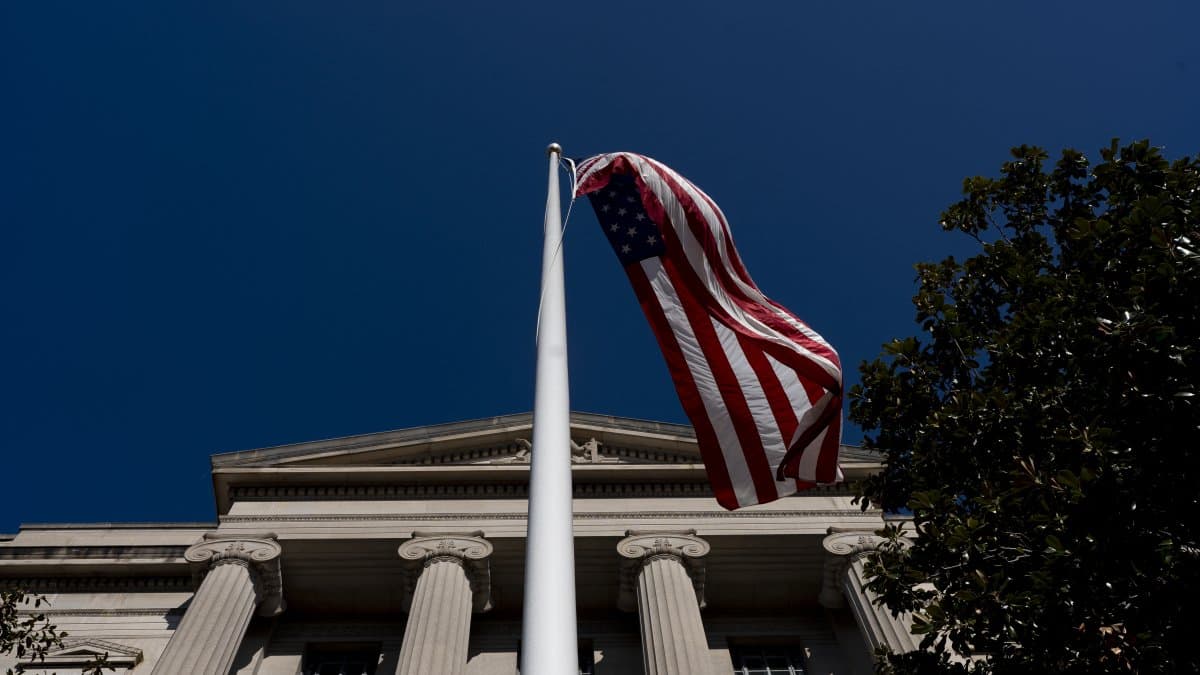
Kirk endorsed Trump's claims regarding the 2020 presidential election: he maintained that there was "overwhelming evidence" that the election was stolen, a stance that aligned him with MAGA. His death shocked Trump, who ordered flags to be flown at half-staff on U.S. public buildings through September 14. Israeli Prime Minister Benjamin Netanyahu paid separate tribute to him, calling him a "lion-hearted friend of Israel" and stating that he "was murdered for speaking truth and defending freedom."
Robert F. Kennedy Jr. credited Kirk with being the catalyst for his alliance with Trump. Following the activist's death, while serving as Secretary of Health, he said that Kirk had been the "primary architect" of his alliance with the president and that he announced his endorsement at a Turning Point rally.
An enduring legacy
A year after his death, Kirk's legacy is hard to ignore. He transformed youth conservative activism into a national network of chapters, conferences, and media outlets; he increasingly explicitly linked evangelical faith with political activism; and he left behind an infrastructure—TPUSA, Turning Point Action, TPUSA Faith— that continued to recruit and train activists. Leadership passed to his widow, Erika Kirk, who was named CEO and board chair. Under her leadership, the organization continued The American Comeback Tour and reported an increase in chapters and campus presence.
Kirk died defending what he proclaimed in life: "God, family, country. In that order." To his followers, he is a martyr of the culture war. To his critics, a polemicist who widened the country's divisions. In both narratives, his death is seen as a turning point for 21st-century American conservatism: not only because of the mourning, but because a segment of the young right began to treat faith, marriage, and voter mobilization as a single project.
That is the legacy that Ben Shapiro highlighted shortly after the memorial, when asked by Peter Doocy on Fox about Kirk's legacy one year later.
"I think Charlie’s legacy in will be death the same as it was in life but significantly, significantly larger," Shapiro began. "And that will be the thought of him on campuses, having open, robust discussions, convincing people, because Charlie was about convincing people that the conservative way of thinking, the Biblical way of thinking, was correct, and he spent his life pursuing that."
"He also happened to be behind the scenes an unbelievably good coalition builder, and so I think that that is going to be part of his legacy as well," Shapiro added.
Erika Kirk, one year at the helm of Turning Point
One year later, the organization counts some 1,500 college chapters (+64%), 3,500 high school clubs, more than 1,200 employees, and over one million students engaged in its programs. TPUSA Faith reports about 12,000 churches in its network. According to the organization itself, the nonprofit arm's fundraising exceeded $115 million in 2025. Spokesperson Andrew Kolvet maintains that, without it, the group might have fallen apart completely.
At the AmericaFest in December 2025, in Phoenix, Erika Kirk aligned Turning Point with the electoral calendar. She said they would work to ensure Trump retained control of Congress for all four years and that they would get JD Vance elected president in 2028 "in the most resounding way possible." At the same time, the political arm focused on the 2026 midterms, targeting states such as Arizona, Nevada, and New Hampshire.
On college campuses, Charlie's formula continued: the "Prove Me Wrong" and "American Comeback" debate tours went on. On the religious front, TPUSA Faith launched the Make Heaven Crowded Tour in 2026, a series of events in churches to expand the network of pastors and congregants.
🛠 Do you think there is an error in this article?
Recommendations



LATEST