ANALYSIS
US tightens controls: Social media now part of visa process
This measure is not isolated. It is part of a trend in recent years, where information verification increasingly relies on digital media.
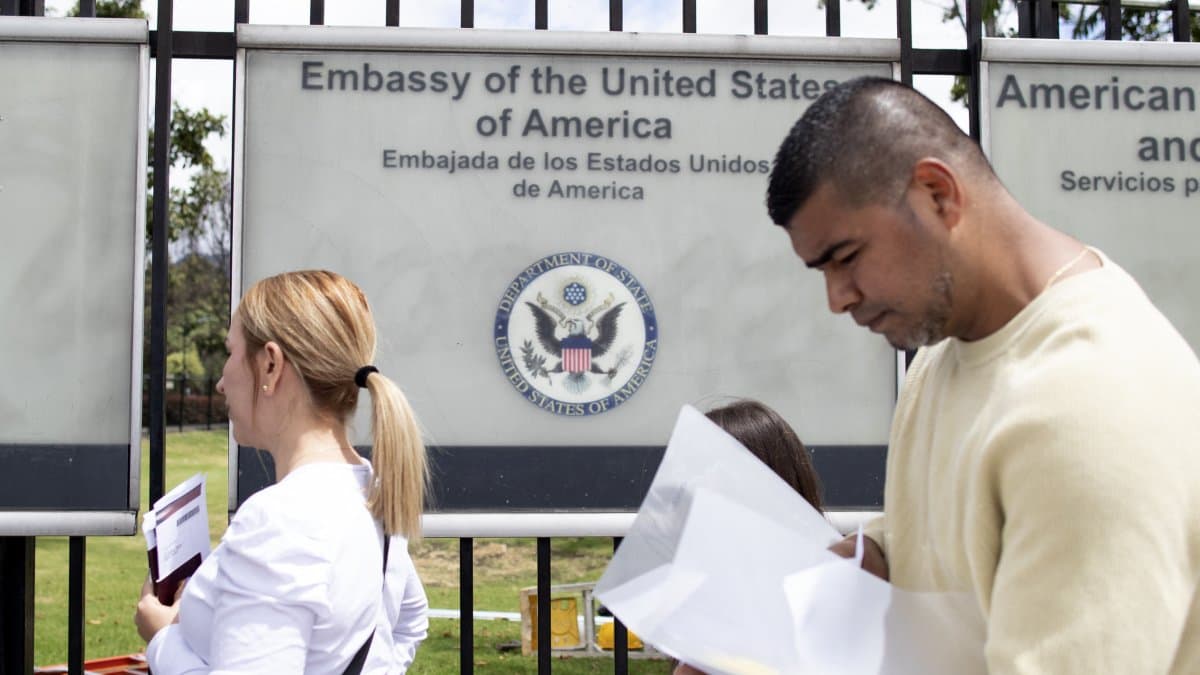

For years, immigration processes in the United States have been evaluated primarily through documents, forms and interviews. However, that reality is evolving. Today, the evaluation of a case goes beyond just paper.
The U.S. government has intensified its control mechanisms by incorporating an increasingly decisive element in people's lives: social media. Since March 30, visa applicants must keep their profiles public, allowing authorities to include this information in the analysis process.
This measure is not isolated. It is part of a trend in recent years, where information verification increasingly relies on digital media. Several reports have shown how migration authorities have expanded the use of technological tools to compare data and strengthen their evaluation processes.
In this context, one's digital presence ceases to be strictly personal and becomes an extension of the applicant's profile.
Authorities not only review what a person formally declares, but also how they project themselves on their digital platform. Posts, interactions and shared content can be considered as part of the analysis, especially when seeking to validate the aspects of the case or identify possible inconsistencies.
This poses a new scenario that demands greater awareness of one's digital footprint. It is not only a matter of complying with the requirements of the process, but of understanding that the way in which a person appears on social media can directly influence the perception of his or her application. Content that contradicts the intent of the visa, ambiguous messages or sensitive information can generate doubts that impact the result.
However, this review does not necessarily imply a negative approach. Rather, it reinforces the importance of consistency.
A well-structured profile, where the information presented in the application is aligned with one's digital presence, can significantly strengthen the case. In this sense, social media ceases to be a risk and is just another element within a comprehensive strategy.
The incorporation of these factors reflects a transformation in the way migration processes are understood. Digitization has expanded the tools of analysis, and with it, also the level of detail with which each case is evaluated.
Today, more than ever, migration requires preparation. And that story, inevitably, also plays out in the digital world. Every decision, every detail and every point of exposure is part of a narrative that must be clear, coherent and well-structured. Because in today's context, it's not just about what is presented on a form, but the whole story that each person projects.
🛠 Do you think there is an error in this article?
Recommendations




LATEST