INTERVIEW.
Persecuted Christians: When the harsh reality is hidden in abstract concepts
José María Gallardo, director of Aid to the Church in Need in Spain, analyzes the situation of the faithful who suffer discrimination and even violence for their faith in the world for VOZ. He points out that although the U.N. and the ICC flee from the term genocide, "for the communities in Benue or Plateau. Nigeria, who bury their dead every week, the technical distinction matters little in the face of a reality that they feel as a systematic attempt to wipe them off the map."
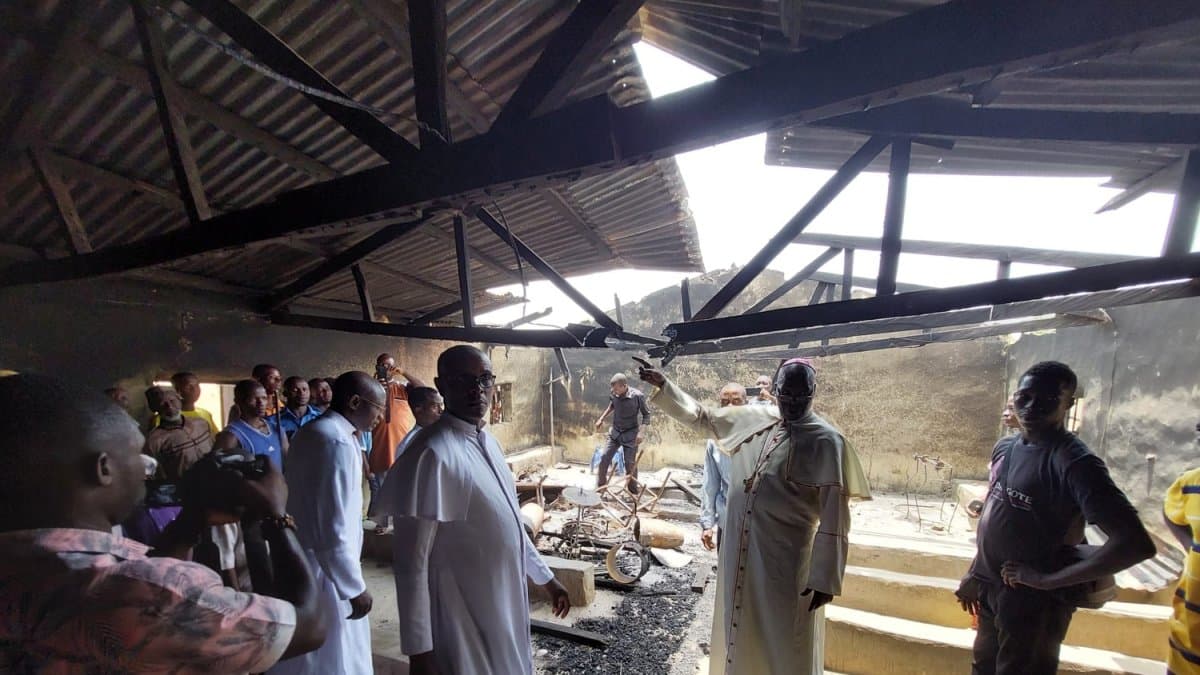

Christians celebrate at Easter the passion, death and resurrection of Jesus Christ. In most parts of the world, this is done through rituals. However, there are more and more countries where the faithful suffer discrimination, loss of rights, loss of home, or even martyrdom for not renouncing their faith.
These days, the holiest in the Christian calendar, have become in recent years a time when violent episodes and threats against believers are on the rise, and in which bearing witness to your beliefs can literally cost you your life.
To talk about the reality of these Christians, VOZ contacted José María Gallardo, director for the past year of the Pontifical Foundation Aid to the Church in Need in Spain. The interview gives us a glimpse of the harsh reality of these "heroes" of the faith, but also allows us to see the fruits of their efforts, such as in Nigeria, where "the more blood shed and the more martyrs there are, the more vocations are born in the country."
1. Is the situation of persecuted Christians getting better or worse as the years go by?
No one ever said that following Christ would be easy. In fact, Christ himself promised that his followers would have to be willing to go as far as he did. In the early years of the church, this was certainly demonstrated. And in these times of Holy Week where we are going to celebrate the Passion, Crucifixion and Resurrection of Christ, the persecution of Christians seems to be more widespread than ever.
Persecution of Christians has reached unprecedented levels worldwide. According to Aid to the Church in Need's World Religious Freedom Report 2025, believers face systematic attacks in 25 countries, and discrimination has been documented in 38 others.
Vatican Secretary of State Cardinal Pietro Parolin called these findings "troubling," underscoring an urgent reality: anti-Christian violence, ethno-religious nationalism and organized crime are driving millions of people from their ancestral homes and silencing their faith.
The data in this report is shattering:
- "413 million live in countries where freedom is severely violated. Of these, approximately 220 million live in countries where they are directly exposed to persecution."
- One in six Christians live without full religious freedom
- One in 10 are directly exposed to persecution.
- In one in three countries, Christian temples and properties with religious bias have been destroyed.
- In one in three countries around the world, Christians have been victims of physical or verbal attacks because of their faith.
- Between 2015 and 2025 at least 212 Catholic priests have been abducted in Nigeria, and of these, 183 were released or managed to escape, 12 were killed and three died as a result of trauma and injuries sustained during their captivity and the rest are still unaccounted for.
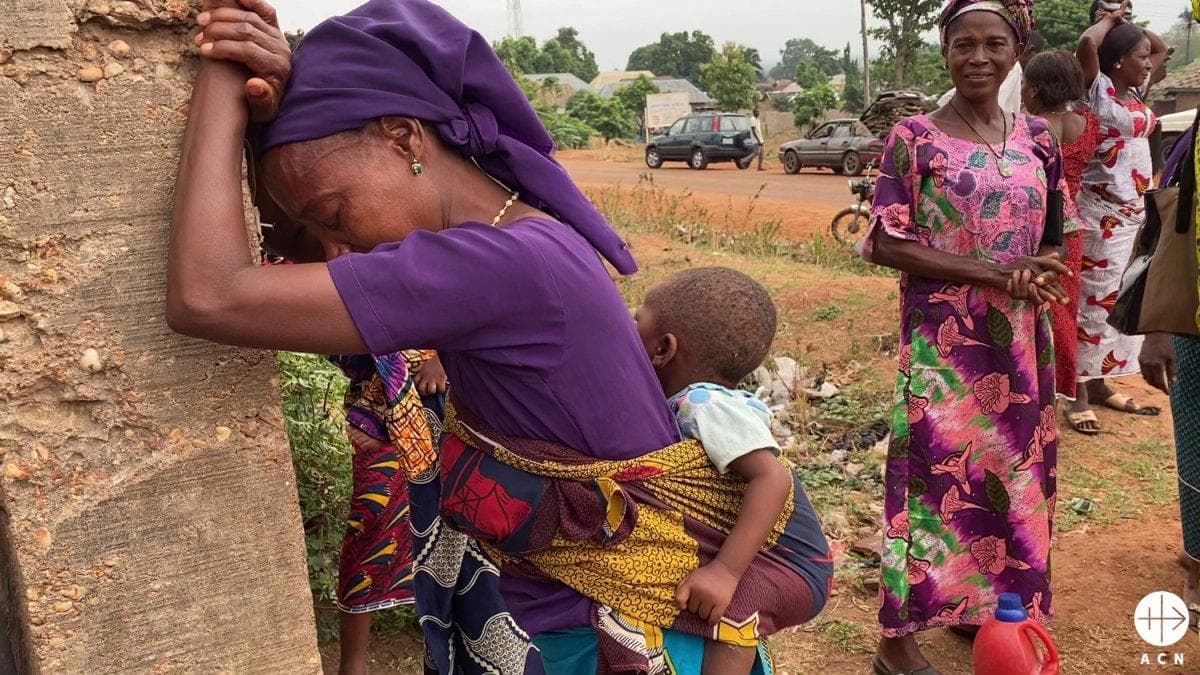
A Christian woman cries after an attack in Nigeria.Courtesy of Aid to the Church in Need.
2. What are the worst areas for Christians today?
With the religious-freedom map 2025, it can be seen that, from the jihadist violence ravaging the Sahel region of Africa to the authoritarian repression in Nicaragua and North Korea, the persecuted church faces serious threats to religious freedom on every continent. One need only look at this map to identify the regions in red where persecution occurs and those in orange where discrimination occurs, and to realize the global concentration of persecution and discrimination found in Central America, Africa, the Middle East, and Asia.
3. The highest number of murders of Christians for their faith is recorded in sub-Saharan Africa, but.... Is Africa the worst place for believers in Christ?
As we have mentioned above, Africa is one of the continents most affected by indiscriminate killings due to the pressure of Islamic fundamentalism, especially in the Sahel region. However, in other continents and countries of Asia and the Middle East and Central America, indiscriminate killings, persecution and severe discrimination over following Christ are taking place.
There are countries where the prohibitions of authoritarian governments forbid the celebration of Holy Week or processions (an example is Nicaragua) and where we have been told that as a result of this pressure or of war and armed conflicts, mass has to be celebrated in a hidden way as if we had returned to the times of the Catacombs. This has also been reported to us in the Russian-occupied territories of Ukraine.
4. Nigeria is by far the place with the most Christian persecution in the world. In fact, there are more martyrs there than in the rest of the world combined... despite the fact that the number of followers of Jesus is, or at least verges on, the plurality of the population. What is happening?
Nigeria is bleeding and cries the reality of the persecution that thousands of Christians suffer and that, precisely, has been the reason why we traveled to Nigeria just two weeks ago; to accompany, listen, feel the pain and touch the open side of the Lord in the middle of the 21st century.
This country is home to 230 million people (the sixth largest in the world) and this population is expected to double in 20 years, behind China and India. In the country, 300 ethnic groups coexist, and more than 500 different languages are spoke. The population is distributed in 40% Muslims, 40% Christians and the remaining 20% of other local religions.
Nigeria is the sixth most dangerous country for Christians after Burkina Faso, Pakistan, Syria, Mali and Niger, according to the Global Terrorism Index 2025, published by the IEP (Institute for Economics and Peace of Australia).
The current situation in Nigeria is complex and multifaceted, marked by a severe crisis of economic instability, widespread insecurity especially in the north of the country and humanitarian challenges. The principal reasons for the conflict Nigeria is currently experiencing can be summarized as:
1. Political weakness and mismanagement of the state, especially in the distribution of wealth.
2. A state of widespread corruption in the country.
3. The fight for natural resources, which increases the interest of foreign powers to gain a presence in the country.
4. A scarcity of land due to climate and population growth.
5. A high level of poverty in the country where there is also a high concentration of wealth in few hands.
6. Polarization characterized by a deep geographic and religious divide between the predominantly Muslim north and the largely Christian south, enhanced by resource conflicts and extreme violence.
The escalation of violence due to various violent groups targeting Christians, as detailed below:
- Boko Haram: Famous mainly for its violent Islamist insurgency in Nigeria since 2009, the terrorist group is seeking to impose a strict interpretation of Sharia or Islamic law which is the detailed code of conduct and law based on Islam that regulates all aspects of life, including worship, morality, what is allowed and what is forbidden. In 12 states in Nigeria, Sharia law (in one out of every three states) has been imposed, which acts as a guide to conduct and, in some countries, as the basis of their legal system.
Boko Haram means "Western education is sinful," which guides the group's attacks on educational institutions and the government. It is located in northern Nigeria in North Eastern Borno State (birthplace of Boko Haram), where 30% of the population is Christian. This group is sadly known internationally for mass kidnappings, such as the one in Chibok in 2014 where 274 girls were kidnapped and attracted worldwide attention under the slogan "give back our girls." The group is characterized by brutal attacks against civilians, territorial control in northeastern Nigeria and the declaration of a caliphate in 2014.
- Islamic State of West Africa or ISWAP (Northern Nigeria): This is a faction of Boko Haram that in 2015 swore allegiance to the Islamic State (ISIS/Daesh). It is one of the most violent and cruel groups in the world. Here, the conflict centers on the control of Lake Chad (border between Nigeria, Niger, Chad and Cameroon) and attacks on military posts. ISWAP, in particular, is attempting to establish an Islamic caliphate, charging taxes and providing basic services to local populations to gain their loyalty.
- Fulani (Muslim Pastors, Central Nigeria): They have more and more external support, more sophisticated weaponry and have increased attacks on Christian farmers. They are an ethnic group, present throughout the Sahel, also called Fula or Peul. They are traditionally nomadic pastors. They have been exercising lethal violence in the last decade, motivated by the conquest of land. Their aim is to raze all communities, stay, change their names and properties, and eventually settle, even bringing in Fulani from other places and other countries. They produce the biggest killings, especially in Benue State. They exert greater violence than jihadist terrorism, although not all Fulani are terrorists.
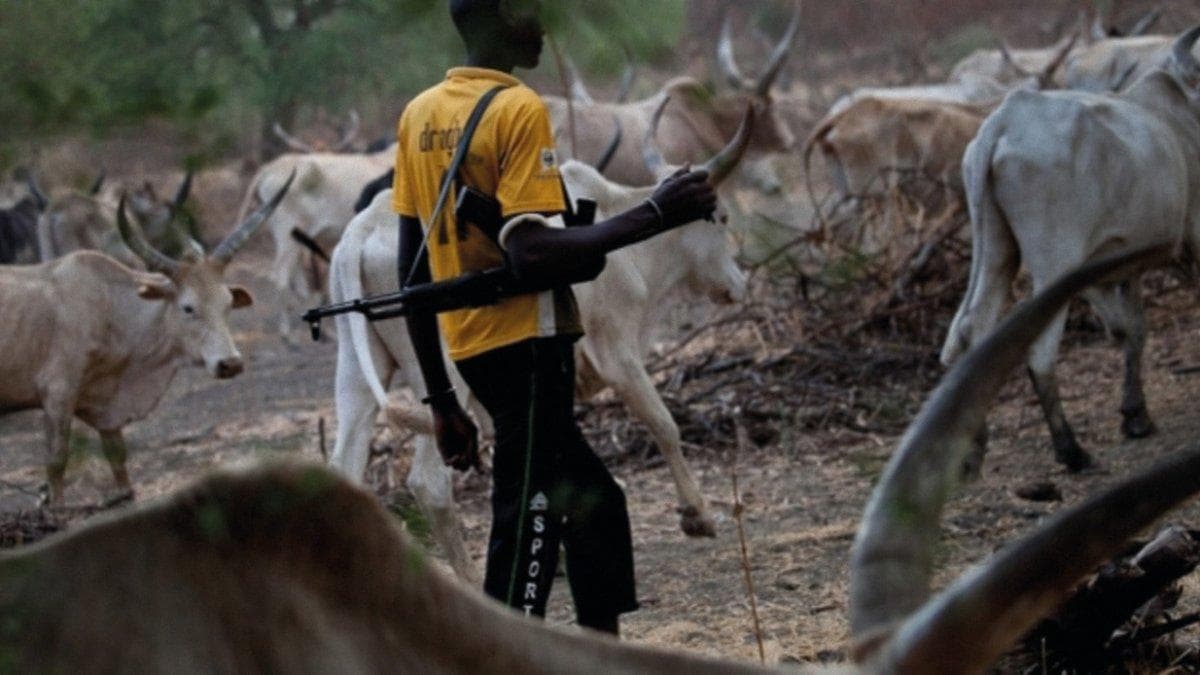
A Fulani herds his flock with a machine gun on his shoulder.Courtesy Aid to the Church in Need.
Criminal and kidnapping gangs: Numerous groups roam freely in different states and indiscriminately attack, rob and murder people of any ethnicity or religion.
This situation, marked by insecurity and economic crises, has resulted in more than 3.6 million people internally displaced in the country.
5. Is there a silenced Christian genocide in Nigeria?
According to the message from the Conference of Catholic Bishops of Nigeria last November, there is not just a genocide against Christians, since the attacks are not only against the Christian community in the country. We can affirm that there is persecution against Christians in certain regions of the center and north of the country. For example, in Benue State, according to the voices of local bishops, there is continuous, persistent and severe persecution. But at the same time, this violence is multifaceted, intermingling ethnic disputes, land disputes and historical conflicts.
For the U.N. or the International Criminal Court, declaring a "genocide" requires proving the "specific intent to destroy, in whole or in part" a group. Hitherto, these institutions have been cautious, preferring terms such as "crimes against humanity" or "regional ethnic cleansing."
The U.N. or the ICC shy away from the term genocide. However, for communities in Benue or Plateau who bury their dead every week, the technical distinction matters little in the face of a reality they feel is a systematic attempt to wipe them off the map.
The debate over whether there is a genocide against Christians in Nigeria confronts two deeply divided positions. Those who claim that it is a "slow-motion genocide" executed by jihadist militias and armed groups that systematically attack churches, schools and homes in the Middle Belt with the aim of displacing Christian populations and imposing a religious agenda. This view is supported by the brutality of the numbers and the apparent inaction of the state, which many interpret as a tacit complicity in allowing the territorial and religious reconfiguration of the region.
On the other hand, the Nigerian government and various international agencies prefer to characterize the violence as a multidimensional conflict driven by the collapse of security and the struggle for basic resources. They argue that climate change and desertification are forcing herders to move south, generating bloody clashes with farmers over control of land that are not always religiously motivated. Moreover, they point out that thousands of Muslims also die at the hands of these same groups, which complicates the legal classification of "genocide" before international institutions that demand proof of an exclusive intention of religious extermination.
But if we can say that Nigeria living on the brink of collapse, the escalation of violence and the serious situation of insecurity throughout the country reach limits never seen before and that the data speaks for itself:
- 259 Christians killed in June 2025 in the village of Yelwata
- 265 students abducted last November in a school in Papiri
- 172 people abducted in Kaduna
- More than 200 priests abducted in the last decade.
Northern Nigeria has become one of the most dangerous places to live if you are a Christian, and we need to speak up to condemn the systematic persecution and discrimination suffered by Christians, especially in this region.
"There is a strategy of thwarting our mission. They are injecting fear in our priests, kidnapping them again and again, in the laity who come to mass, bombing and attacking them, preventing them from gathering together. There is an Islamist agenda to reduce the Christian presence in Nigeria."Archbishop Kaigama of Abuja.
6. And in the rest of the world?
In the rest of the world, we cannot speak of "Christian genocide," but we can speak of an international pressure of Islamic fundamentalism and communist authoritarian states for trying to limit the free expression of the Christian faith and religious freedom.
Although countries such as North Korea or Somalia rank high in the general index of danger due to extreme oppression and lack of absolute freedom, Nigeria leads in the category of lethal violence. This situation is due to a complex mix of militancy by groups such as Boko Haram and the Islamic State West Africa Province (ISWAP), along with attacks by radicalized Fulani herdsmen. Other countries with high levels of physical violence include Sudan and Mali, but mortality figures in Nigeria remain, year after year, the highest on the planet.
We must highlight and defend Article 18 of the United Nations, which guarantees that everyone has the right to freedom of thought, conscience and religion, and this includes the freedom to change one's religion or belief and to manifest it individually or collectively, in public or in private, in worship, teaching and practice.
7. What is the objective of the "Sana Nigeria" ("Heal Nigeria") Campaign?
The slogan of the "Sana Nigeria" (Spanish for "Heal Nigeria") campaign says: "Persecution cannot have the last word; Heal Nigeria." And that is what we want with this campaign: that persecution may not have the last word and that our church in Nigeria may have "pastoral weapons" to defend itself from persecution and avoid it.
We have put into action the three pillars on which our pontifical foundation rests:
a) Prayer (for persecuted Christians and their persecutors).
b) The prophetic information or condemnation to highlight the reality of the persecution suffered by Christians in Nigeria and the multifaceted reality that occurs.
c) The charity (economic aid) that is necessary to help the church in Nigeria, split into three major needs and projects to be funded:
- Strengthening the faith: Aid to priests, seminarians and the religious. Supporting them in their material, formative and pastoral needs.
- Healing trauma: Assisting them in the construction of a trauma center in Abuja for displaced people where psycho-spiritual support heals the hearts of those who have suffered the traumas of war and persecution
- Protecting the persecuted (safety and security): Construction of walls, alarms, wire fences and vehicles to prevent theft, hijacking and for evangelization not to stop.
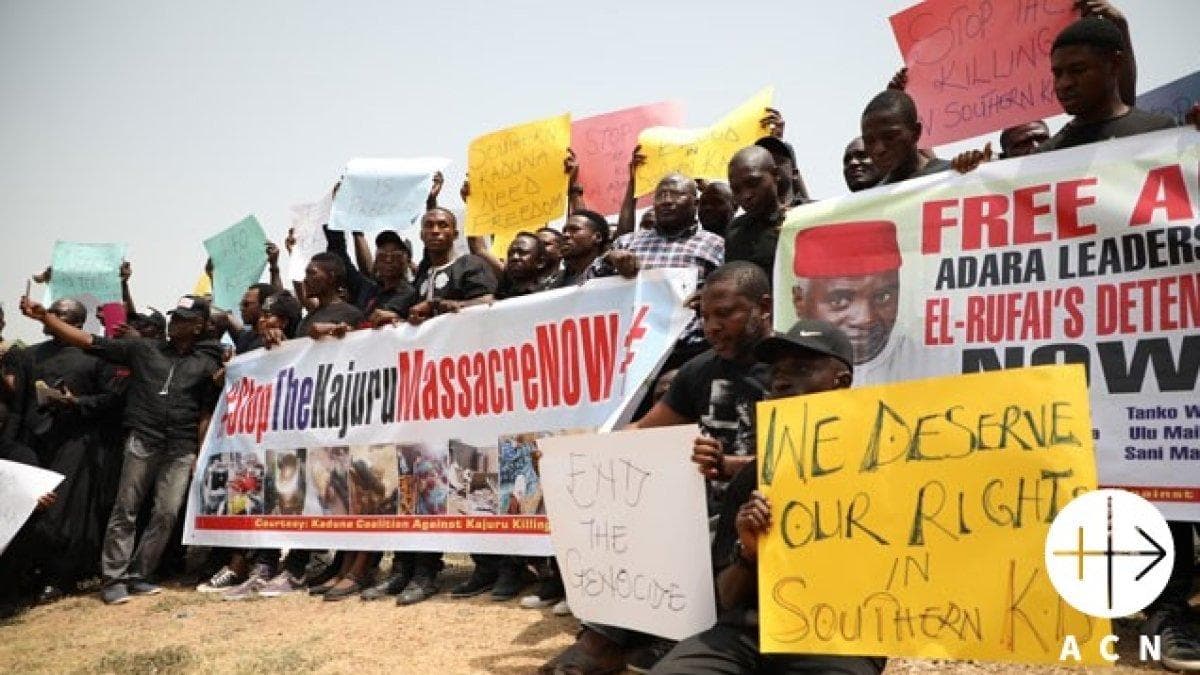
Demonstration for an end to massacres in Nigeria.Courtesy of Aid to the Church in Need
In the midst of violence and persecution, the church in Nigeria does not abandon its people. Priests, nuns, seminarians and lay people stand alongside Christian communities suffering the consequences of violence, but want to continue to bring them faith, comfort and hope.
With the help of the benefactors of our foundation, Aid to the Church in Need, the church wants to heal the wounds of the people of Nigeria. So persecution does not have the last word, we invite all readers of this interview to help support Nigeria through our website (https://www.churchinneed.org)
8. Why do you think that crimes against Christians are ignored, or that the fact that a victim is a Christian is hidden? Certain media outlets characterize the conflict in Nigeria as one between nomads and herdsmen....
I have already commented above that the conflict in Nigeria is multifaceted, and though there are a multitude of factors and we cannot hide the attacks on Christians, we must say that in some of these attacks provoked by the different groups mentioned above, Muslims are also killed.
We cannot allow the indiscriminate attacks on Christians in Nigeria to be ignored, and we must demand that their government defend, especially in the north of the country (but not only) the mostly Christian populations; so that the thousands of internally displaced people who have had to leave their towns and cities can return, live in peace and celebrate their Christian faith in total freedom and in communion with their Muslim brothers and sisters or other religions where they share the territory. In Africa and throughout the world, there are examples of peaceful coexistence between citizens of different religions, and what we have to do is to promote peaceful coexistence and interreligious dialogue that builds bridges of peace and harmony.
9. In your experience with persecuted Christians, what would you highlight about them?
For me, persecuted Christians are an example that strengthens my faith. They are heroes of the faith who in the 21st century show us that the blood shed by martyrs who have lost their lives to defend the faith in Jesus Christ magnifies our own lives and makes us proud of them.
We pray for them, but they also tell us that they pray for us, and secularization and the loss of Christian values will not disappear in Western countries.
The bishops of Nigeria have told us that the more blood shed and the more martyrs there are in Nigeria, the more vocations are born in the country. The seminaries are full, and vocations continue to grow both at the diocesan level and at the level of contemplative and apostolic congregations.
10. Christianity is, above all, hope. Are there silver linings among the persecuted?
There are always silver linings among Christians who suffer persecution or discrimination in the world. They are our hope and we are their hope.
From Aid to the Church in Need (ACN Spain) we want to be a loudspeaker for those whose testimony, courage and bravery allow our faith to be strengthened and reinforced so that "we are on the right path."
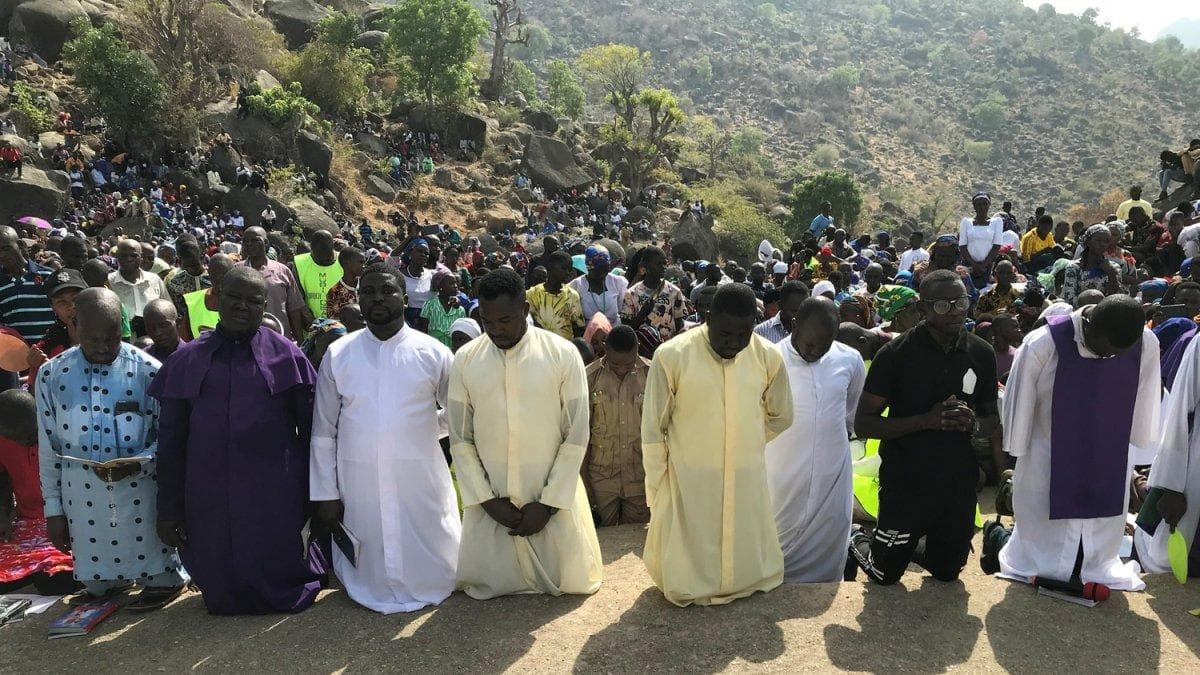
A group of Christians pray in Nigeria.Courtesy of Aid to the Church in Need
Recently, a postulator of the cause of Father Ganni (murdered in Iraq in 2007), presented to us in 2024 during the Night of Witnesses (an event held annually by our foundation), celebrated in the Almudena Cathedral of Madrid and presided over by our Cardinal, D. José Cobo, some key points on how a persecuted Christian and martyr (in this case a priest) of the 21st century can help us strengthen our faith and bring hope to our lives:
1. In every martyr, beyond a violent death there is a sign of God; there is a coronation that God has wanted to make of a son of his.
2. Among the people of God and of the Diaspora, the figure of persecuted and murdered Christians has enhanced their faith and their commitment to follow Christ.
The greatness of a martyr of the 21st century is that they have been among us and with many witnesses who knew them and confirmed their love for God and their commitment to the poorest.
4. Every martyr is a witness and heir to the faith of our ancestors who remind us of the origins of Christianity and how the faith has endured for centuries.
In his "Pope's video" within the Pope's World Prayer Network, he said: "Let us pray that those who, in various parts of the world, risk their lives for the Gospel, may infect the Church with their courage and missionary zeal. And open to the grace of martyrdom."
We cannot leave them abandoned, and that is why the foundation helps the church in need through its 24 international offices. From its office in the United States, we will continue to support Nigeria and all persecuted Christians around the world.
🛠 Do you think there is an error in this article?
Recommendations
LATEST