ANALYSIS
Fraud and waste: Rural hospitals account for only 7% of total Medicaid hospital spending
The "One Big Beautiful" bill aims to bridge the gap between Americans by expanding access to resources for vulnerable populations.

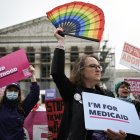
An ambulance passes near a pro-Madicare demonstration.

On Sunday, the White House released a document debunking speculation about the "One Big Beautiful" bill promoted by President Donald Trump. Among the "myths and realities" it outlined were claims related to the Medicaid and Medicare services Americans currently receive.
One key point the document emphasizes is that the "One Big Beautiful" bill does not "kick American families off Medicaid." Instead, it highlights that the president has repeatedly stated there will be no cuts to the program.
Just The News
SCOTUS upholds South Carolina ban on Medicaid funds for Planned Parenthood
Just The News
The "One Big Beautiful" bill protects and strengthens Medicaid for those who rely on it—pregnant women, children, seniors, people with disabilities, and low-income families—while aiming to eliminate waste, fraud, and abuse, according to the Oval Office.
The Administration emphasized that the legislation does not include a single cut to welfare programs, stating that it "protects them for all eligible Americans."
">FACT: Rural hospitals comprise just 7% of all hospital spending on Medicaid. By strengthening Medicaid, we are making more resources available for vulnerable populations and safety net providers, like rural hospitals. We are expanding rural hospital protection, providing targeted… pic.twitter.com/hzrUYrZUWA
— Rapid Response 47 (@RapidResponse47) June 30, 2025
The "One Big Beautiful" will not close rural hospitals.
Rural hospitals account for just 7% of total Medicaid hospital spending, which, according to the document, shows they have not benefited from the significant rise in waste, fraud, and abuse under the Biden administration.
"By strengthening Medicaid, we are making more resources available to vulnerable populations and safety net providers, such as rural hospitals. We are expanding protections for rural hospitals, providing targeted funding for rural care, and giving states flexibility to support local providers," it says.
What are rural hospitals?
As of the most recent data (2010–2022), there are approximately 1,982 rural hospitals across the country.
However, from 2005 to 2023, 146 of these hospitals either closed or converted to non-acute care facilities, meaning they ceased providing inpatient acute care. Of those, 81 shut down entirely.

Politics
Harsh setback for Trump's mega bill: Medicaid reform does not comply with Senate rules
Joaquín Núñez
Politics
Trump signs executive order to lower the price of prescription drugs and pharmaceuticals
Carlos Dominguez
Other "myths" debunked by the Oval Office
The Trump administration also rejected claims that the new bill would cause "people will literally die" or leave millions without access to medical care.
The official statement describes these claims as "one of the most egregious and unhinged attacks from the left, sowing fear instead of facts."
The statement also dismisses other speculated concerns, including benefits for people with disabilities, work requirements for vulnerable Americans, and coverage for at-risk populations.
"Over the past 10 years, CMS admitted that improper Medicaid payments have exceeded half a trillion dollars. Last year alone, taxpayers spent $56 billion on benefits for able-bodied adults, abusing the system, and more than a million undocumented immigrants receive free health care at taxpayer expense."

The White House specifies that the One Big Beautiful Bill will remove undocumented immigrants, establishes work requirements for able-bodied adults and protects Medicaid for those who are truly vulnerable.
CMS Launches New Model to Address Unnecessary and Inappropriate Services
Called the Wasted and Inappropriate Services Reduction (WISeR) model, this initiative will see CMS partnering with companies specializing in advanced technologies to explore improved and faster prior authorization processes compared to those currently used in Original Medicare.
The goal is to help patients and providers avoid unnecessary or inappropriate medical care while safeguarding federal taxpayer dollars. This model builds on recent prior authorization reforms announced Monday by the U.S. Department of Health and Human Services and CMS.
LATEST