ANALYSIS.
Leo XIV, the pope who emerged from an American Catholic Church "at the crossroads"
Although Catholicism remains the majority faith, its numbers are barely holding steady thanks to immigration. At the same time, there is a deep divide between hardline conservatives and radical progressives, who even support abortion and the so-called 'woke' culture.

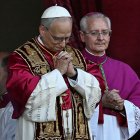
Cardinal Prevost celebrates Mass at the Vatican in the days before his election

The election of Leo XIV, the first American pope in history was received "with enormous joy" by the national Church. An institution that lives "at a crossroads," according to the latest sociological studies and that congregates some 53 million people (20% of the total population), 36% of whom would be Hispanic.
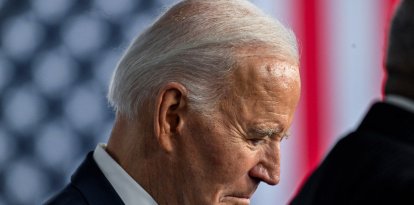
A true reflection of the universal Church, the U.S. Church is currently deeply divided between a radically progressive faction—which questions non-negotiable principles like the defense of the unborn (Joe Biden being a clear example of this type) and promotes gender ideology in the name of 'inclusion'—and a deeply conservative wing with a notable ability to make itself heard worldwide, represented by Cardinal Raymond Burke and groups like Catholic Voice.
Conservative group Catholic Vote has the power to make itself heard around the world
Precisely the latter organization has carried considerable weight in the news that has appeared in the media since the death of Pope Francis. Its campaigns did a lot of damage to Cardinal Pietro Parolin, Vatican secretary of state and a big priori favorite.
For example, Catholic Voice got the Holy See's dicastery of communication, which does not usually deny any information, to hasten to label as "false" reports about an alleged fainting spell and the fragile health of Bergoglio's former number two. This organization also recalled that the Italian cardinal was key to the Vatican's "betrayal" of the Christian martyrs in China because of the agreement with the Communist government in Beijing.
The second big favorite before the start of the Conclave, Luis Antonio Tagle, was also the subject of attention from this group and its satellites, with videos of the Filipino singing John Lennon's Imagine while throwing their hands up in the air because it was a song advocating a world without religions. In this case, they hit the nail on the head and the campaign ended up being a boomerang that relaunched the image of the Asian Francis who, by the way, took the opportunity to share several videos of himself that increased his popularity among young Catholics.
Four out of 10 Catholics in the U.S. were born abroad or to immigrant parents
Returning to the figures, the latest studies on religion and the situation of Catholics in the United States agree that, although it continues to be the leading religion in terms of number of followers and its number remains relatively stable in the United States, it is still the most popular among young Catholics and its number has remained relatively stable over the last decade, there is a declining trend, especially among those born in the USA, and it is immigrants who keep the number at around 20% of the total population, according to Pew Research Center.
According to this agency's latest survey, four in 10 U.S. Catholics were either born in other countries (29%) or their parents were immigrants (14%). Catholics born in the U.S. to U.S. parents accounted for 54%.
The fall in the number of Catholics contrasts with the growth of Evangelicals
According to figures from the Association of Religion Data Archives (ARDA), which run to 2020, there were more than 61 million Catholics at that time, accounting for 18.7% of the population. The trend was towards stability, after plummeting more than three percentage points from 22% in 2000 in just a decade (2010), when they accounted for 19.1%.
A trend that coincides with the rise of evangelicals, who have seen their numbers increase from 14.2% at the beginning of the century to 16.5%, registering the highest growth of any creed in the U.S.. Non-evangelical Protestants, on the other hand, have experienced an even greater decline than Catholics, sinking from 9.3% to 5.2% in 20 years.
White Catholics fall, Hispanic Catholics grow
In 2024, the majority of those who proclaimed themselves Catholic are white (54%), followed by Hispanics, who account for 36% of the total. These figures represent a 10-point plunge among whites, while 7% more Latinos embraced Catholicism. The remainder, 4% of Asians, 2% of blacks and another 2% of other minorities.
Most Catholic voters are Republicans
By ideology, 53% of Catholics who are registered voters are Republicans, while those who vote Democratic account for 43%. Among Hispanics, the numbers are reversed, with more voting Blue Party (56%) than GOP (39%).
Another notable aspect is that while adult Catholics, especially older Catholics, present themselves as more reform-minded, in line with Francis, younger Catholics present much more conservative positions.
"Catholicism at the crossroads": abuses, secularization and loss of power of the bishops
All these figures led researcher Maureen Day, Associate Professor of Religion and Society at the Franciscan School of Theology, to title her study Catholicism at the Crossroads. In it she points as part of the causes of the disaffection of Catholics with the Church by the abuse scandals, secularization and the loss of weight of the bishops in the decisions of lay parishioners.
Day, moreover, points out that the number of Catholics who go at least once a week to Mass, fulfilling the Sunday precept is barely 29% and on a downward trend. In fact, it represents an impressive drop of 33 points between 1950 and 2023 (63-30%). A trend that cannot be explained only by the secularization of society, since, in the same period of time, the attendance of evangelicals at services increased from 35% to 40%.
The crisis of "cultural Catholicism."
According to Day, what lies behind these numbers is what she defines as the "cultural Catholicism." That is, people who have been raised with Catholic teachings and commune with many of its values, but who go to the parish "a few times a year" or "rarely or never" and who represent 53% of U.S. Catholics.
These data contrast with the first Catholic Laity Survey of 1987, when almost half of U.S. Catholics said that their faith was the most or one of the most important parts of their lives, compared to 37% who now consider it so.
Commitment to the Catholic Church, an opportunity for unity in diversity
"On the one hand, there is a great deal of common ground among the most active Catholics, even with the diversity still found here. According to our analysis, 20% of Catholics are “high commitment”: those who say they attend Mass weekly, are unlikely to leave the faith, and that the church is very important to them. These Catholics are more likely to depart from their political party’s position on an issue if it does not align with Catholic teachings. For example, high-commitment Catholic Republicans are much more likely to support the bishops’ position on making the immigration process easier for families. High-commitment Catholic Democrats, meanwhile, are more likely to be against abortion than are their moderate—or low—commitment counterparts. In other words, these high-commitment Catholics tend to be less polarized and could find common cause with one another."
In an interview after learning of the election of Lion XIV, May noted that the only way for the Church to move forward is to "recognize and elevate what unites this vast family of Catholics, both personally and collectively, is going to be critical as the Church moves forward."
LATEST