Supreme Court upholds agreement between Texas and DOJ that overturned Biden's rule to pause deportations
The "administrative hold" regulation, adopted in 2024 by the Executive Office for Immigration Review (EOIR), allowed immigration judges to temporarily suspend deportation proceedings so that the individual could pursue other avenues of protection, such as asylum, with U.S. Citizenship and Immigration Services (USCIS).
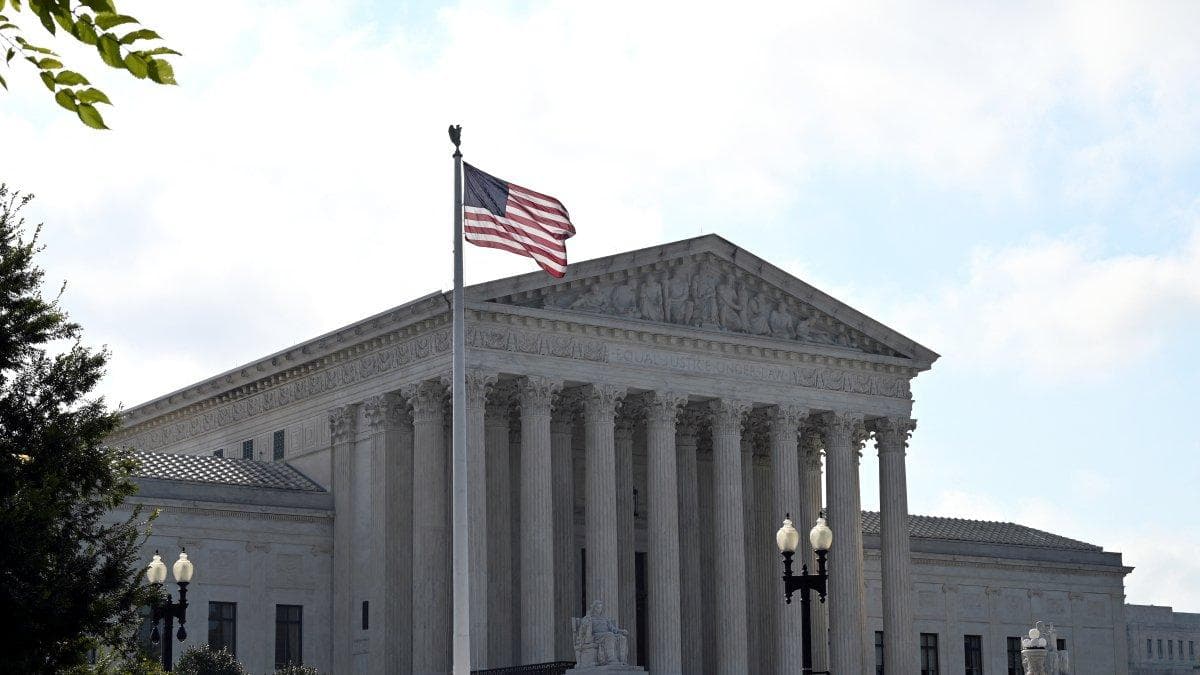

The Supreme Court (SCOTUS) refused on Tuesday to reinstate a Biden-era regulation that allowed immigration judges to temporarily suspend certain deportation proceedings, according to reports from SCOTUSblog.
The "administrative hold" regulation, adopted in 2024 by the Executive Office for Immigration Review (EOIR), allowed immigration judges to temporarily suspend deportation proceedings so that the individual could pursue other avenues of protection, such as asylum, with the U.S. Citizenship and Immigration Services (USCIS). A common scenario involved a victim or witness of a crime who needed to apply for protection while the deportation proceedings were on hold.
Politics
The radical Democratic wing is mobilizing its heavy hitters in Mississippi to boost Scott Colom's campaign
Andrés Ignacio Henríquez
The agreement between Texas and the DOJ
In June, Texas brought the case before a federal court in Wichita Falls, where Judge Reed O'Connor accepted the state's argument that EOIR lacked the authority to adopt the rule. The Lone Star State argued that federal law requires an immigration judge to decide, at the end of the proceedings, whether a foreign national is deportable or not.
Just hours after the lawsuit was filed, the Department of Justice (DOJ) and Texas asked the judge for a final ruling that would overturn the rule and prohibit the EOIR from adopting a similar one in the future. O'Connor granted both requests the same day, according to SCOTUSblog.
Cities attempt to intervene
In August, the cities of Baltimore, New Haven, and Columbus, along with Centro Legal de la Raza, sought to join the case to defend the rule on appeal. Judge O'Connor denied their motion to intervene on the grounds that they lacked standing to sue, rejecting their argument that the rule's repeal would cost them money due to the deportation of taxpayers.
The plaintiffs then appealed to the 5th Circuit Court of Appeals, which also refused to block the settlement and reinstate the rule while the appeal was pending. On October 9, the plaintiffs appealed to the Supreme Court and described the settlement as "blatant collusion." Their attorney, Joshua Salzman, warned that allowing it would set a dangerous precedent, as any agency could circumvent federal law restrictions by "announcing its unwillingness to defend an unfavorable regulation and immediately accepting nationwide relief."

The final decision
Attorney General D. John Sauer asked the court to uphold the settlement, arguing that the plaintiffs' motion sought to turn a dispute over their standing to intervene into a much broader attack on the merits of the case. Texas, for its part, argued that suspending O'Connor's sentence "would revive a rule that the district court declared unlawful" and would reopen fiscal and sovereign liabilities for the state.
Four days after the case was fully argued, the court denied the petition without comment, upholding the repeal of the administrative closure rule.
🛠 Do you think there is an error in this article?
Recommendations




LATEST