ANALYSIS
Abbott freezes Texas environmental permits for data centers until ERCOT and the Water Development Board complete their audits
In less than a year, Abbott has gone from courting AI giants to restricting their air and water permits. The backlog in the Texas grid now exceeds five times the all-time peak demand, and nearly 90% of those requests are for data centers.

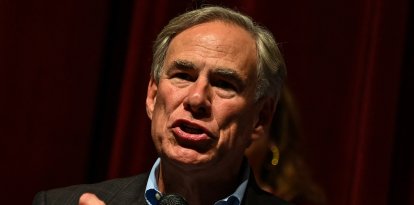
Texas Governor Greg Abbott in Uvalde—File Photo

Republican Gov. Greg Abbott of Texas ordered the Texas Commission on Environmental Quality (TCEQ) on Monday, Sept. 21, to halt issuing new permits for data centers, strengthening his moratorium on data center development in the state.
The move comes as the rapid expansion of data centers in Texas has sparked opposition in some communities, just weeks before Abbott runs for reelection in the midterms.

Economy
Abbott puts brakes on data center boom: Texas won’t foot the bill for Big Tech
Carlos Dominguez
A 180-degree turn
According to a report by The Texas Tribune, Abbott instructed the agency in a letter to TCEQ Executive Director Kelly Keel to halt issuing new permits for data centers until the Electric Reliability Council of Texas (ERCOT), the state’s nonprofit electric grid operator, and the Texas Water Development Board (TWDB), which oversees state water resource planning, complete an audit of proposed data centers in the state.
The audit efforts seek information on electricity usage, water consumption, impact on local communities, ownership details and the planned data centers' use of tax incentives.

"Simply put, Texans must come first," Abbott wrote. "Data centers must pay their own way, protect our power grid and water supply, and complete the ERCOT and TWDB audits. Until they do so, the TCEQ will not issue any permits requested for data center projects."
According to the letter, TCEQ must consider the information gathered in the audit when approving future permit applications, which necessitates the pause in approvals.
"Because the information requested by the PUC, ERCOT and TWDB is necessary to make informed decisions, no other state agency should move forward with regulatory approvals related to data centers until this information is obtained," the governor wrote.

A shift in Abbott's policy
The new pause continues Abbott's shift in stance on the rapid development of data centers in Texas, an industry he described in November 2025 as something he wanted to turn the state into an "epicenter of AI development."
In June, the governor made the first concrete cutback and required data centers to fully pay for the electrical infrastructure serving them. The idea was to ensure that the cost of new power lines and substations would not fall on other consumers. Two months later, he ordered a moratorium on new connections to the grid operated by ERCOT and called for an audit of every project in the pipeline: how much energy and water it would use, what tax incentives it receives, how it cools its servers and who owns it. Without that data, the connection was not to proceed.

Last week, Abbott ordered the Texas Water Development Board to require data centers and other large users to comply with consumption reporting requirements. The directive calls for penalizing past noncompliance and imposing legal consequences on those who continue to fail to respond.
"Data centers must share the responsibility for protecting Texas's water," the governor stated. Abbott requested that the agency submit an update on compliance and enforcement by Oct. 14, 2026.
An industry out of control
Since the artificial intelligence boom began about three years ago, Texas has become one of the fastest-growing data center hubs in the world. By the time Abbott issued his first directive last month, ERCOT had more than 470 gigawatts of large loads requesting grid connection, more than five times the state's all-time peak demand, and nearly 90% of those requests were for data centers.
The data center industry, which had viewed Texas as an ideal destination due to its independent power grid, favorable regulations and competitive energy costs, now faces a significantly more restrictive regulatory landscape under the very same governor who once courted them.
LATEST