From 'woke' inclusion to disillusion: Journalist Nikole Hannah-Jones reflects on her daughter's education
The creator of "The 1619 Project" admits that the decision to enroll her daughter in predominantly black, low-income schools had academic consequences that the family is still evaluating years later.
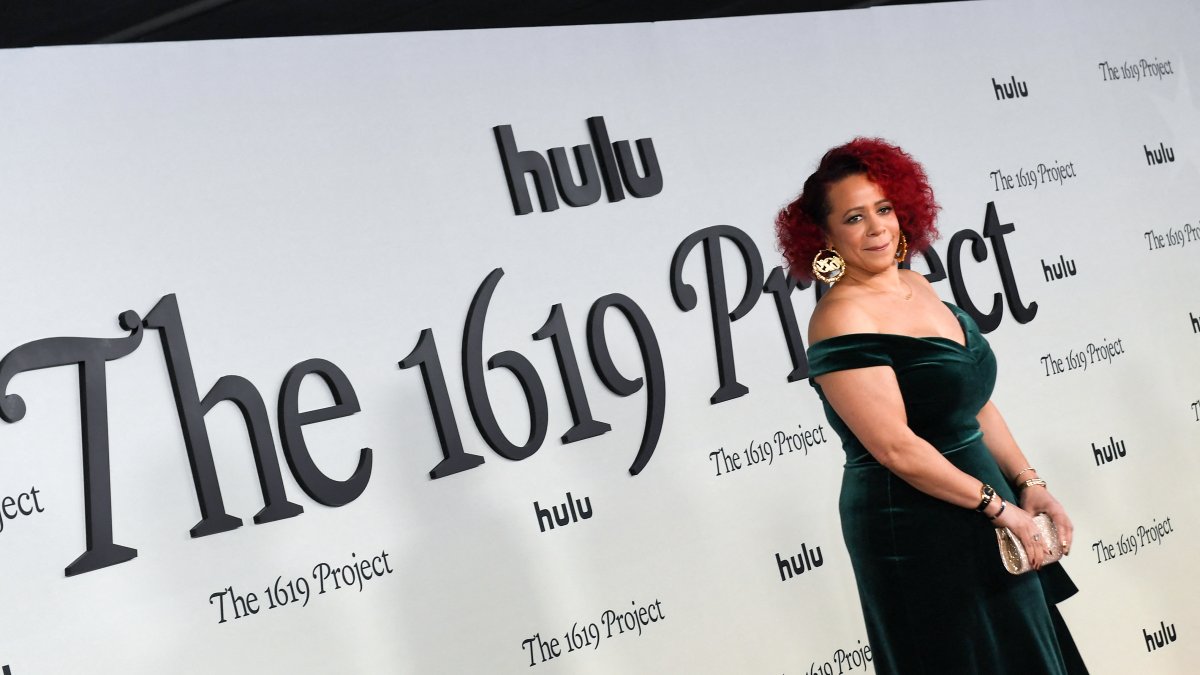
Journalist and executive producer Nikole Hannah-Jones

American journalist Nikole Hannah-Jones, known for spearheading "The 1619 Project," has reignited the debate on educational segration, inequality and parental responsibility after recounting the consequences of a decision she made a decade ago regarding her own daughter's education.
Hannah-Jones wrote a lengthy essay recently published in The New York Times Magazine, titled "In Fighting for Every Black Child, Did I Betray My Own?" She recounts how she and her husband chose to enroll their daughter Najya in predominantly black, low-income public schools in Brooklyn, despite having the financial means to seek other options.
The decision, explains the executive producer, was closely tied to her years of work on school segregation and the belief that families with greater resources should not abandon schools attended primarily by poor and minority children.
In 2015, the family enrolled Najya in P.S. 307, a Brooklyn public school located near the Farragut Houses public housing complex. A year later, Hannah-Jones turned that family experience into another essay for the same magazine, "Choosing a School for My Daughter in a Segregated City," which sparked a broad national debate on segregation in the education system.

"Did you know my school was bad like this?"
A decade later, the journalist admits that the outcome was much more complicated than she had imagined.
The new story begins with a confrontation between mother and daughter. When Najya was finishing seventh grade and began researching the best public high schools in New York with her friends, she discovered the academic gap between her school and other schools in the city.
"Did you know my school was bad like this when you decided to put me here?" she asked her mother, as Hannah-Jones recounts in the editorial supplement.
Najya later went on to ask her why, having the resources to offer her other educational opportunities, she had decided not to do so.
The family had chosen Urban Assembly Unison School for high school—also in Brooklyn—a school open to students without the academic screening used by some of New York's most competitive public schools. In her article, Hannah-Jones highlights the work of the principal and several teachers, but acknowledges that the academic differences between schools eventually became apparent.
Najya had earned good grades, even in algebra, but when she later enrolled in a much more demanding high school, she discovered that she had not mastered some of the material she was supposed to have already learned.
Hannah-Jones herself sums up the dilemma by asking how her daughter could have earned an A in algebra while knowing so little about the subject, and how a student considered an honor student had arrived without sufficient preparation to meet the demands of her new school.
Tutoring to catch up
According to the story published by The New York Times Magazine, her teachers identified the gaps in her preparation and arranged for help so she could catch up. The teenager also received private tutoring and eventually adapted: by the end of the semester, she was earning mostly As and Bs, and she later passed the state algebra exam.
But the transition also came at another cost.
Hannah-Jones explains that her daughter went from attending predominantly black schools—where she never felt her intellectual ability was questioned because of her race—to a predominantly white and Asian school where she faced racist comments and stereotypes from some classmates.
The episode ultimately pitted the family against the two extremes that Hannah-Jones identifies within the system: schools with greater academic deficiencies and a high concentration of low-income students, versus high-performing schools where black students may experience isolation or racial discrimination.
A problem that goes beyond one family
This personal case is part of a broader problem within New York's education system.
Figures from New York City Public Schools show that during the 2024–2025 school year, the system served more than 906,000 students, 75.3% of whom were classified as economically disadvantaged. The student body was 42.3% Hispanic, 19.3% black, 18.7% Asian or Pacific Islander, and 16.1% white.
The existence of a diverse student population, however, does not necessarily mean that this diversity is reflected within each school.
An analysis by the UCLA Civil Rights Project, based on data through 2018, concluded that approximately 85% of black students in New York attended schools considered heavily segregated, while black and Latino students were also disproportionately concentrated in schools with high levels of poverty.
A more recent national study by the same organization, published in 2024, further found that the proportion of U.S. schools considered heavily segregated—those with between 0 and 10% white students—nearly tripled over the three decades analyzed, reaching approximately 20%.

Politics
Tax credits and school scholarships: How Trump’s federal program will expand school choice
Joaquín Núñez
A decision revisited 10 years later
Hannah-Jones' piece is not merely a critique of the schools her daughter attended. It also serves as a personal reevaluation of a decision the journalist had publicly defended since 2016.
She and her husband believed that sending Najya to a predominantly black, low-income school could help strengthen that school and prevent the perpetuation of a system in which affluent families abandon certain schools in search of more selective ones.
Ten years later, she acknowledges the limitations of that gamble.
Her daughter, now 16, feels she paid part of the price for that decision and has openly questioned why her parents did not use the financial resources at their disposal to provide her with a more academically rigorous education from the start.
Hannah-Jones herself ends up confronting a contradiction that runs throughout her essay: a family can try to act with equality in the educational system in mind, but it can hardly transform the structural inequalities of that system on its own.
Her experience, published 10 years after that first essay on her daughter's education, brings back to the table one of the most persistent debates in American education: what happens when the defense of collective equality comes into conflict with a parent's obligation to seek the best possible opportunities for their own child?
LATEST