A federal judge dismisses part of the lawsuits challenging Trump's executive order strengthening election safeguards
In March, the president signed an executive order directing various federal agencies to collaborate to verify voter eligibility and strengthen controls over the distribution of mail-in ballots.
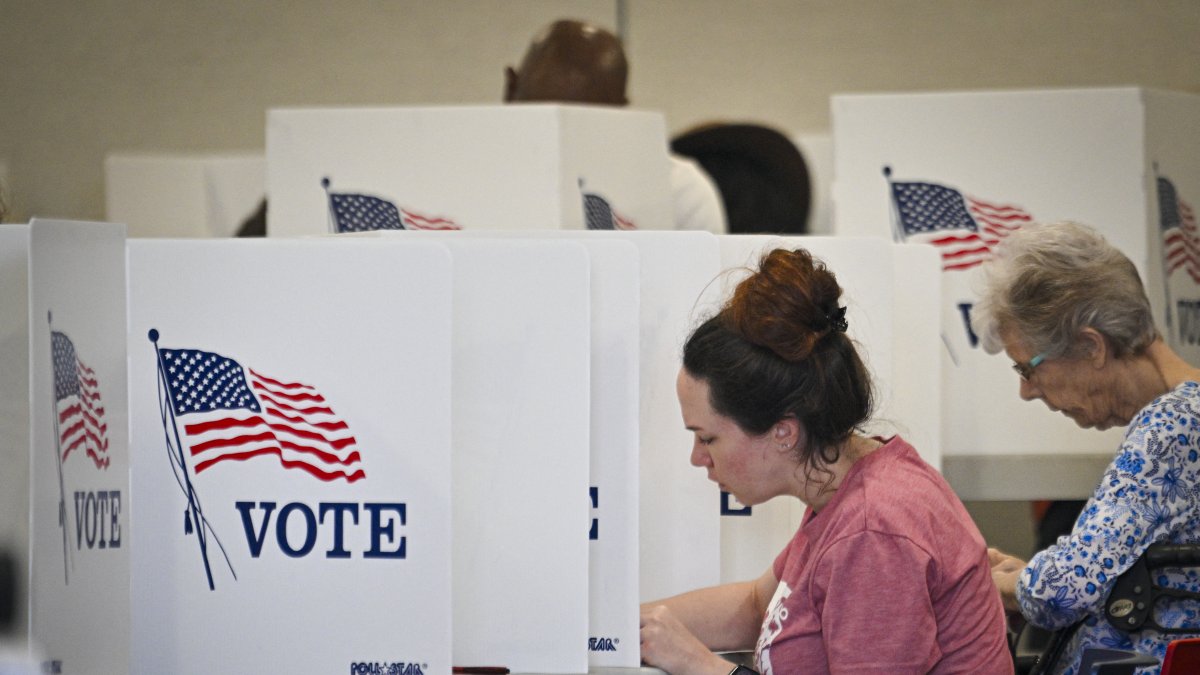
Polling place/ Miguel J. Rodriguez Carrillo

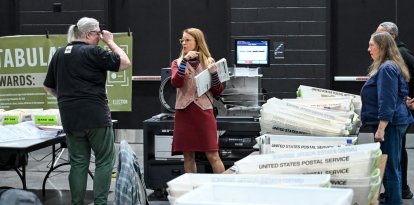
A federal judge limited the scope of several lawsuits filed against an executive order signed by Donald Trump that tightened controls on mail-in voting.
In March, the president signed an executive order directing various federal agencies to collaborate to verify voter eligibility and strengthen controls over the distribution of mail-in ballots.
Among other things, he directed the Department of Homeland Security (DHS) and the Social Security Administration to compile registries of eligible voters, ordered the U.S. Postal Service to implement tracking and security systems for mail-in ballots, and authorized the Department of Justice (DOJ) to prioritize investigations related to the issuance of ballots to individuals deemed ineligible.
Politics
Supreme Court limits federal government's ability to confiscate weapons from drug users
Williams Perdomo
Politics
A federal judge dismisses a lawsuit seeking to block the UFC event at the White House
Joaquín Núñez
The White House defended the initiative as an effort to strengthen electoral integrity and prevent illegal voting in federal elections.
The order triggered a series of lawsuits filed by Democratic-led states and election organizations seeking to block its implementation. The plaintiffs argued that several of its provisions exceeded presidential authority and encroached on powers traditionally reserved for the states, in this case, regarding elections.
It was in this context that District Judge Indira Talwani issued her ruling, limiting the scope of the lawsuits. In her 17-page ruling, Talwani ruled that the plaintiffs may continue to litigate only regarding the potential effects of the order on the midterm elections on November 3. At the same time, he deemed challenges related to future election cycles to be premature.
"In light of the EO's specific deadlines over the next three months, and the reality that elections will be occurring throughout this period with the November 3, 2026 midterm occurring in just five months, postponing judicial review is impracticable and may inflict significant hardship on Plaintiffs," the judge wrote in her ruling.
The decision does not determine whether the executive order is constitutional, nor does it permanently block its implementation. Instead, it keeps open a legal dispute that could proceed to appellate courts and eventually reach the Supreme Court.
LATEST