








Norman Podhoretz’s intellectual journey and the fate of American Jewry
The “Commentary” editor’s career epitomized both the success of 20th- century Jews and an awakening to the peril posed by the moral collapse of political liberalism.
Published
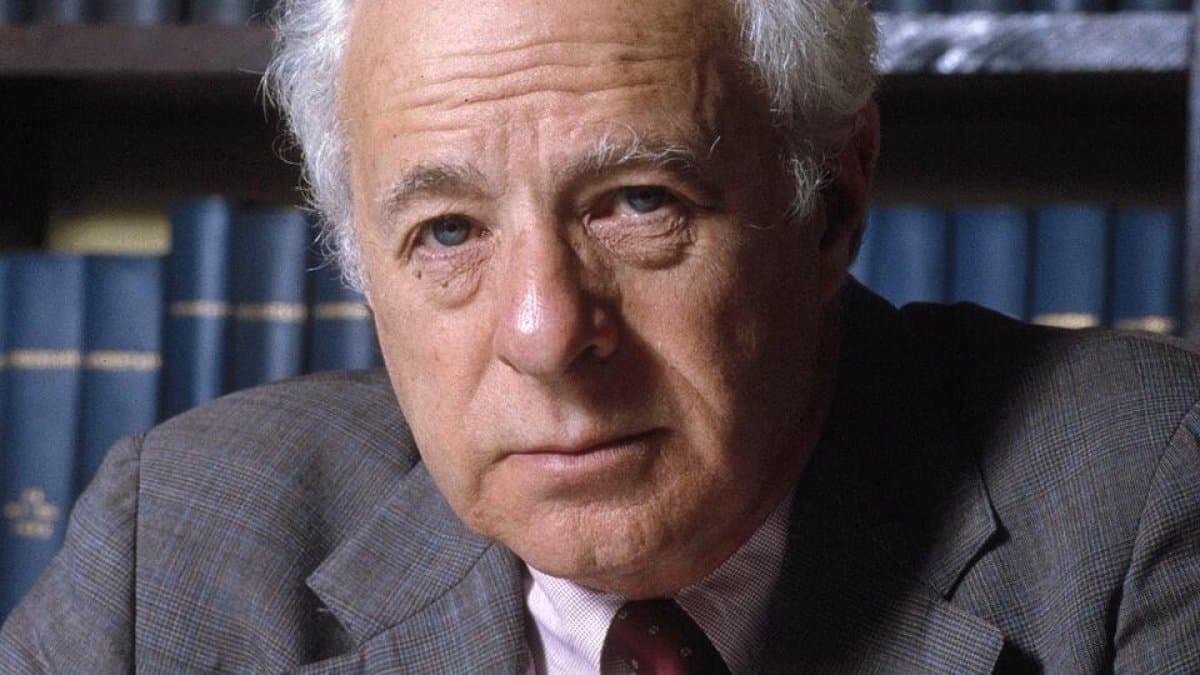
There are those who insist that no one person, let alone a journal of opinion, can be said to have changed the world. Yet this was true of Norman Podhoretz and Commentary magazine. The man and his magazine helped win the Cold War, while awakening Americans to the moral bankruptcy of modern political liberalism and the threat it posed to the two countries that he loved:<span> America</span> and Israel.
The longtime editor of Commentary, who died on Dec. 15 at the age of 95, was more than a seminal figure among Jewish intellectuals of his era. He was that rare man of letters whose work transcended the worlds of literature, Jewish life and journalism in which he labored for many decades. To take a deep dive into his many essays, the 12 books he authored—not to mention the volumes of issues of the monthly magazine he edited from 1960 to 1995—is to take a journey through the history of the last century.
Still relevant today
The remarkable thing about so much of Norman Podhoretz’s writing is how relevant it is to contemporary political battles. That’s especially true for this work concerning the defense of America and the Jewish people, causes to which he remained devoted throughout his life. In this way, even though the volume of his writing diminished in the last decade and a half of his life, the body of work he created remains fresh and vital to the struggles he engaged in so ardently.
Take, for example, one piece he wrote for the New York Post in May 1986 (prior to that newspaper’s archive being digitized), a clipping of which fell out of one of his books in my personal library when I opened it while preparing to write about him. Titled “Anti-Semitism in the ‘Nation,’” it discussed that left-wing magazine’s decision to publish an openly antisemitic essay by author Gore Vidal in which he referred to Jews as “Israeli fifth columnists,” nothing more than guests in the United States who should shut up about “the politics of the host country.”
<cite class="c-detail__cite__title">"Only 40 years after the Holocaust, antisemitism had 'begun creeping back' into the national discussion 'under the guise of anti-Zionism' and 'criticism' of the Israeli government"</cite>
That marked, as Podhoretz rightly noted, “an ominous new stage in our public discourse.” Only 40 years after the Holocaust, antisemitism had “begun creeping back” into the national discussion “under the guise of anti-Zionism” and “criticism” of the Israeli government. But what was really going on was that people like Vidal, who were “eaten up with ferocious anti-Jewish feelings” were trying to “get away with putting all the old lies about the Jewish people back into circulation.”
Podhoretz was prescient in this, as he was on most things. Nearly 40 years later, his takedown of Vidal and The Nation also apply to the now fashionable antisemites on the left like New York City mayor-elect Zohran Mamdani, as well as the ones on the right with large followings like former Fox News host Tucker Carlson, both of whom also traffic in the same hateful tropes of dual loyalty and buying influence that they claim is only opposition to the State of Israel.
This is just one example of the arguments that characterized the arc of his career.
A lot of ‘ex-friends’
A brilliant prose-stylist, literary critic and influential editor, he was also well-known as a controversialist who never shied away from conflict with allies or foes. As a consequence, he lost a lot of friends among the luminaries of the world of letters who dominated the culture and society. He chronicled this in books like Breaking Ranks, The Bloody Crossroads: Where Literature and Politics Meet and Ex-Friends. Like many American Jews, Podhoretz started out on the left but eventually abandoned it. He began a journey to the right when he realized that the political liberalism of the 1960s and ’70s, second nature to most Jews, was increasingly incompatible with the defense of the West against totalitarian communism and the battle against antisemitism.
That was something for which the New York literary set—inclusion in which was very important to him as a young man—never forgave him. Nor could they abide his willingness to unsparingly expose their hypocrisy, grasping ambition and raw lust for status, power and inclusion among the elites of fashionable society that he made clear in his groundbreaking 1967 memoir Making It.
<cite class="c-detail__cite__title">"It heralded the arrival of a literary pugilist who was prepared to tell the truth about the high and mighty"</cite>
For a 37-year-old writer and editor to write such a book at all was itself an act of chutzpah. But its memorable first line—“One of the longest journeys in the world is the journey from Brooklyn to Manhattan”—and what followed not only provided important insights about the struggle for acceptance for the generation of children of Jewish immigrants to America. It heralded the arrival of a literary pugilist who was prepared to tell the truth about the high and mighty, and who would also chart a path toward a new way of looking at public policy and society.
In the course of making his way from an impoverished childhood in Brooklyn to the dazzling salons of Manhattan and all it represented, Podhoretz also gained a perspective that most of his peers lacked. His path took him from life at Columbia University as a scholarship student, where he was mentored by some of the great minds of the era, to Cambridge University in England. But as he later wrote, it was during his two years of Army service, in which he encountered the people and the culture outside of New York, that he began to understand the greatness of America and its people. And it was that love for his country that animated his refusal to go along with cultural trends that denigrated it.
Understanding neoconservatism
Podhoretz was one of the leading lights of what came to be called “neoconservatism.” That is a term that in the last two decades came to be associated with advocacy for the failed American wars in Afghanistan and Iraq, and the futile attempt to export democracy to Islamic societies that wanted no part of it.
But its meaning—when it first began to be applied in the 1970s to people like the Commentary editor, and his friend and colleague Irving Kristol—bespoke the willingness of a generation of writers and academics who had grown up on the political left to rethink the assumptions of the political liberalism that had dominated American life since the Great Depression.
It involved critiques of the welfare state and its impact on the poor, as well as the consequences of an all-powerful government and administrative state that was increasingly unaccountable to voters. It also involved a spirited defense of American society against the formidable challenge it was undergoing from the so-called “New Left” and the counterculture that had rapidly become the new establishment, which brooked no dissent.
<cite class="c-detail__cite__title">"In response, Podhoretz and Commentary mounted a defense of the sort of bourgeois values that centered on the importance of family and patriotism, which elites looked down upon"</cite>
This liberal deconstruction of the foundation of the traditions of Western civilization would eventually lead to the creation of new toxic myths rooted in Marxism and misguided ideas about race that would seek to tear down America. Even 50 years ago, the rot was apparent to those who cared to see it. As Kristol noted, “a neoconservative is a liberal who has been mugged by reality.”
In response, Podhoretz and Commentary mounted a defense of the sort of bourgeois values that centered on the importance of family and patriotism, which elites looked down upon. This same necessary rethinking of where liberalism had led also applied to foreign policy.
In the 1970s, America was reeling from the disaster of Vietnam and suffering from a “credibility crisis” to which both the <span>Lyndon Johnson</span> and Richard Nixon presidencies had contributed. It was also awash in a post-1960s despair about the ability of the West to resist the growing Soviet menace to the free world.
Here again, Commentary helped point the way by championing a vigorous defense of the need to combat communism when fashionable opinion increasingly took the cynical and defeatist view that the two sides in that long conflict were morally equivalent. Podhoretz and his wife Midge Decter, also an accomplished and important writer, were founding members of the Committee for the Present Danger, a group whose members included a number who would serve in the Ronald Reagan administration (including Reagan himself) that sought to raise awareness of the threat from an “evil empire” that liberals were not willing to confront let alone ready to defeat. Decter died on May 9, 2022, at the age of 94.
While some other conservatives (by the end of the Cold War, the notion of a separate group of neoconservatives was more a function of antisemites trying to anathematize what they incorrectly believed were solely Jewish thought leaders than a meaningful distinction) treated the fall of the Berlin Wall as signaling the end of history, Podhoretz readily understood that the next challenge for the West from radical Islam, and its adherents and apologists, would be just as dangerous and perhaps even more difficult to overcome.
Standing up for Israel
And it was in this context that his full-throated defense of the State of Israel must be understood. His opposition to efforts to weaken it or to appease its existential enemies, even via false hopes for peace that were raised by the 1993 Oslo Accords that Podhoretz courageously opposed, again led the establishment to decry yet another example of his unwillingness to bend to conventional wisdom. Where others, especially among the credentialed liberal elites, stood in judgment on an embattled Israel, critiqued its efforts at self-defense and sought to force upon it suicidal concessions to implacable enemies, he pointed to the stakes in this struggle, both for Israelis and Americans.
<cite class="c-detail__cite__title">"It must be recognized that the man was a prophet who was largely rejected by those he cared most about"</cite>
America’s efforts to transform Afghanistan and Iraq were forlorn hopes sunk by the solid grip of Islamic beliefs that are clearly antithetical to Western democracy. Podhoretz, however, wasn’t wrong to focus on what he saw as an existential threat (detailed in his 2007 book World War IV: The Long Struggle Against Islamo-Fascism), something that has only become clear to less cogent thinkers in the two years since the Hamas-led Palestinian Arab attacks on Israel on Oct. 7, 2023. The global surge in Jew-hatred that has swept over America, especially at campuses like Columbia and now manifesting itself in a long list of terrorist attacks against Jewish targets, illustrates that Podhoretz was again ahead of the curve when it came to understanding what was important.
It must be recognized that the man was a prophet who was largely rejected by those he cared most about. American Jews, for whom political liberalism came to replace traditional Jewish faith. They remained stubbornly wedded to the political left and erstwhile minority allies, who were increasingly willing to treat them and the security of a besieged Israel as unworthy of their concern. They remained stuck in the ideas of the early 20th century, in which they embraced the left and distrusted both new religious allies on the right, and the America that was not a product of the two coasts and elite opinion. He would memorably dissect this problem in his 2009 book, Why Are Jews Liberals? It remains the most important work on the topic.
Even his early writings, such as his controversial essay “My Negro Problem—and Ours,” published in Commentary in 1963, spoke of growing up in a divided neighborhood where the races were at odds with each other. It speaks eloquently to America’s current post-Black Lives Matter problems with its advocacy for a color-blind society, as opposed to efforts by leftists to make such divisions permanent.
The American Jewish experience
Podhoretz’s life was a microcosm of the American Jewish experience in which a child of immigrants raised in poverty ascended to the heights of influence in the worlds of literature and politics. In 2004, President George W. Bush awarded him the Presidential Medal of Freedom—the nation’s highest civilian honor.
<cite class="c-detail__cite__title">Just as important, his example fostered a new generation of American thinkers and writers who recognize those threats and who are willing to engage in the intellectual battles needed to defend the West and Israel..."</cite>
The real proof of Podhoretz’s greatness, however, rests in the way his magazine and his writing helped lead the way forward at a moment in history when the forces of totalitarianism seemed to have the wind at their backs. It emerged at a time when the country’s intellectual establishment had essentially disarmed itself in the name of morally bankrupt liberalism.
Just as important, his example fostered a new generation of American thinkers and writers who recognize those threats and who are willing to engage in the intellectual battles needed to defend the West and Israel, as well as to bear witness against antisemitism. Among them are his son John, who followed in his footsteps as editor of Commentary; his daughter, my friend and valued colleague JNS senior contributing editor Ruthie Blum; myself; and many others. Whatever we may achieve as we continue to take up the struggle for this righteous cause that he passed on to us is only because we stand on the shoulders of a giant.
May his memory be for a blessing.
🛠 Do you think there is an error in this article?
Recommendations




LATEST