US blocks global shipping emissions tax that UN wanted to impose and avoids a 'massive tax hike'
Secretary of State Marco Rubio noted in X: “Thanks to his leadership, the United States prevented a massive UN tax hike on American consumers that would have funded progressive climate pet projects."
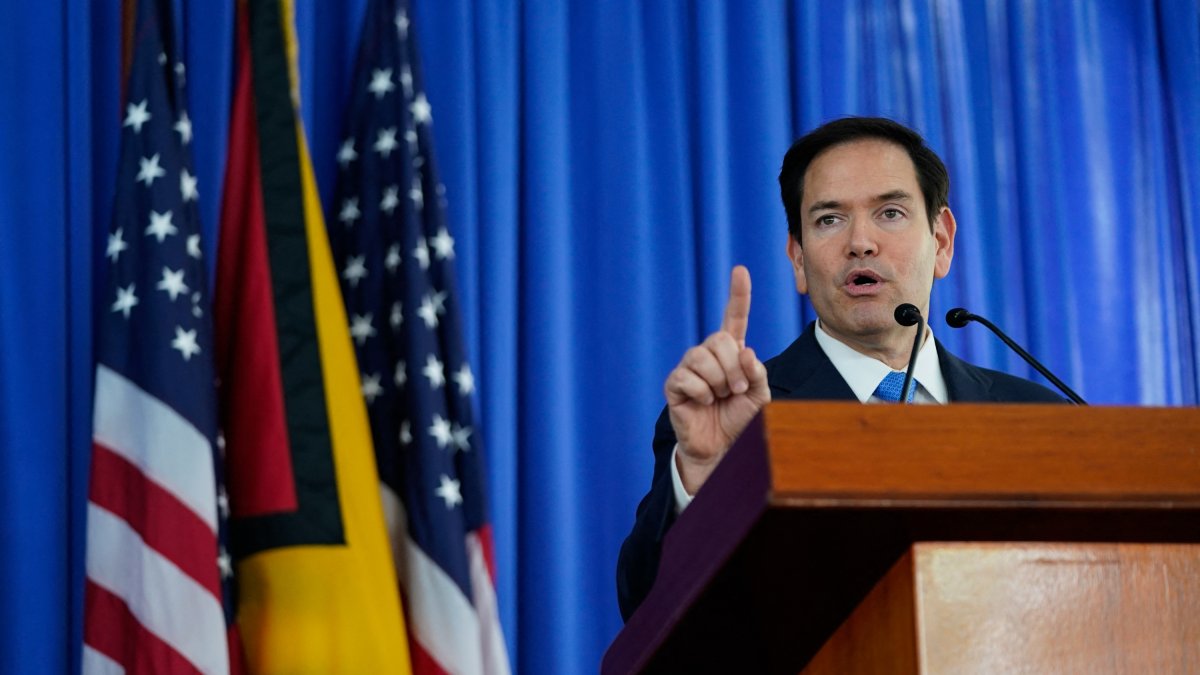
Secretary of State Marco Rubio during a speech.

In the face of trade threats from President Donald Trump, and after Secretary of State Marco Rubio anticipated his refusal, the United States derailed the first global carbon tax on shipping as an international maritime meeting adjourned Friday without adopting regulations.
The decision postpones for a year the adoption of a framework to reduce emissions from the sector, which accounts for about 3% of global CO₂ emissions and moves more than 80% of world trade.
Earlier this year, amid great fanfare, the world's largest maritime nations agreed on the regulations during a chaotic session of the International Maritime Organization (IMO) in April, where the United States left the table midway through, rejecting the proposal.
These measures, part of the "zero net emissions framework" (NZF), would have imposed a carbon pollution levy to clean up shipping, setting a charge for each metric ton of carbon dioxide emitted by ships above allowable limits.
But, after intense lobbying by the Trump Administration along with Saudi Arabia and other oil-producing countries, delegates voted to postpone the decision for a year, until October 2026, and suspend the session.
More than half of the 176 member states—57 countries in favor of the postponement, 49 against, and 21 abstentions—supported the motion put forward by Saudi Arabia and Singapore.
While the Trump Administration threatened retaliation such as tariffs, visa restrictions, port levies and sanctions on officials of countries supporting the framework, especially climate-vulnerable developing nations.
Trump Administration celebrates victory
U.S. Secretary of State Marco Rubio called the postponement "another HUGE win" for Trump. "“Thanks to his leadership, the United States prevented a massive UN tax hike on American consumers that would have funded progressive climate pet projects," Rubio wrote on X. "Our country will continue to lead the way and put America FIRST."
This is another HUGE win for @POTUS.
— Secretary Marco Rubio (@SecRubio) October 17, 2025
Thanks to his leadership, the United States prevented a massive UN tax hike on American consumers that would have funded progressive climate pet projects. Our country will continue to lead the way and put America FIRST.
Trump urged countries to vote "no," posting on his social media platform Truth Social on Thursday that "The United States will NOT stand for this Global Green New Scam Tax on Shipping".
The White House expressed its "outrage" at the mere holding of the vote and reiterated that it would not adhere to the tax "in any way, shape, or form."
Putting America first
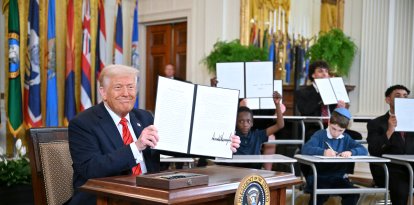
Also, already in the White House, President Donald Trump signed an executive order titled "Putting America First on International Environmental Agreements," which withdraws the United States from the Paris Agreement on climate change, fulfilling a campaign promise. The order further instructs the U.S. ambassador to the UN to immediately notify the withdrawal from the Agreement and from any similar commitments under the United Nations Framework Convention on Climate Change, deeming the withdrawal effective upon notification.
Additionally, all financial commitments related to climate change are revoked, including the U.S. International Climate Finance Plan, and various government agencies are ordered to cease policies that implement it.
The order reflects the policy of prioritizing US economic interests, arguing that agreements such as Paris divert taxpayer funds to countries that do not need them and restrict US economic development. Trump justified the decision, noting that the Paris Agreement imposes unfair burdens, favors countries like China and India, and does not reflect US values or contributions on economic and environmental issues.
It also orders agencies to prioritize economic efficiency and prosperity in future international energy agreements, promoting fossil fuels and declaring a "national energy emergency" to boost oil and gas production.
LATEST