Texas: House Democrats postpone return until end of first special session
For Democrats, winning the first session as a clear minority represents a symbolic victory.

A file image of the dome of the Texas Legislature

As they define a plan to return to their home state, Democratic state lawmakers in the Texas House of Representatives agreed not to return to Texas territory until the end of the first special session called by Gov. Greg Abbott to redraw congressional districts.
According to a report from NBC News, Democrats have held several closed-door meetings over the past two days, both as a full group and in subgroups, to organize and fine-tune an exit plan after more than 10 days out of the state.
Although at the moment there is no full consensus on the return to Texas, the group of legislators does agree on not returning to the capital, Austin, until the Republicans formally close the first special session.
For the Democrats, managing to defeat the first session while in the minority represents a symbolic victory, since most legislators are aware that eventually they will have to go back to work and face the Republicans, who largely control the state Congress and have the possibility of calling new special sessions until approving the new electoral maps.

Politics
Texas: House Democrats begin to cave and prepare to return to the state as GOP moves forward with redistricting
Emmanuel Alejandro Rondón
Our commitment was only to kill this corrupt special session. What we will do, what we're going to do in the future, we're in discussions right now," Gene Wu, chairman of the state House Democratic Caucus, told Meet the Press NOW.
Wu added that, for now, the next steps will not be defined until there is "consensus among our membership," but he already made it clear that the party has other avenues to confront the Republican plan, implying that the quorum breakdown will not be permanent. Wu said Democrats will employ judicial resources, the legislative process, and even coordination with other states, such as California, to respond with new congressional maps to Republican redistricting initiatives.
"We can fight this fight for as long as we can do it. But we have other strategies, other methods of fighting it," Wu insisted. "It does not have to be just a quorum break; it does not have to be just one thing or the other. We can throw everything at this."
The Texas redistricting bill, which has already passed the state Senate due to Democrats' inability to break quorum, could give up to five additional seats to Republicans in the federal House of Representatives.
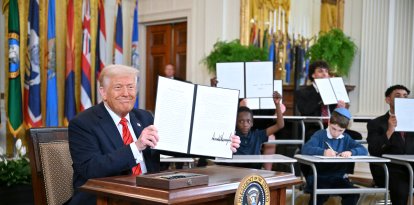
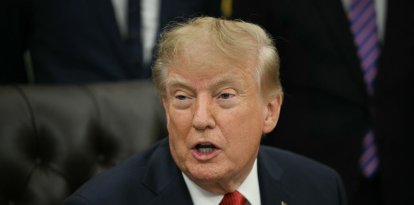
President Donald Trump is a prime mover behind the measure and has publicly celebrated the effort by Texas Republicans.
In addition to Wu, Democratic sources who requested anonymity pointed out to NBC News that, from the beginning, they knew they would not stay out of Texas indefinitely.
The main objective—to attract national attention and generate political pressure on Republicans—would already be accomplished, noting especially that California and New York are considering redrawing their maps. "This is a communications battle. When you’re in the minority, what you have is a bullhorn and an ability to draw attention to issues. Eventually, the majority will vote. That's democracy," said one legislative aide.
LATEST