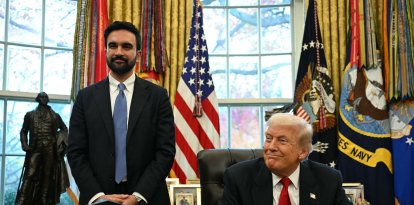
US approves transfer of more than 200 missiles from Germany to Ukraine
The long-range missiles, believed to be compatible with systems such as the HIMARS or M270 multiple rocket launchers, would have a range of up to 300 miles, significantly extending Ukrainian strike capability.
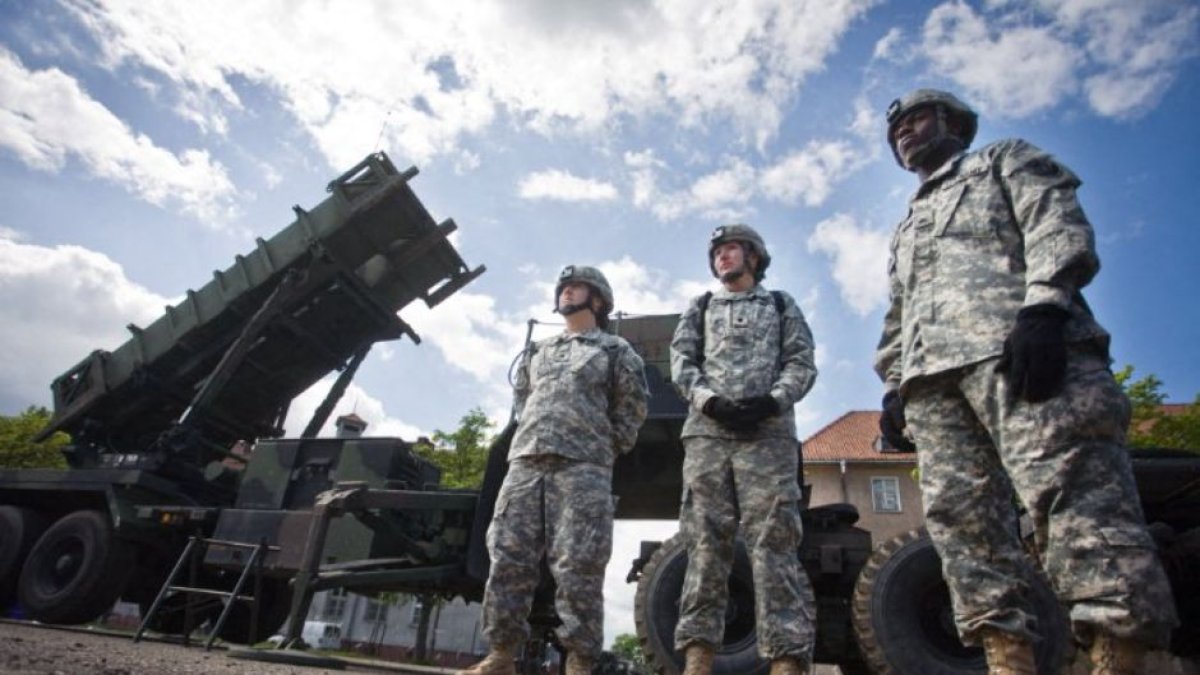
U.S. soldiers in front of a Patriot missile battery (Archive).

The United States authorized the transfer of more than 200 missiles from Germany to Ukraine, according to reported The New York Times.
That decision, announced Friday by a U.S. congressional official, includes 125 long-range artillery rockets and 100 Patriot air defense missiles.
According to The New York Times, these weapons, made in the United States, require U.S. government approval for export, even if owned by another country.
The long-range missiles, believed to be compatible with systems such as the HIMARS or M270 multiple rocket launchers, could have a range of up to 300 miles, significantly extending Ukraine's strike capability.

Military assistance
The transfer comes against the backdrop of a recent increase in U.S. military support for Ukraine. In early May, the U.S. State Department notified Congress of the approval of a license to export arms to Ukraine worth $50 million or more.
This was the first arms sale authorized under the administration of President Donald Trump after his return to the White House.
In addition, just over a week ago, the State Department approved a $310 million package for the supply and maintenance of F-16 fighter jets destined for Ukraine, bolstering military support for the country.
The approval of this missile transfer strengthens cooperation between the U.S., Germany and Ukraine.
European leaders and Ukraine call for a ceasefire
In parallel, Ukrainian President Volodymyr Zelensky announced on Saturday on X that he held a key meeting in Kiev with the leaders of France, Germany, Poland and the United Kingdom.
Joint Statement by the Leaders of France, Germany, Poland, the United Kingdom, and Ukraine Following the Meeting in Kyiv.
— Volodymyr Zelenskyy / Володимир Зеленський (@ZelenskyyUa) May 10, 2025
On Saturday, May 10, 2025, the leaders of France, Germany, Poland, the United Kingdom and Ukraine met in Kyiv.
They agreed that starting Monday, May 12,… pic.twitter.com/afDURGGIxG
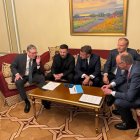
In a joint statement, they agreed to demand a full and unconditional ceasefire for at least 30 days, starting Monday, May 12, to open space for diplomacy.
The leaders emphasized that an unconditional ceasefire cannot be subject to conditions, and called any Russian demands in this regard an attempt to prolong the war.
The cessation of hostilities must be comprehensive, encompassing air, sea and land, and requires effective monitoring, which could be coordinated with the United States.
During the ceasefire, diplomacy will focus on establishing security, political and humanitarian foundations for peace.
The leaders welcomed European and U.S. support for this initiative and stressed the importance of strengthening the Ukrainian Defense and Security Forces, including the possible creation of a resettlement contingent as a security guarantee.
In the event that Russia rejects the ceasefire, the leaders agreed to push for tougher sanctions against the Russian banking and energy sectors, focusing on fossil fuels and oil.
They also pledged to pass a 17th European Union (E.U.) sanctions package, coordinated with the United Kingdom, Norway and the United States and to discuss the use of frozen Russian assets at the next G7 summit.
In addition, the leaders reaffirmed their commitment to strengthen Ukrainian defense through funding, resilience and joint projects for arms production in Ukraine and Europe.
LATEST