The History of Somaliland, the Least Globalist Country in the World (2)
‘We celebrate every three-story building’: Somaliland, nation-building without external guidance
Building nations in the image and likeness of the most successful models is one of the tasks to which globalism devotes the most energy. But Somaliland has forged—without international funding, foreign peacekeeping troops or models to follow—a democracy grounded in its actual social structure rather than in idealistic Western assumptions that do not automatically work in most parts of the world, including the West.
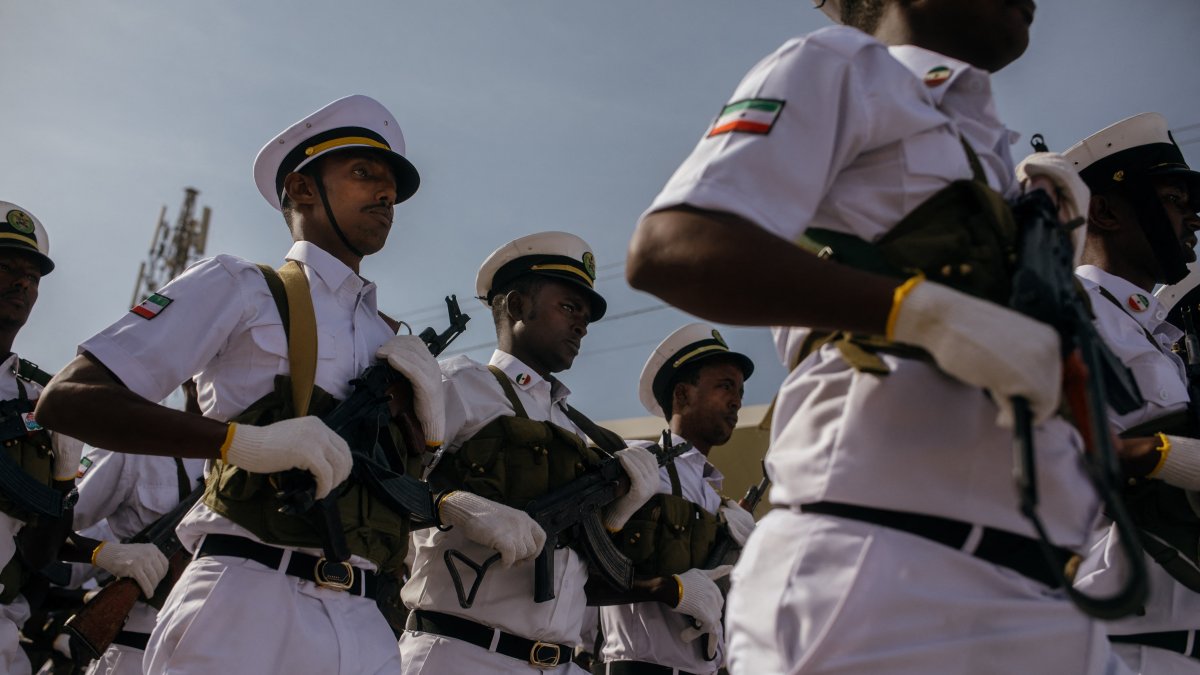
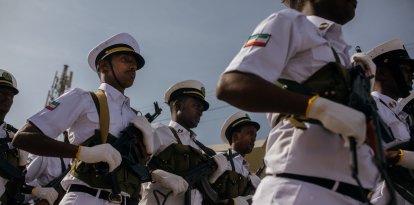
Members of the Somaliland Coast Guard march on the 35th Independence Day

Amid the ruins of the towns and cities razed by the forces of dictator Barre, the Somalilanders joined forces to rebuild their country and avoid the fate that has befallen Somalia.
Under the astonished gaze of the few foreign aid workers deployed there to respond to a disaster that never received the international attention given to the famines in Ethiopia, the war in Biafra or the genocide in Rwanda, the Somalilanders gradually rebuilt—with their own money and labor—what had been destroyed by Barre's troops and air force.
This video recorded by journalists from the U.S. network CBS shows ordinary people defusing the explosive mines left behind by forces from Mogadishu with their own hands.
In the city of Burao, near the capital, Hargeisa (once known as "the city without roofs"), one of the areas hardest hit by Barre's airstrikes, leaders of the SNM and traditional chiefs gathered between April and May to quell the civil conflict between the SNM—whose members were predominantly from the Isaaq clan—and the minority groups that had aligned themselves with the forces from Mogadishu. "The 1991 Burco [Burao] conference was also crucial for the elders made a decision to end the union with ... Somalia," writes Biruk Shewadeg in this academic article dedicated to the unique model of institution-building that Somaliland has implemented.
Shewadeg places even greater importance on another of these conferences, the one held between January and May 1993 in a stronghold of the Gadabursi (part of the Dir clan), whose stance during the war fell somewhere between neutrality and support for Barre. While the Burco conference focused on reconciliation, this one established mechanisms for governance and public order management, which had been negotiated among clan structures in earlier, less far-reaching meetings.
The Burao and Borama Conferences did not take place on the red carpets of expensive hotels, where even back then (in the early 1990s) all documents relevant to the history of any country were negotiated and signed. In Burao and Borama, there were no foreign advisors or expensive U.N. jeeps. The spotlight was entirely on what we would today call "civil society," which in Somali tradition was structured primarily around the "Guurti," the council of traditional leaders that the founding fathers, gathered in Borama, established as the House of Elders—a non-elected body with power comparable to that of the House of Representatives, whose president is elected at the polls in Somaliland.
"The Constitution currently in force in Somaliland was adopted in 2000 and embodies the balance of power negotiated at Borama and other conferences."
The democratic path the country embarked upon was also shaped by the spirit of the SNM, one of the few African guerrilla movements not funded by foreign powers, in which the military was always subordinate to political leaders who changed occasionally, even during wartime. With the withdrawal of Mogadishu's forces from the territory, the SNM's military leader, Abdirahman Ahmed Ali Tuur, had been appointed president of the new country. Tuur (which means "hunchback" and is one of the crude nicknames used in Somaliland and Somalia without quotation marks and completely naturally) attended the Borama Conference with the intention of being ratified as president, but the dignitaries in attendance instead elected Mohamed Haji Ibrahim Egal, a civilian. A photograph shows the two of them leaving the conference together immediately after the historic anomaly—the peaceful handover of power by a victorious military leader—had taken place.
From the country's highest political office and in constant cooperation with the clan leaders and the structures that had been established, Egal was tasked with leading the demobilization of the various armed groups, a process that was carried out successfully despite—or perhaps because of—the lack of oversight or participation by external actors.
"Somaliland, instead of partaking democratic model of governance imposed from the outside, opted for synchronizing Western-style institutions of government with its own cultural substratum," Shewadeg writes in his article. "It allowed for the Somali [or, more specifically, Somaliland] population to identify with the new state structure and to get accustomed to democratic governance, thus helping it to achieve greater cohesion" and gave the system the "popular legitimacy that Somalia's former regimes lacked," the author emphasizes.
Ahmed Y. Farah and Ioan M. Lewis elaborate in this essay for Cahiers d'Études Africaines on the indigenous, organic and self-governing nature of Somaliland's nation-building process. The Borama Conference received international support amounting to no more than $100,000, presumably from Western NGOs and embassies in the region. The amount is clearly negligible when compared to the cost of any U.N.-sponsored peace conference or any other major event of a similar nature with international participation. Both before and after Borama, all expenses for these meetings were covered by Somalilanders from within the country and the diaspora.
The constitution currently in force in Somaliland was adopted in 2000 and embodies the balance of power negotiated at Borama and other conferences. The text allows for a maximum of three political parties, whose candidate lists are drawn up by the heads of traditional clans. The fact that the number of clans exceeds the number of permitted parties forces the various traditional groups to negotiate and cooperate, which would explain, as Armin Rosen wrote in Tablet magazine following a trip to the country, why Somaliland has managed to avoid the political violence and other turmoil plaguing Somalia and many other African countries. The power that the clans hold in the House of Elders—which is not elected—gives them all considerable influence in decision-making and serves as another antidote against potential dissent.
"The greatest problems of instability and violence in Somaliland occur around the city of Las Anod, the capital of the Sool region, which is disputed with Puntland, a federal state of Somalia."
The first democratic state governed by the rule of law that Somaliland was building faced a decisive test in 2003, when the country decided it was time to hold its first multiparty elections by universal suffrage.
The candidates were Ibrahim Egal's former vice president, Dahir Riyale Kahin, and Ahmed Mohamed Mahamud Silanyo, a Somali term referring to a type of lizard known for its great agility, light-colored skin and bulging eyes—much like the politician himself.* The official results declared Riyale the winner by a margin of 80 votes. Many in Silanyo's party were convinced that their candidate had won the election. But Silanyo ignored those who urged him to challenge the result and accepted defeat to avoid a clash among brothers. Seven years later, he ran again and clearly defeated Riyale, who did not resist the change and ceded power to him.
The greatest problems of instability and violence in Somaliland occur around the city of Las Anod, the capital of the Sool region, which is disputed with Puntland, a federal state of Somalia. The vast majority of the population in the eastern part of the region belongs to the Dhulbahante subclan, which is part of the Darod clan, the dominant clan in Somalia.
In 2023, following a series of unsolved murders of local figures, local militias and the Somaliland Army engaged in armed clashes that left more than 200 dead.
Amnesty International and other actors specializing in the insidious use of micro-level tactics accused Hargeisa of applying disproportionate force. But Somaliland eventually withdrew from Las Anod, which proves either the seriousness of the military threat it faced or the restraint shown by Hargeisa's forces in their response to the uprising.
"Unlike neighboring Somalia, Somaliland has kept the terrorist threat from groups like Al Shabab at bay."
In the rest of the territory, Somaliland has reached 2026 with admirable levels of social cohesion and a functional state whose parliamentarians and presidents hand over power without killing or imprisoning one another and sit together at official receptions and patriotic celebrations.
Unlike neighboring Somalia, Somaliland has kept the terrorist threat from groups like Al Shabab at bay. Local observers, such as those interviewed by Armin Rosen, attributed this precisely to that social cohesion. "If you're with Al Shabab, you'll be easily spotted, because we all know each other," stated one of the interviewees. "Everyone here is the police," more than one source told the journalist.
This also ensures safety on the streets. "In Somaliland, women sell 21-carat [sic] gold openly in the markets. Money changers operate without fear. Security is upheld by the people themselves through collective civic responsibility," wrote Edna Adan Ismail—who served as Somaliland's foreign minister from 2003 to 2006—in a recent article published by The Times of Israel.
*Nicknames are particularly common in Somali culture, both in Somaliland and in Somalia. They often appear even on official identification documents and are passed down from parents to children like last names. Former Somali President Mohamed Farmajo, for example, owes his name to his father's passion for cheese during the era of Italian colonial rule.
– "History of Somaliland, the Least Globalist Country in the World (1)"
LATEST