Venezuela: Who is responsible for the murder of Victor Quero?
There is no forgiveness. It is a level of cruelty that is not of this world. It is hell on earth. Even today there are still 500 political prisoners behind bars and, after Quero's case, we no longer know if we can really speak of political prisoners or corpses.
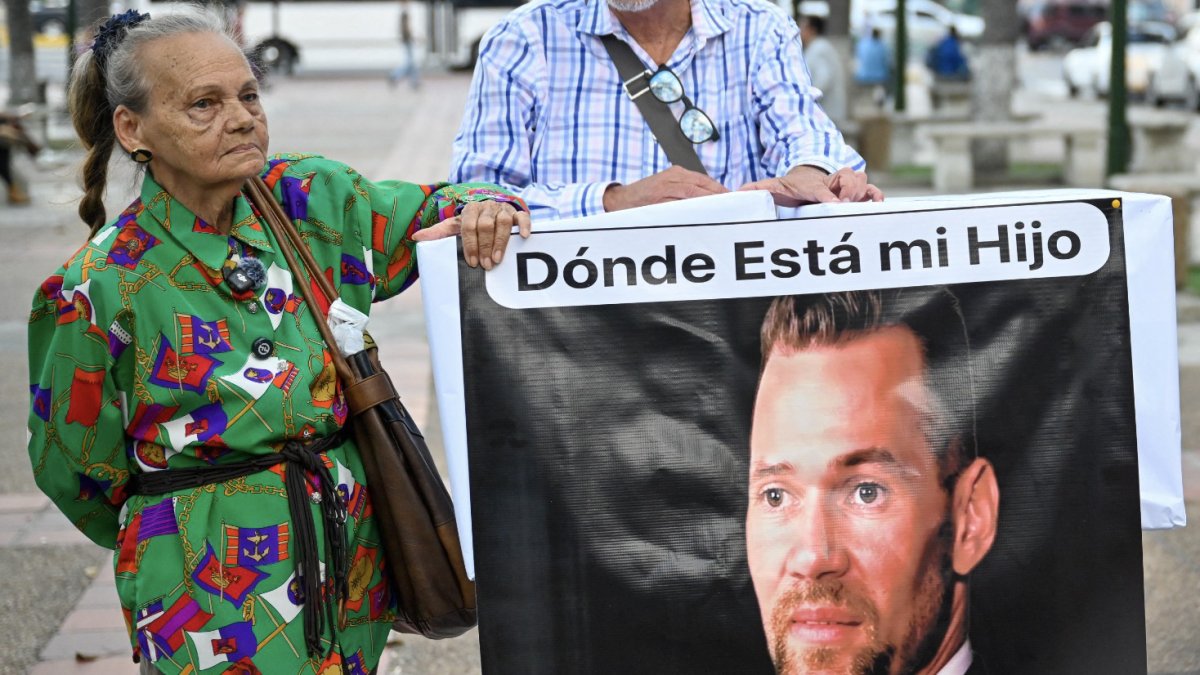
Carmen Navas, Victor Hugo Quero's mother
Vicctor Quero was murdered. According to official information, finally acknowledged by the Ministry of Penitentiary Service of the regime of Delcy Rodriguez, Quero died in custody in July last year after being kidnapped for being an opponent in January 2025.
He died in custody. In the hands of the State. While suffering his kidnapping for being an opponent. That is, the Chavista regime assassinated Victor Quero. Since he was kidnapped in January of last year, Quero's mother, Carmen Nava, wandered around several prisons in Venezuela because she did not know the whereabouts of her son.
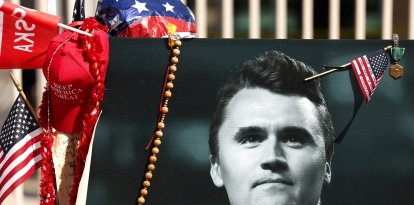
After January 3 of this year, with the release of several political prisoners and the hope that they would all be released, given the pressure from the United States, Carmen Navas returned to the streets, to wander among prisons, with a large printed photo of Victor Quero, which she showed to each prisoner, whom she questioned about the situation of her son.
After several months of uncertainty, this March 7, the regime issued a statement: Víctor Quero, who had disappeared in January 2025, died in custody on July 30 after reportedly "suffering a hemorrhage" while being held at Rodeo I prison. Quero had already been buried. And this same March 7 his mother, Carmen Navas, went to his grave. She brought him flowers.
For nearly a year, they hid it from her. They let her suffer through the uncertainty. They let her wander from prison to prison, spending hours outside detention centers questioning guards and newly released inmates about her son. They kept her hanging on to hope. Just a couple of months ago, after returning to Rodeo I for what felt like the hundredth time, an official shouted at her to “stop insisting.” She did not give up.
And now, after learning of the tragedy, we have learned more details that aggravate the level of cruelty and wickedness of Victor Quero's murderers. In October of last year, after several insistences, the Ombudsman's Office in coordination with prosecutor Tarek William Saab notified Carmen Navas that her son, Quero, was being held in the Rodeo I prison for crimes of "treason to the homeland." By the time of the notification, Quero had already been underground for three months.
And, just a few weeks ago, a judge of the regime denied Quero the amnesty, which had been requested by the lawyer of Navas' family in connection with the reconciliation process promoted by the United States. The judge, surely, already knew that Quero had been murdered.
There is no forgiveness. It is a level of cruelty that is not of this world. It is hell on earth. Even today there are still 500 political prisoners behind bars and, after the case of Quero, we no longer know if we can really speak of political prisoners or corpses. How many of those who are still detained are not really detained, but swell the list of the murdered? We are just learning about the horrors that the regime is trying to bury. Delcy Rodriguez today governs over a mass grave.... And we have not even begun to dig it.
There can be no forgiveness—nor should there be—without justice first. That is why, amid the extraordinary circumstances unfolding in Venezuela, where the country is supposedly being run by the United States and Delcy Rodríguez is portrayed as little more than an employee of Trump, one question remains: who will answer for the killing of Víctor Quero? There must be justice. It is the only way reconciliation can move forward, as the second phase of the U.S.-supervised process takes shape.
If Delcy Rodriguez really wanted to show that she is different from what she was before January 3, she would not only order a rigorous investigation as soon as possible, but she should preventively arrest the one who was attorney general when Quero was assassinated, Mr. Tarek William Saab. The judge who denied the amnesty, the Ombudsman's Office that notified the mother of a detention that did not exist, and the Minister of Interior and Justice, Diosdado Cabello, who still holds that powerful position, should also be arrested.
And, if the United States were really in charge, it should press for the above to happen. Otherwise, the question arises: who really governs? Who is being held accountable?
LATEST