Palisades Fire: The tragedy that was born from the discourse of the radical left
One of the most alarming things to emerge from this case is the figure of Luigi Mangione, who was arrested in December 2024, accused of murdering Brian Thompson, CEO of UnitedHealthcare, with several shots on a Manhattan sidewalk.
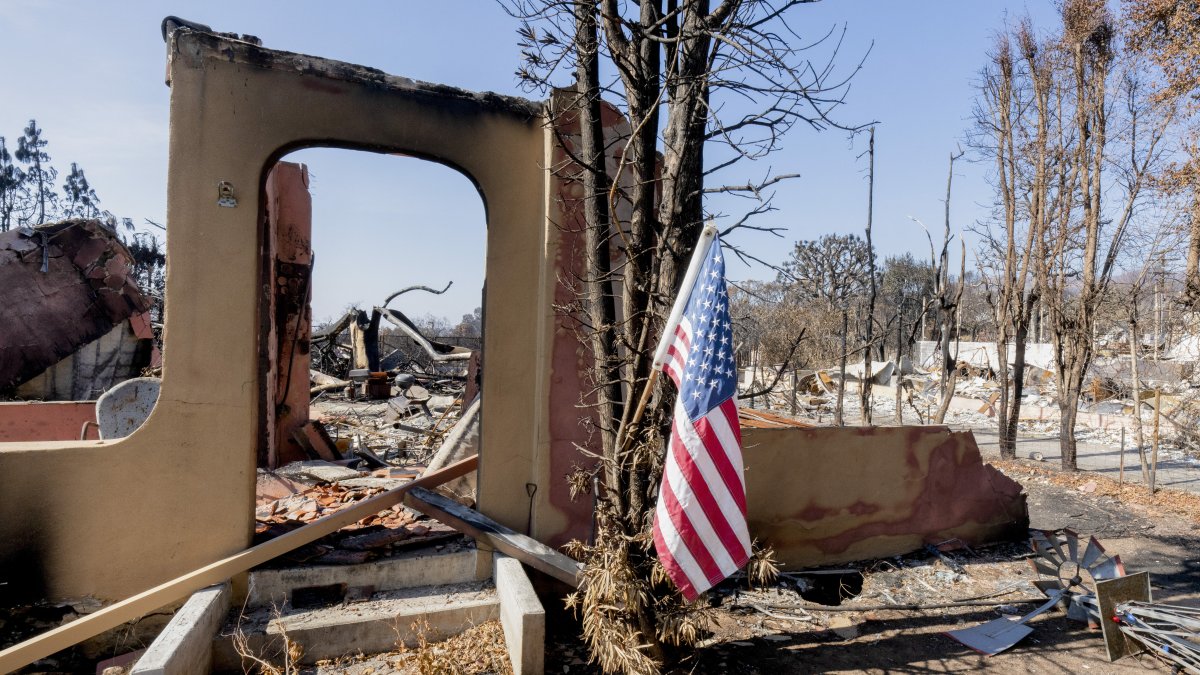
The fire, one of the most devastating in California history, leveled more than 9400 structures.
In late April, the U.S. Attorney's Office for the Central District of California filed an indictment in federal court in Los Angeles. The document defines the prosecutorial strategy in the case "United States v. Jonathan Rinderknecht," whose trial begins on June 8, and describes in detail how a 29-year-old Uber driver came to become, according to the prosecution, the perpetrator of the most destructive fire in Los Angeles history.
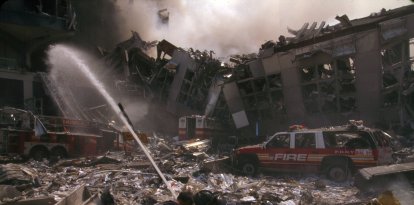
Because of that memo, we return today to the Palisades Fire, the January 2025 blaze that killed 12 people, destroyed nearly 7,000 structures, burned 23,000 acres and displaced 150,000 residents. Damage is estimated at $150 billion.
What Rinderknecht and his defense argue will be evaluated by a jury. Already in the public record, with names, dates and screenshots, is the ideological profile the prosecution constructed of the defendant. That profile makes this case more than an ordinary criminal prosecution.
The filed memorandum reveals that Rinderknecht's search history in December 2024 included the terms "free Luigi Mangione," "lets take down all the billionaires" and "reddit lets kill all the billionaires." On Jan. 3, 2025, two days after he allegedly started the fire, he took a screenshot of an article about Mangione pleading not guilty in court.
Passengers he transported on the Dec. 31 and Jan. 1 shifts described him as "angry, intense, driving erratically, and ranting about being 'pissed off at the world,'" and his obsessions were Luigi Mangione, capitalism and vigilantism.
When investigators interviewed him on Jan. 24 and asked him, in hypothetical terms, why someone would commit arson in Pacific Palisades, Rinderknecht replied that it would be out of resentment toward the rich who enjoy their money while "we're basically being enslaved by them." He compared that act of "desperation" to the murder Mangione was accused of.
The picture that emerges from the file is not one of an impulsive act. Prosecutors documented that in August 2024, Rinderknecht burned a Bible and communicated that to ChatGPT, and that he used that platform as "a confidant and diary." Prosecutors also documented that in 2018, he had gone out to admire the Woolsey Fire, which ravaged parts of Los Angeles and Ventura County, and that he told his then-girlfriend that he was "in awe of it." Months before the Palisades Fire, he asked ChatGPT to generate footage of people fleeing a burning forest. In the hours leading up to the fire, he looped "Un Zder, Un The," a French rap song whose music video shows a burning garbage can, while recording videos on Hidden Buddha Hill, the same hill where sensors detected the ignition point at 12:12 a.m. on Jan. 1.
The official statement from the Department of Justice adds two pieces of information that complete the profile. Geolocation data from his iPhone places Rinderknecht standing in a clearing just 30 feet from the fire as it grew rapidly, contradicting his statement to investigators that he was at the bottom of the trail when he first saw the fire. After fleeing in his car past the oncoming fire trucks, he turned around, followed them at high speed, drove back up the same trail and filmed the fire and the firefighters until 1:02 a.m.
There is also a piece of information that the defense will try to use in its favor but that the prosecution cites as evidence of the defendant's dangerousness: After learning that he was under investigation, Rinderknecht threatened to burn down his sister's house.
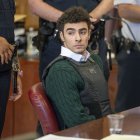
One of the most alarming things to emerge from this case is the figure of Luigi Mangione, who was arrested in December 2024 and accused of killing Brian Thompson, CEO of UnitedHealthcare, with several gunshots on a Manhattan sidewalk. Thompson was 50 and had two children. At the time of the crime, he was carrying a manifesto describing the murder as something that "had to be done" and denouncing the "corruption and greed" of the health insurance industry. The words "delay," "deny" and "depose," slang used by critics of the healthcare industry, were engraved on the bullets.
Mangione, 27, pleaded not guilty to all charges in both trials he faces and will stand trial in the coming months. But what happened between Thompson's murder and the start of those trials was not what usually happens when someone kills in cold blood on a New York street. Mangione became an idol of the fanatical left and a spoiled darling of institutional progressivism. The possibility that such a character could generate copyists, fanatical admirers and legitimizers of his causes is highly dangerous in a society where political violence is growing by leaps and bounds.
To give an understanding of the magnitude of the phenomenon, journalists from major news organizations described Mangione as revolutionary and intelligent and said he seemed like a morally good man. Voices "empathetic" to Mangione's crime or his causes multiplied in the media, among politicians, university professors and on the streets. This is the context in which Rinderknecht developed his worldview.
Of course, political or media rhetoric cannot be held responsible for aberrant crimes such as setting a heinous fire. No one bears criminal responsibility for what Rinderknecht allegedly did. But there is a difference between criticizing the health insurance industry and constructing a framework in which murdering its CEO is understandable, heroic, or at least so morally ambiguous that it does not merit unqualified condemnation.
That second operation is responsible for an intoxication of the public conversation that is as viral as it is unprecedented. It actively produces a moral grammar in which violence, if pointed in the right direction and against the right victims, ceases to be violence and becomes justice.
Such a grammar is not new to the American left. During the violent season of BLM's 2020 outbreak, prominent figures in the progressive establishment decided that property destruction did not qualify as violence. New York Times editorialists argued that destroying replaceable property "is not violence" and that using the same language for both "is not moral." Editors at The New Yorker said there was no time to lecture protesters about property. Then-NPR editor Katherine Maher admitted that looting was "counterproductive" but said it was hard to be outraged that the protests did not prioritize "private property from a system of oppression."

Politics
Progressive lawmakers justify Brian Thompson's murder: "It's a wake-up call"
Williams Perdomo
The prosecution file shows that Rinderknecht absorbed that framing in a documented, traceable, dated, and screenshotted manner. The language with which he articulated his alleged motivations to investigators, that resentment against the rich, the narrative of capitalist slavery, the comparison with Mangione, are part of an ideological ecosystem that is highly instrumental to disturbed minds and to those whose moral character tends to blame others for one's own failure. This way of understanding the world becomes acquired and it is very difficult for those who grew up believing that the world owes them something to be able to take responsibility for their actions. They may not even understand the criminality of their actions.
Rinderknecht's speech seems to be taken from a manual already elaborated, already legitimized, already circulating at the most visible levels of public debate. That manual has known authors: politicians who could not or would not condemn the murder of Brian Thompson without adding a "but"; journalists who celebrated the assassin as a revolutionary; academics who elevated him to an icon before retracting under pressure. None of them wielded a lighter. But they all contributed to building the world in which Rinderknecht, according to the federal indictment, decided that burning down a neighborhood of the rich was an act of justice.
That is exactly what happens when a political party loses the ability to distinguish right from wrong based on who the victim is. This is not an abstract philosophical debate. It is a judicial file with 12 dead.
LATEST