OPEC: The end of the cartel?
In such a world, every producer is beginning to play their own individual game. None of these games is compatible with a cartel, which requires everyone to subordinate themselves to a collective strategy.
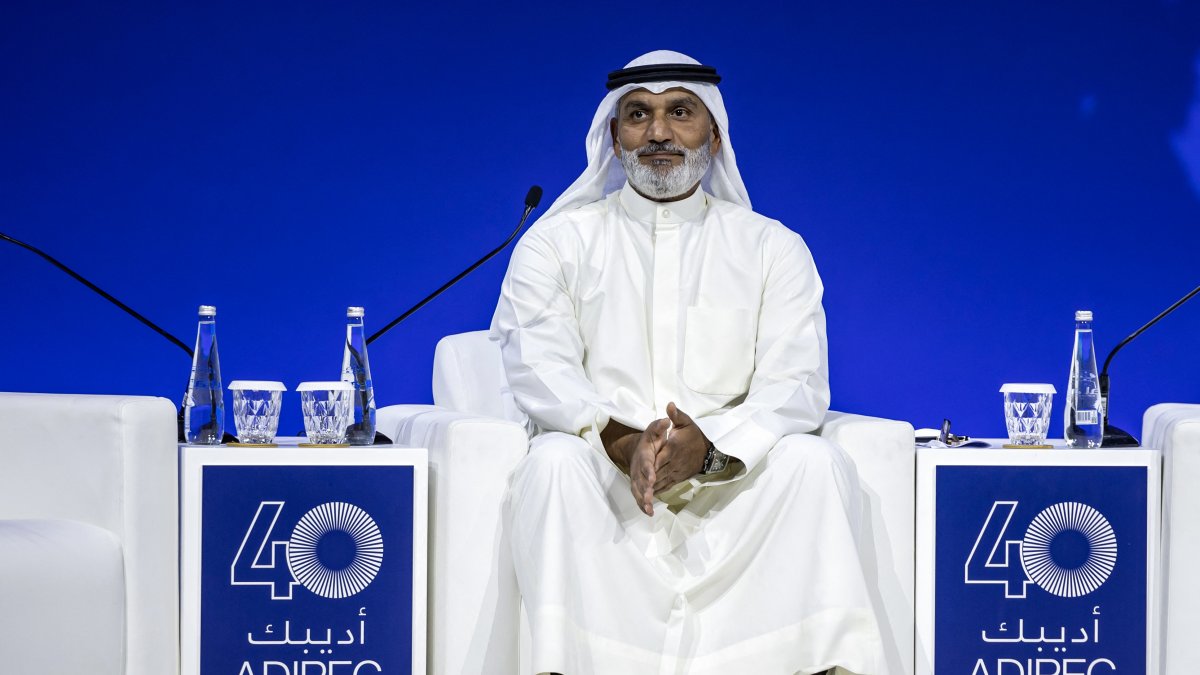
Haitham al-Ghais, OPEC secretary general/Fadel Senna.
OPEC did not die this Tuesday when the United Arab Emirates announced its departure. However, it has been ailing for some time, ever since Abu Dhabi’s first investment in alternative energy and the first Iranian missile to strike Emirati territory. What occurred today is the public confirmation of a verdict that has long been postponed.
To say this is not to minimize the magnitude of the event. It is exactly the opposite. Breakups occur when two parties still believe in a shared framework and fight to control it; this is something else entirely. The Emirates reached that conclusion years ago. The war in Iran provided them with the perfect pretext and, more importantly, the strategic umbrella of Washington, D.C., to act without being left exposed.
Over the last few years, the UAE lived within OPEC with growing discomfort; the underlying tension with Saudi Arabia over production quotas was public, recurrent, and structurally irresolvable because the two oil states were models with incompatible time horizons and needs.
Saudi Arabia needs high oil prices to finance social transfers, its military apparatus, and its well-known strategic initiative: Vision 2030. Otherwise, the Saudi model simply does not add up. That is why OPEC, under Saudi leadership, has always functioned as a mechanism of managed scarcity: collectively cutting production to maintain a price floor. The cartel's discipline was, in essence, Riyadh's fiscal discipline externalized to the rest of the members.
The Emirates has another problem. They have invested billions to expand their production capacity to 5 million barrels per day. That infrastructure depreciates over time. OPEC quotas required them to produce approximately 3.4 million barrels, leaving the rest of the machinery idle. This makes the quota dispute crucial: time plays against the Emirates under the old scheme, but in their favor if they act now.
For decades, the cartel was a form of coordination among actors who shared the same problem: how to extract maximum value from a resource the world needed and they had. That world is ending. The electrification of transportation in China has already reduced demand. The International Energy Agency projects that global demand could peak before 2030. The Gulf states themselves have invested tens of billions in renewable energy because they understand that oil revenues have an expiration date.
In this context, the logic of collective restraint is inverted. If oil is going to be worth less in ten years, then the barrel you don't sell today is not a barrel you will be able to sell tomorrow at a better price. It is a barrel that may remain underground forever, or that you will have to sell at a liquidation price once the market no longer needs it.
From that perspective, the rational strategy for a low-cost producer with large reserves and a finite horizon is not to restrict. It is to accelerate. Turn reserves into cash flow now, while buyers are still paying well, and use that money to fund the transition to a post-oil economy. That is exactly what the Emirates intend. In this scenario, OPEC is not a smart coordination mechanism. It is a brake. It asks the Emirates to sacrifice present revenues in the name of a collective long-term stability that, for Abu Dhabi, is no longer relevant.
None of the above explains why now. If the logic was so clear, why did Emirates wait until this moment to act? Exiting OPEC in normal times would have come at a high price and left it exposed geopolitically without a credible substitute for the regional security umbrella that, it was assumed, the Saudi-Emirati alliance provided. The war changed all three terms of that equation.
Coordination with Riyadh in Yemen not only ended, but it turned into open hostility. In December, Saudi Arabia bombed the Port of Mukalla, backed the order to expel Emirati forces from Yemen, and led the counteroffensive that ended with the collapse of the Southern Transitional Council in January. Two façade allies were publicly at each other's throats. The OPEC exit did not break anything that was whole.

The second change was evidence that the Saudi security umbrella was worth little when the fire was real. When Iranian missiles began to hit Emirati territory, the Saudis were of little help. The anti-missile batteries that defended Abu Dhabi were operated, according to multiple reports, by Israeli personnel. Emirati security was more dependent on Israel and the United States than on its Arab neighbors. If that was so, the obligation to moderate energy policy in the name of Gulf solidarity lacked any real counterpart.
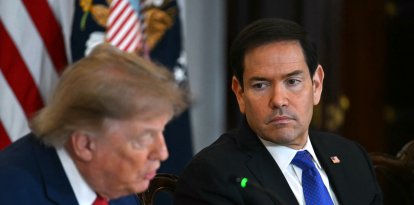
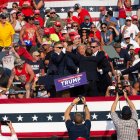
The third change was Washington, D.C., and this is perhaps the most revealing aspect of the maneuver's full architecture. Days before the Emirates announced their exit from OPEC, Treasury Secretary Scott Bessent was defending the creation of a dollar swap line with Abu Dhabi before the Senate. Marco Rubio held security talks with Emirati Chancellor Abdullah bin Zayed on April 26. Trump endorsed the rapprochement. The Emirates were not simply exiting a cartel; they were closing a new structural deal with the world's leading power: more oil supply in exchange for security guarantees and financial access.
What few mention is that this realignment was not merely geopolitical. The Emirates had signaled that they might begin settling some oil transactions in yuan if dollar liquidity tightened. Washington took note and responded. The swap line is not just a financial lifeline; it is confirmation that Abu Dhabi chose the dollar system over the yuan system at a time when that choice was neither obvious nor cost-free. For the United States, anchoring the Emirates to the dollar circuit while Abu Dhabi boosts its production outside of OPEC represents a double win. For the Emirates, it is the hedge they needed to make their move.
That, more than any other factor, explains the timing. The Emirates did not exit OPEC at a time of weakness. They exited covered, with a new security framework under construction and with the narrative legitimacy of having been attacked by Iran while their Gulf partners looked on. The political cost of the decision was never lower. The strategic benefit is never so high.
For Riyadh, the Emirati exit is a blow that operates on several levels simultaneously, and the most significant is not the energy sector. In market terms, the damage is real but manageable in the short term. The Emirates were producing 3.4 million barrels per day prior to the war, with an installed capacity of five million. If Abu Dhabi produces at full capacity once the Strait of Hormuz resumes normal operations, it will inject a significant additional volume into a market that was already under pressure. Saudi Arabia will then face the choice that every cartel leader dreads: continue cutting production to offset the output of the defector, or abandon quota discipline, accept lower prices, and enter into a volume war. Neither option is good, as both entail acknowledging that Riyadh’s control mechanism has a crack that it cannot patch.
But the more serious damage is political. Since its foundation, OPEC has been the main instrument of Saudi power projection outside the region. To lose the internal coherence of the cartel is to lose this instrument of global influence, while the Emirates reposition themselves strategically under Washington's wing.


The risk is that the free-rider logic is contagious. If other OPEC members with latent capacity, Kuwait, Iraq, and Kazakhstan (which have historically failed to meet their quotas), interpret the Emirati exit as a model and begin to defect or renege on their commitments, the cartel could enter a spiral of defections that causes prices to collapse for everyone, including the Emirates. A barrel at fifty dollars serves no one, and there are producers in the Gulf that, at that price, would face a severe fiscal crisis.
But here is Abu Dhabi's implicit gamble: Saudi Arabia cannot afford that scenario, and it knows it. Riad will keep doing what it needs to sustain the price floor, because the alternative is worse. The Emirates is counting on Riyadh to be rational enough to absorb the cost of being the market stabilizer, even if that directly benefits the one who just abandoned it.
The other asset the Emirates is putting in play is the Habshan-Fujairah pipeline. This infrastructure allows them to export oil directly to the Indian Ocean without passing through the Strait of Hormuz, which remains a high-risk area as long as the conflict with Iran is unresolved. While the Gulf sails under wartime conditions, the Emirates have access to an alternative route that their competitors do not. They can present themselves to Asian buyers as a reliable supplier: the same Gulf oil, without the risk of a conflict zone.
What is happening in the global oil market is not an episode of geopolitical turbulence that will stabilize when the Strait of Hormuz reopens. It is the first alarm of a reconfiguration whose logic has less to do with the current war than with the energy transition that no one quite knows how it will happen.
The Gulf oil states know, with varying degrees of urgency, that they are playing against the clock. That certainty puts them in competition with each other in a way OPEC was never designed to manage, because OPEC was designed for a world of scarcity, while they are entering a world of relative abundance and declining demand. In that world, each producer is starting to play its individual chip. None of those games is compatible with a cartel that requires everyone to subordinate to a collective strategy.
While we don't know when or how OPEC will end, we do know that the cartel showed its terminal illness this week. The world energy order is being reconfigured before our eyes.
LATEST