Europe's Energy Suicide: The EU Admits the World Runs on Fossil Fuels — While Deliberately Destroying Its Own
The result is not environmental salvation. It is an engineered dependency that can only delight oil producers such as Russia.
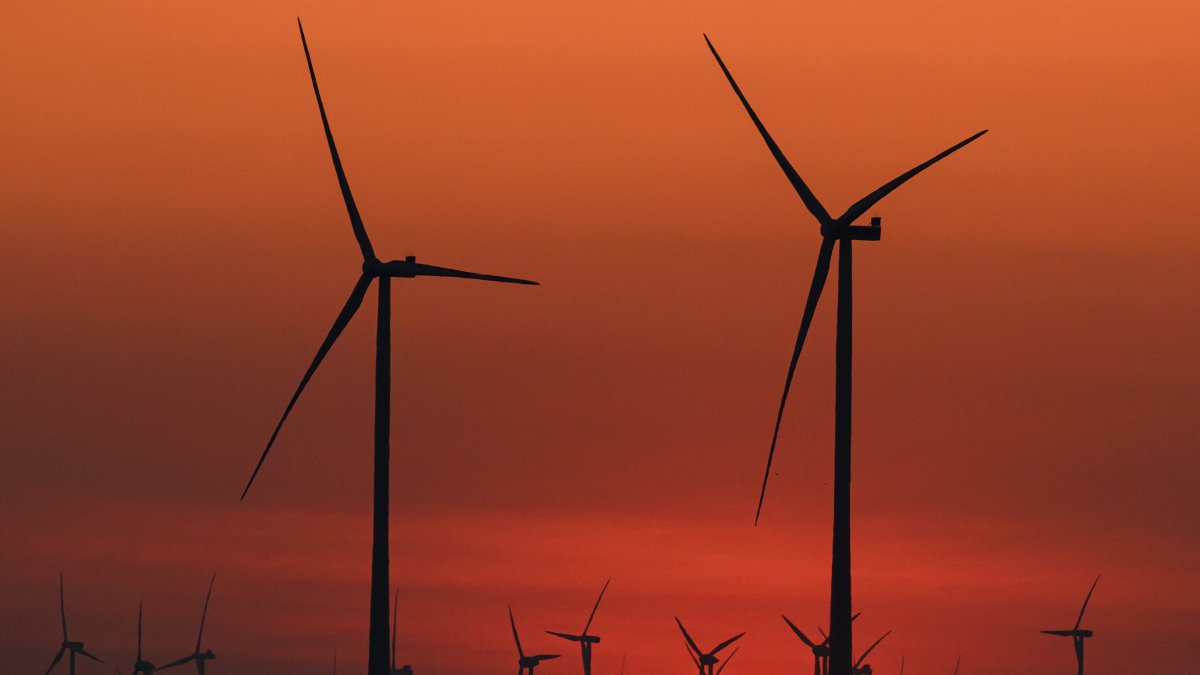
Windmills near Kittsee, Lower Austria
The European Union's energy policy has reached a level of ideological self-harm that even its harshest critics could scarcely have imagined.
The global economy continues to run overwhelmingly on fossil fuels. Transportation, electricity generation, heavy industry, heating, and plastics production all depend on them.
The European Commission, in a moment of geopolitical stress, finally acknowledged this truth. When tensions rise in critical chokepoints such as the Strait of Hormuz, Brussels joins international calls to keep energy flows open, implicitly conceding that modern civilization cannot function without reliable hydrocarbon supplies.
On March 19, 2026, the European Council, which consists of the heads of the 27 European Union nations, issued a statement, saying:
"The European Council calls for de-escalation and maximum restraint... [and] for a moratorium on strikes against energy and water facilities.... The European Council also welcomes the increased efforts announced by Member States, including through strengthened coordination with partners in the region, to ensure freedom of navigation in the Strait of Hormuz..."
In early April, the EU backed a coalition of more than 40 countries, led by the UK and France, to secure and reopen the Strait of Hormuz. Kaja Kallas, the EU's foreign affairs representative, said:
"[R]estoring safe, toll-free freedom of navigation in the Strait, consistent with the Law of the Sea, is an urgent priority. The EU supports all diplomatic efforts to achieve this."
European Commission President Ursula von der Leyen, in addition, pledged to work with partners to resume navigation "as soon as possible." So far, in mid-April 2026, von der Leyen has repeatedly emphasized that the ongoing closure is "greatly damaging" for the EU. The bloc has rejected any "toll" or fee system proposed by Iran (or others) and has insisted on unrestricted, toll-free passage under international law.
EU officials, including Kallas, have repeatedly highlighted that about 20% of global oil and a significant share of liquified natural gas (LNG) normally flows through the strait. She further noted that the closure is "really dangerous for the oil supplies, energy supplies to Asia" (with roughly 85% of the oil/gas through Hormuz going to Asia), and that it affects fertilizers as well.
In short, while the EU's public emphasis is often on "freedom of navigation" and international law (toll-free passage), they clearly connect this to the oil and energy dimension — both for the global economy and for Europe's own exposure to higher prices and supply risks. The disruption in the Strait of Hormuz is a major threat to energy security, not just abstract maritime rights.
Nevertheless, within Europe itself, the same institutions pursue the systematic dismantling of their own domestic fossil fuel capacities. The Netherlands is proceeding with the final closure and capping of wells in the Groningen gas field — one of Europe's largest reserves. Germany has accelerated phasing out coal and, as part of its "Energiewende" -- "energy turnaround" from fossil fuels to "renewable energy" such as wind and solar that do not work -- has been deliberately flooding coal mines. Across the continent, shale gas exploration remains effectively banned in most member states. Nuclear capacity has been curtailed in several countries, most notably Belgium and Germany, with the latter's abrupt shutdown of its last nuclear power plants.
The result is not environmental salvation. It is an engineered dependency that can only delight oil producers such as Russia.
Europe, therefore, has to import the vast majority of its oil and gas. According to Eurostat and recent analyses from think tanks such as Ember, the EU's fossil fuel import bill, while lower than the 2022 peak of over €600 billion, still stood at approximately €337 billion in 2025.
Industrial gas and electricity prices in Europe are two to four times higher than those faced by major competitors in the United States or Asia. This is not an accident of the market; it is the direct consequence of policy choices that have eliminated domestic supply options while both domestic and global demand continue unabated.
The economic consequences are already visible -- and severe. Energy-intensive industries such as steel, chemicals, fertilizers, glass and refining are relocating outside Europe or curtailing production. Competitiveness is eroding. Households face increasingly high energy bills that contribute to widespread energy poverty: official EU figures show that roughly 9-10% of the population, more than 40 million people, struggle to heat their homes.
The cumulative extra cost of fossil fuel imports between 2021 and 2024 has been estimated at nearly €930 billion above pre-Ukraine War baselines. This transfer of wealth benefits oil producers in Russia and elsewhere — hardly the outcome envisioned by those who promised "strategic autonomy."
This is not mere policy error or short-term pragmatism. It is the logical outcome of an ideological framework – an almost religious infatuation with a fantasy of climate purity that for a time captured key EU institutions. As well-intended as the wish may have be — after all, who does not want clean air? — it was roundly upended each week by China and India industriously increasing their CO2 emissions by more than Europe could cut its own.
What we are witnessing is the practical application of cultural Marxism — the postwar theory that shifted the locus of revolutionary struggle from economics to culture and institutions. Facing the empirical failure of classical Marxism, thinkers such as Herbert Marcuse reframed Western civilization itself as the oppressor. Capitalism, industrial society, and traditional sources of energy independence became targets not because they fail, but because they symbolize the very success of the West, capitalism and the incentives of free-market economies. "Capitalism has done more to empower people and raise living standards than any other force in history," according to Michael D. Tanner, an American expert on poverty and economic inequality.
The late American economist Milton Friedman, who promoted economic freedom, expanding opportunity, and economic growth, said in 1979:
"[T]he only cases in which the masses have escaped from... grinding poverty... in recorded history, are where they have had capitalism and largely free trade. If you want to know where the masses are worse off, worst off, it's exactly in the kinds of societies that depart from that."
Instead of handing out small slices of a finite pie, why not make a bigger pie?
Nevertheless, this current "kitchen Marxism" — counter-factually and self-destructively retaining its animus against capitalism and Western achievement — permeates the European Commission and allied bodies.
The EU's "Green Deal" and its associated regulations are presented as environmental imperatives, but their effect is the deliberate weakening of Europe's industrial base and energy security. Fossil fuels are not opposed merely for their emissions; they are opposed because they underwrite prosperity, independence, and power — attributes the cultural Marxist worldview seeks to delegitimize. An affluent, independent public is harder to control. Politically, if you are poor and dependent, there is the possibility that you will keep reelecting your incompetent leaders in the hope that they will rescue you. It is in those leaders's interest just to keep dangling the promise of rescue in front of you.
The European Court of Human Rights and other supranational mechanisms have been reinforcing this orientation, prioritizing abstract, Quixotic "pie-in-the-sky" climate targets over the concrete well-being of Europe's citizens.
The result is a continent that lectures the world on decarbonization while quietly increasing its reliance on costly imported oil and gas, often from regimes whose human rights records, geopolitical ambitions, and climate records -- receive far too little scrutiny.
Europe does not lack energy resources. It lacks the political will to use them. Britain's North Sea oil and gas resources alone are a treasure trove waiting to happen. Until European policymakers confront the ideological roots of this self-defeating strategy — and prioritize the security and prosperity of their own citizens over utopian visions — the continent will continue its slide toward deindustrialization, mass hardship and strategic irrelevance.
The Strait of Hormuz will soon fully reopen, but Europe's path to energy independence is being deliberately and self-destructively sealed shut.
LATEST