Allen and the ecosystem that normalized political violence.
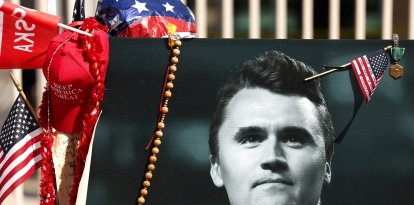
It wasn't just the bullet that grazed Donald Trump's head in Pennsylvania or the shooting that killed Charlie Kirk before the eyes of the world. True, each of these acts has its own story, its own perpetrator, its own disturbed logic. But viewed together, they form an ecosystem of extreme dangerousness: the normalization of political violence as a legitimate tool of social change in 21st century America.
Attack against Trump
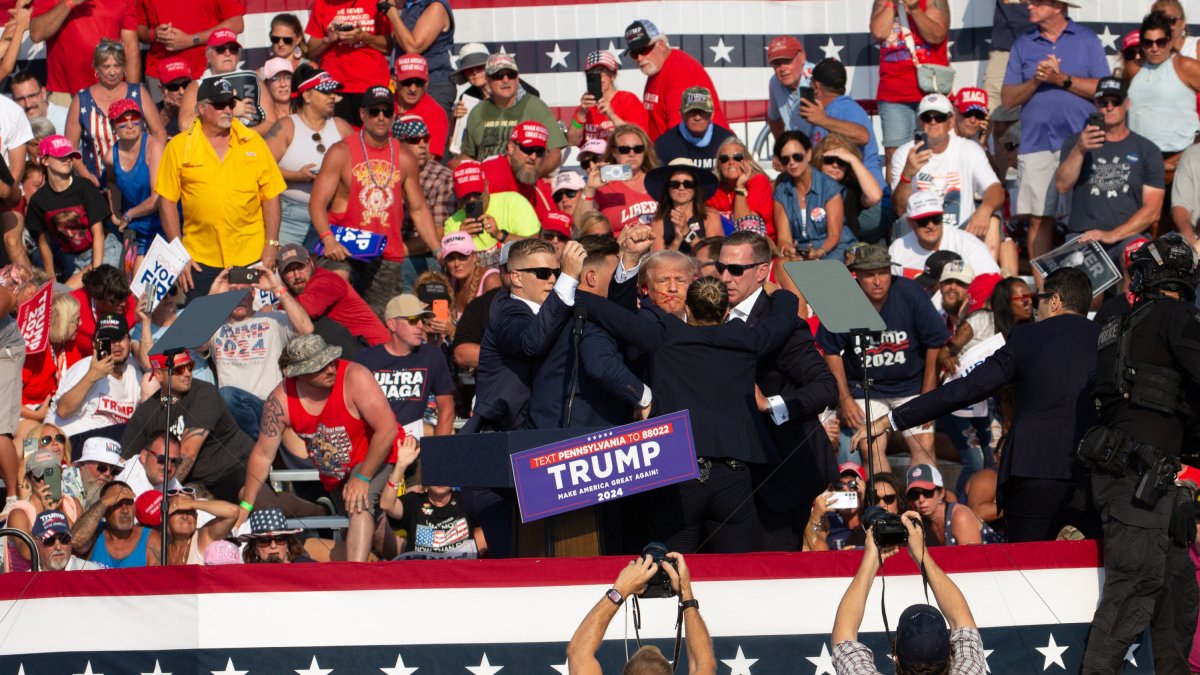
It wasn't just Allen armed walking into the White House Correspondents' Dinner. It wasn't just Luigi Mangione executing the CEO of an insurance company on a Manhattan street. It wasn't just the bullet grazing Donald Trump's head in Pennsylvania or the shooting that killed Charlie Kirk before the eyes of the world. True, each of these acts has its own story, its own perpetrator, its own disturbed logic. But viewed together, they form an ecosystem of extreme dangerousness: the normalization of political violence as a legitimate tool of social change in 21st century America.
What is it that makes more and more citizens consider pulling the trigger "justified"?
The Network Contagion Research Institute (NCRI) and the Social Perception Lab at Rutgers University released a report that should be on the front page of every newspaper in the country. In a representative survey of 1,264 U.S. residents, they found that 38.5% of the total believe that assassinating President Trump would be at least partially justified. Among those who identify with the center-left and left, that figure climbs to 55 or 56%, depending on the measurement.
Thirty-one percent of respondents overall (and 50% of those on the left) said the same about Elon Musk. Nearly 40% found it acceptable to destroy a Tesla dealership as a form of protest. Among those on the left, that number borders on 60%. These numbers are the result of a serious analysis that includes statistical correlations with psychological and ideological variables. And what they reveal is chilling: we are not dealing with a minority of isolated fanatics, but with a cultural trend with deep roots. A year ago, left-wing support for this type of violence was 56%. It is reasonable to think that this trend has deepened and will not correct itself.
It would be comfortable but false to attribute this phenomenon to a single variable. The NCRI identified three psychological and ideological factors that predict support for political violence: left-wing authoritarianism (the willingness to use coercive methods to impose progressive goals), external locus of control (the sense of powerlessness in the face of forces that the individual does not control), and heavy use of the Bluesky social network. But these factors did not come out of nowhere. They are the end product of an ideology that was built up over years, fed by multiple streams that feed back into each other.
The woke ideology is not simply a harmless college fad. It is a worldview that divides the world into oppressors and oppressed, into those on the right side of history and those who deserve to be written off, silenced or eliminated. When you teach an entire generation that their political adversaries are not citizens with whom they disagree, but moral enemies who represent structural evil, you are laying the groundwork for something very dangerous. The data bear this out.
The data confirms it. A survey by the American Political Perspectives Survey revealed that Americans with graduate degrees are twice as likely to support political violence as those whose education ended in high school. Forty percent of graduates say "violence is sometimes necessary" to bring about social change, compared with 23% of non-graduates. Thirty-six percent of graduates believe that damaging property is justified as part of a protest, compared to 18% of those with a high school diploma. The college campus seems to be reproducing intolerance.
This is not a surprise; it seems more like the logical consequence of decades of indoctrination in an ideology that elevates identitarian self-esteem to the status of supreme value and turns any challenge to that self-esteem into an aggression that justifies retaliation. There was a moment when the alarm system should have activated all its signals. It was October 7, 2023, after the biggest pogrom since the Holocaust. The response from important sectors of the Western left, particularly from university campuses and progressive media, was not one of condemnation but of ambiguity that in many cases turned into open celebration.
What this attitude revealed is that the "oppressor/oppressed" logic can justify any act of violence against anyone who is classified as part of the wrong side.If one can applaud the murder of babies and the rape of hostages under the label of "resistance," the distance to applauding the murder of a health care executive or a conservative politician is shorter than anyone wanted to acknowledge.
I wrote last week about the alarming anti-Americanism that has taken hold of the Democratic Party. What I did not address in that column, and which is inseparable from this analysis, is the role of the "Trump as Hitler" narrative in building the culture of murdercat. When Democratic Party leaders, left-wing influencers and progressive academics repeat for years that the president of the United States is a fascist, a pedophile, a traitor and the greatest danger to democracy since World War II, they are doing something very specific: they are building a moral justification for anyone choosing to act. TThe manifesto of the attacker of the Correspondents' Dinner contains nothing that we haven't seen repeated ad nauseam on the social networks and accounts of progressivism and the left. It is the distillation of years of incendiary rhetoric repeated morning, noon and night. The responsibility lies with the man who pulled the trigger. But we cannot rule out the existence of the entire hate production chain.

The NCRI report points to the RRSS as the catalyzing factor. Platforms like Bluesky have developed subcultures in which political violence is aestheticized, becomes a meme, becomes consumable and even aspirational. Luigi Mangione, the confessed killer of UnitedHealthcare CEO Brian Thompson, was turned into a pop hero in a matter of hours. Users began using his name as code, quoting the slogan "Deny, Defend, Depose" (a parody of the language of insurance companies) as a form of covert incitement to violence that circumvents the moderation of the platforms.
Heavy use of social networks, combined with deep pessimism about the future of the country, predicts support for political violence. Networks do not create violence, but they act as accelerators: they magnify the sense of powerlessness, transform it into collective rage and give it a narrative that makes it heroic. The case of Hasan Piker is paradigmatic. This streamer with millions of followers, who justifies and even publicly calls for political terrorism, was received as a fascinating character by the New York Times and by the Democratic elite who frequent him.
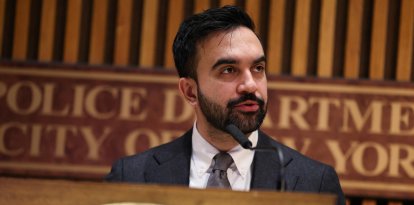
All of the above has a political context that contains and, in part, enables it. As I noted in my April 21 column, the Democratic Party is undergoing a process of colonization by a left that no longer shares the foundational values of American liberal democracy. Connecticut Senator Chris Murphy celebrating in X that Iranian ships circumvented his own country's naval blockade. Michigan Democratic Senate candidate Abdul El-Sayed campaigning with Piker. Zohran Mamdani, the mayor of New York, whose wife gave "likes" to posts celebrating Oct. 7, condemning political violence with the same mouth with which her immediate entourage celebrates it.
This is the central paradox of the moment: a party that is unable or unwilling to establish a clear line against violence, the product of years of running after an electorate that became increasingly radicalized without anyone putting the brakes on it.
There is one finding from the NCRI report that deserves special attention because it breaks all stereotypes. Joel Finkelstein, director of the institute, found that women are 15% more likely than men to support the culture of murder. Leftist women are the most likely group of all, with a difference of about 75% from the least likely group, conservative men. This tells us that radicalization is occurring in a specific sector of the population: young, educated, female, connected to social networks and with a pessimistic view of the country's future. It is not precisely the profile of marginality but that of a disturbed group that has absorbed years of woke pedagogy and is channeling its existential anguish towards political extremism.
Finally, and in light of Allen's recognition as an outstanding teacher, it is disturbing how easily educators across the country are turning to extreme positions. In no fewer than 12 states, teachers were suspended or fired for "implying approval" for the death of Charlie Kirk. After the first assassination attempt against Trump in Pennsylvania in July 2024, educators flooded the networks with variants of "better luck next time." The fact that the attacker at the Correspondents' Dinner is a teacher should set off all the alarms.
We are witnessing the normalization of barbarism, the predictable result of a pedagogy that teaches that the enemy does not deserve understanding. Today, the culture of murder is not a fringe movement, it is an emerging cultural trend that is spreading rapidly. NCRI data warns that, given the current level of justification, there is a high probability that online violence will escalate. It is already happening.
LATEST